Best Australian Semiconductor and Chip Technology Stocks to Watch in 2026
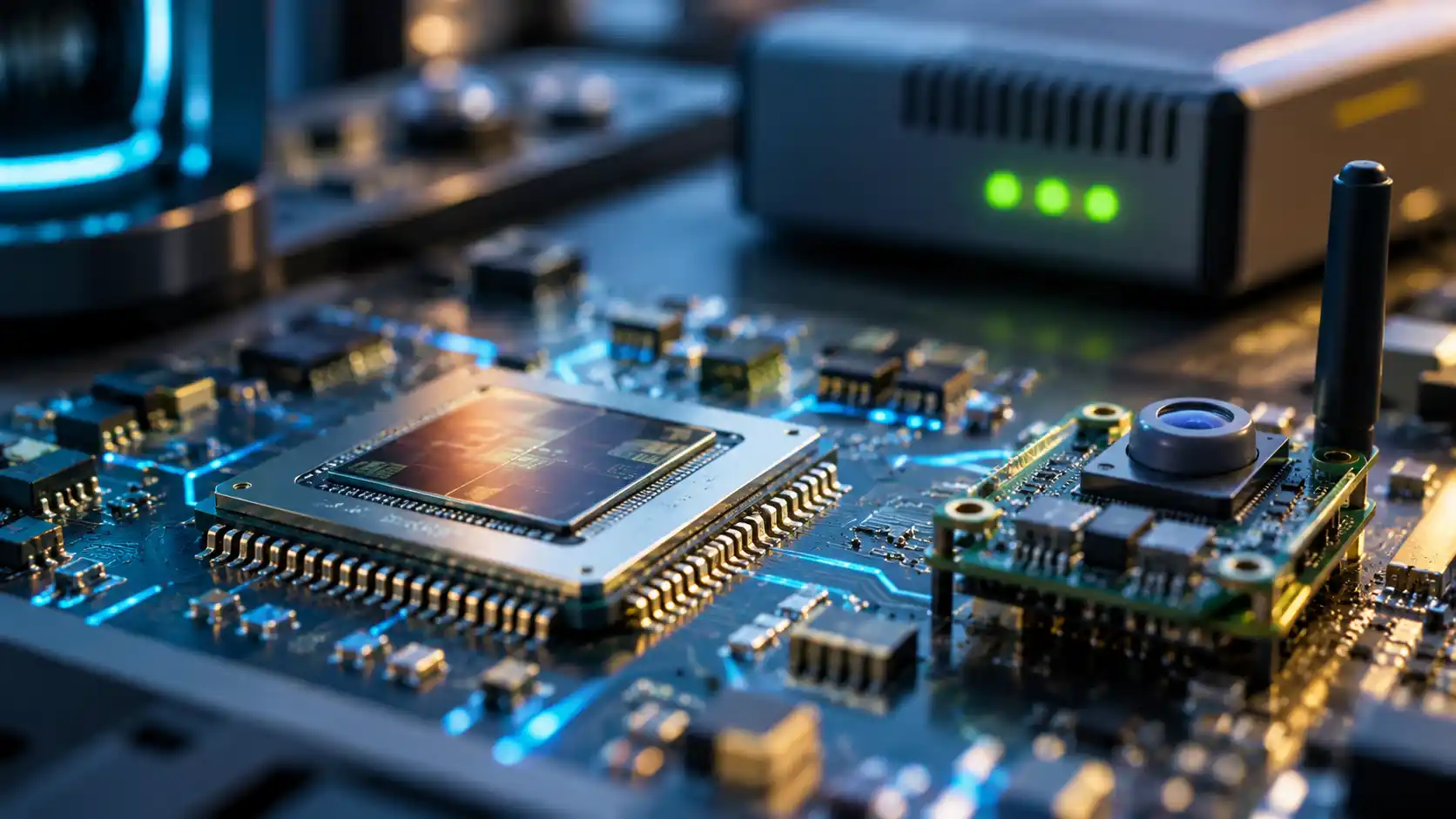
Australia’s semiconductor business is growing on specialised chip technologies, memory innovation and sophisticated computing, not big scale processor manufacture. ASX-listed firms are looking at potential in areas including artificial intelligence (AI), quantum computing and energy-efficient memory. Weebit Nano, BrainChip and Archer Materials provide exposure to three different aspects of this developing technology sector.
1. Weebit Nano (ASX: WBT)
Weebit Nano develops Resistive Random Access Memory (ReRAM), a non-volatile memory technology that is designed to store information without the need for continuous power. It’s developing technology to integrate into semiconductor chips for automotive electronics, industrial equipment, IoT devices and edge computing.
The company operates on an intellectual property licensing model, partnering with semiconductor manufacturers to integrate ReRAM into their products. The technology collaborations and customer validation initiatives are crucial milestones along the path to greater commercial adoption. Weebit’s longer-term future will depend on successful integration, production validation and demand from chip makers.
2. BrainChip Holdings (ASX: BRN)
BrainChip manufactures neuromorphic computing technology based on their Akida processor platform for low-power AI processing. The technique emphasises on processing information on the devices themselves, rather than relying on cloud computing for some applications.
Akida is being designed for edge AI applications, for usage in robotics, industrial monitoring, smart devices and sensor-based systems. BrainChip is also collaborating with semiconductor partners to apply its technologies into custom chip designs. Its economic success will depend on client uptake, real-world use cases and the capacity to compete with existing AI processor developers.
3. Archer Materials (ASX: AXE)
Archer Materials is developing next generation semiconductor technologies in the areas of quantum computing, sensing and medical diagnostics. Its 12CQ project focuses on carbon-based materials for quantum computing applications but its larger research encompasses graphene-based electronics.
It's also creating a Biochip platform for point-of-care medical tests, starting with blood potassium monitoring. These technologies could have applications in healthcare, advanced computing and specialised electrical devices. Archer’s progress will rely on additional technical validation, production development and the capacity to push its research initiatives into commercial applications.
What Is Driving the Australian Semiconductor Industry?
There is a growing interest in semiconductor technology due to several developments:
Artificial intelligence: Demand for specialist processors and efficient memory solutions is being driven by the growing deployment of AI.
Energy-efficient computing: Companies are developing solutions that can cut electricity use and increase processing power.
Quantum technology: Research into quantum computing and improved sensing is opening prospects for specialist semiconductor developers.
Supply-chain diversification: Global initiatives to bolster semiconductor supply chains are generating interest in alternate technologies and niche producers.
Key Risks to Consider
Shares in Australian semiconductor companies can be very volatile, especially where the technology is still undergoing development or commercialisation.
- Technology risk: The good design may not operate as planned or be reliable in manufacture.
- Commercialisation risk: Just because it works in the lab doesn’t mean that it will be widely adopted by customers.
- Competition: Existing worldwide semiconductor companies have strong technical resources and existing client contacts.
- Manufacturing problems: Moving from prototypes to repeatable, large-scale manufacturing can pose technical and integration challenges.
- Funding requirements: Access to finance on an ongoing basis may be required for research, product development and commercial growth.
Risk Considerations
Australian semiconductor equities face technical, manufacturing and commercialisation challenges. Not every promising research results in products that can be sold commercially, and it might be difficult to compete against established worldwide firms. And companies might need more investment and technical development before they can achieve wider market adoption. Investors should examine the stage of development of each firm, its commercial alliances and its potential to bring its technology to market.
Disclaimer:
General Financial Product Advice and Regulatory Framework: Pristine Gaze Pty Ltd (ABN 66 680 815 678, ACN 680 815 678) operates as Corporate Authorised Representative (CAR No. 001312049) of Alpha Securities Pty Ltd (AFSL 330757), which is licensed and regulated by the Australian Securities and Investments Commission under the Corporations Act 2001 (Cth). This report contains general financial product advice only and has been prepared without consideration of your personal objectives, financial situation, specific needs, circumstances, or investment experience. The information is not tailored to individual circumstances and may not be suitable for your particular situation. Before acting on any information contained herein, you should carefully consider its appropriateness having regard to your personal objectives, financial situation, and needs, and consider seeking personal financial advice from a qualified financial adviser who can assess your individual circumstances and provide tailored recommendations.
Investment Risks and Market Warnings: All investments carry significant risk, and different investment strategies may carry varying levels of risk exposure including total loss of invested capital. The value of investments and income derived from them can fluctuate significantly due to market conditions, economic factors, company-specific events, regulatory changes, commodity price volatility, currency fluctuations, interest rate movements, and other factors beyond our control. Securities markets are subject to market risk from general economic conditions and investor sentiment, liquidity risk affecting the ability to buy or sell securities at desired prices, credit risk from issuer default or deterioration, operational risk from inadequate internal processes, sector-specific risks including industry regulatory changes, technology obsolescence, management changes, competitive pressures, supply chain disruptions, and mining-specific risks including resource estimation uncertainty, operational hazards, environmental compliance, permitting delays, commodity price cycles, geopolitical factors affecting mining operations, and exploration risks. Small-cap and speculative mining stocks carry additional risks including limited liquidity, higher volatility, dependence on key personnel, limited operating history, uncertain cash flows, and potential failure to achieve commercial production.
Information Accuracy and Limitations: While we endeavour to ensure information accuracy and reliability, we make no representations or warranties (express or implied) regarding the accuracy, reliability, completeness, timeliness, or suitability of information provided, except where liability cannot be excluded under applicable law. This report may include information from third-party sources including company announcements, regulatory filings, research reports, market data providers, financial news services, and publicly available information, which we do not independently verify and for which we assume no responsibility. Past performance, examples, historical data, or projections are not indicative of future results, and no guarantee of future returns is provided or implied. To the maximum extent permitted by law, Pristine Gaze Pty Ltd and Alpha Securities Pty Ltd, together with their respective directors, officers, employees, representatives, and related entities, exclude all liability for any errors, omissions, inaccuracies, loss or damage (including direct, indirect, consequential, or special damages) arising from reliance on information provided, investment decisions made based on this report, market losses, opportunity costs, and technical issues or system failures.
Frequently Asked Questions
Common questions about investing and market research to help guide your decisions.