The Future of AI Investing in Australia

Artificial intelligence (AI) is increasingly becoming an important part of the global investment landscape and Australia is no exception with opportunities emerging across this fast-evolving sector. AI is transforming the way companies do business and the way investors look for opportunities for future growth, including automation, data analytics, cloud computing, and advanced semiconductor technologies.
For Australian investors, the future of AI investing is more than just companies developing AI software. With the rise of AI adoption, businesses that provide cloud infrastructure, data centres, cybersecurity, digital services and specialised hardware may also benefit. But identifying sustainable opportunities requires looking beyond the market noise and understanding the commercial potential, financial strength and the risks of each business.
Where AI Investment Opportunities Are Emerging
1. AI software and technology development
Businesses looking for ways to boost productivity and cut operating costs may provide a boost to companies that develop AI platforms, machine learning tools and automation software. Healthcare, financial services, retail, mining and logistics are seeing opportunities arise for specialised technology providers.
Australian companies are also working on solutions in fields like medical imaging, workplace automation, customer analytics and industrial monitoring. But investors need to separate those companies that have real, revenue-generating businesses built around AI products from those that are simply making AI-related announcements.
2. Data centres and digital infrastructure
One of the most important areas related to the future of AI investing is data centres. Artificial intelligence systems need a lot of computing power, storage space and reliable connections, driving the need for facilities that can meet these demands.
The Reserve Bank of Australia said in November 2026 that investment in Australian data centres had increased about tenfold in the previous three years. It also expects significant investment to continue, with a further $115 billion in real terms potentially going to Australian data centres between mid-2026 and the end of 2028.
This development could create opportunities for data centre operators, telecommunications providers, infrastructure businesses and companies providing related equipment and services. But the level of investment will depend on future demand for computing power and the availability of suitable infrastructure.
3. Semiconductors and computing hardware
AI applications require specialised processors, chips, servers and networking equipment. Companies that design, supply or distribute these technologies could benefit as demand for AI computing increases.
The Australian listed semiconductor industry is relatively small compared to major international markets. Investors may therefore have to consider technology distribution, hardware supply and supporting infrastructure businesses instead of focusing only on chip manufacturers.
4. Energy and supporting infrastructure
AI growth also means demand for electricity, cooling systems and stable power grids. Data centres are energy hungry, so electricity generation, grid infrastructure, battery storage and energy management are all relevant areas of the wider investment opportunity.
Data centres made up about 3% of electricity consumption in the National Electricity Market in 2025-26, the RBA noted. As more facilities open, this share could increase, potentially creating more demand for energy infrastructure.
Australia's AI Investment Landscape
The development of the sector is also being influenced by government policy. The National AI Plan for Australia was released in December 2025, with a focus on attracting investment, developing domestic AI capabilities, expanding infrastructure, and encouraging wider adoption across industries. It also seeks to establish safeguards that promote responsible AI development and use.
That's a lot of opportunities for investors in technology developers and also in companies that are adopting AI to make their operations better. There are few companies on the ASX with direct exposure to AI but there are a number of others that may benefit indirectly through data centres, telecommunications, cloud services and digital infrastructure.
That means investors need to look at how AI really affects a company’s profitability and revenue, not just how close it is to the technology.
What Should Investors Look for When Choosing AI Investments?
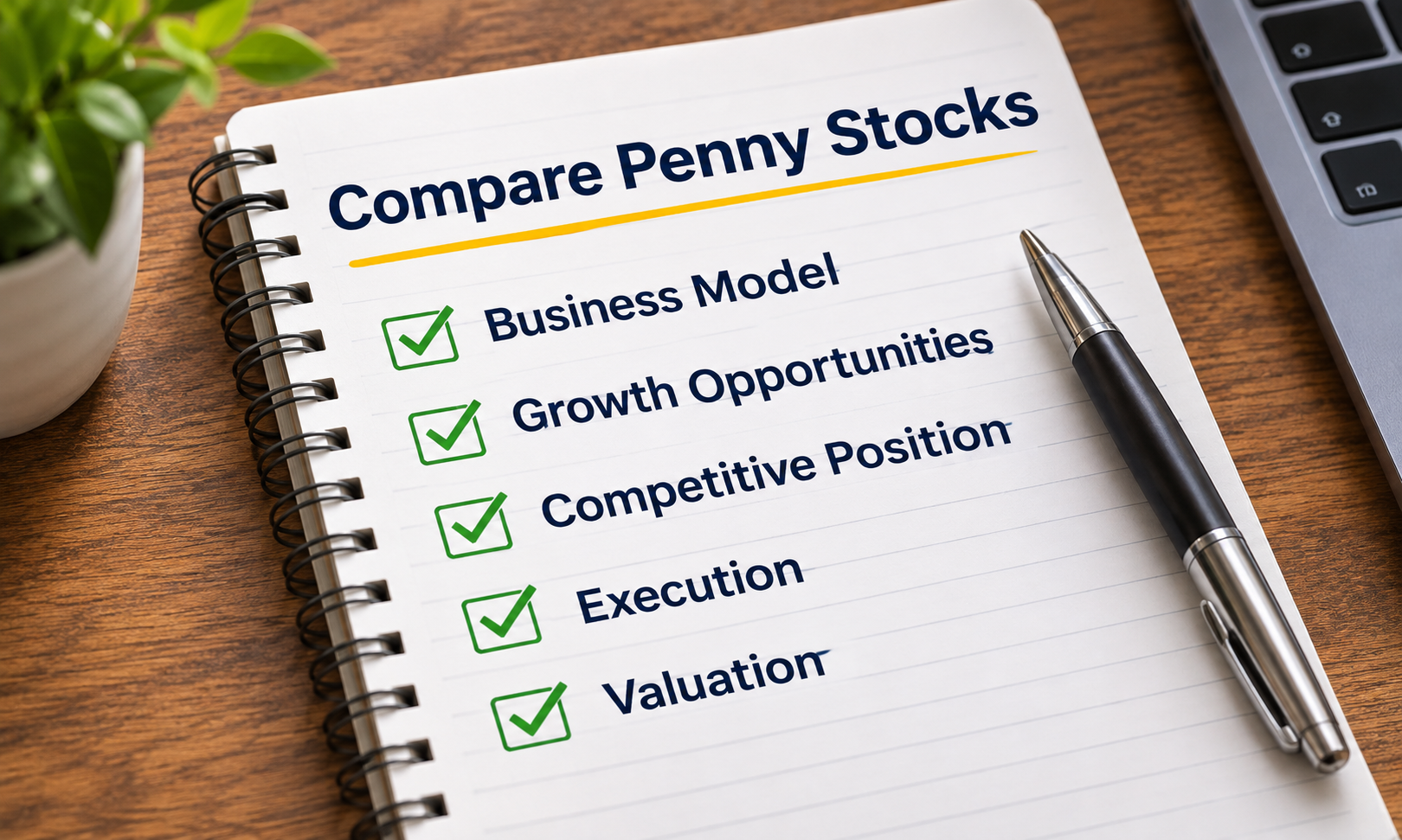
Even if AI itself has huge growth potential, not every AI-focused company is a good investment. There are a few things investors should consider before picking stocks:
- Revenue contribution: Evaluate the percentage of a company's revenue that comes from AI-based products and services.
- Commercial adoption: Look for evidence that its technology is being used by customers and is generating recurring revenue.
- Research and development: See if the company is spending enough to keep up with the competition as artificial intelligence (AI) technology advances.
- Financial strength: Cash flow, debt levels, profitability and funding requirements are all key considerations, especially for smaller technology businesses.
- Competitive position: Does the company have proprietary technology, Does it have loyal customers, Does it have a leg up on the competition?
- Valuation: Look at market valuations relative to earnings potential and realistic growth expectations so you don’t overpay for market excitement.
An approach that is diversified could also help investors manage the risks of individual AI companies. Different ways to be part of the sector’s development can be through exposure to technology, infrastructure and established businesses taking up AI.
Challenges That Could Shape the Future of AI Investing
There's a lot of potential for growth in AI investing, but there are also a number of challenges. Technologies are changing rapidly and companies may find it difficult to maintain their competitive edge when new products and new competitors enter the market. High research and development costs can also be incurred by smaller businesses before their products are a commercial success.
Another important concern is valuation. Strong investor interest can drive AI-related share prices above what current earnings and business fundamentals justify. These valuations could be under pressure if the commercial adoption is slower than expected or earnings disappoint market expectations.
Infrastructure constraints also play a key role in Australia. Reliable electricity, suitable land, skilled workers and significant capital investment are needed for data centre expansion. Much of the equipment used in Australian data centre projects is imported, so headline investment numbers do not translate into equivalent domestic economic benefits, the RBA notes.
Changes in regulation, cybersecurity threats, data privacy concerns, and the responsible use of AI could also impact the costs of doing business and investment choices.
What Lies Ahead for AI Investing in Australia?
The future of AI investment in Australia is likely to be a mix of technology development, infrastructure expansion and broader business uptake. As demand for AI services grows, data centres, energy networks, computing hardware and specialist software providers could all play important roles.
Australia’s AI ecosystem is growing, driven by government initiatives and private investment, but the longer-term commercial success will depend on how well businesses can convert technological capabilities into sustainable revenue and earnings.
Investors should not assume that the most promising opportunities will be found only in companies labelled as AI businesses. The trend may also benefit established companies that successfully integrate AI into their operations, improve productivity and strengthen their competitive positions.
Risk Considerations
AI investments involve risks related to rapid technology change, intense competition, uncertain commercial acceptance and high development costs. Smaller companies could feel the pressure on funding and higher valuations could mean greater potential for volatility in their share prices. The growth of data centres also depends on availability of electricity, infrastructure capacity and customer demand. Investors should focus on the fundamentals and valuations of the companies and not AI-related market euphoria.
Disclaimer:
General Financial Product Advice and Regulatory Framework: Pristine Gaze Pty Ltd (ABN 66 680 815 678, ACN 680 815 678) operates as Corporate Authorised Representative (CAR No. 001312049) of Alpha Securities Pty Ltd (AFSL 330757), which is licensed and regulated by the Australian Securities and Investments Commission under the Corporations Act 2001 (Cth). This report contains general financial product advice only and has been prepared without consideration of your personal objectives, financial situation, specific needs, circumstances, or investment experience. The information is not tailored to individual circumstances and may not be suitable for your particular situation. Before acting on any information contained herein, you should carefully consider its appropriateness having regard to your personal objectives, financial situation, and needs, and consider seeking personal financial advice from a qualified financial adviser who can assess your individual circumstances and provide tailored recommendations.
Investment Risks and Market Warnings: All investments carry significant risk, and different investment strategies may carry varying levels of risk exposure including total loss of invested capital. The value of investments and income derived from them can fluctuate significantly due to market conditions, economic factors, company-specific events, regulatory changes, commodity price volatility, currency fluctuations, interest rate movements, and other factors beyond our control. Securities markets are subject to market risk from general economic conditions and investor sentiment, liquidity risk affecting the ability to buy or sell securities at desired prices, credit risk from issuer default or deterioration, operational risk from inadequate internal processes, sector-specific risks including industry regulatory changes, technology obsolescence, management changes, competitive pressures, supply chain disruptions, and mining-specific risks including resource estimation uncertainty, operational hazards, environmental compliance, permitting delays, commodity price cycles, geopolitical factors affecting mining operations, and exploration risks. Small-cap and speculative mining stocks carry additional risks including limited liquidity, higher volatility, dependence on key personnel, limited operating history, uncertain cash flows, and potential failure to achieve commercial production.
Information Accuracy and Limitations: While we endeavour to ensure information accuracy and reliability, we make no representations or warranties (express or implied) regarding the accuracy, reliability, completeness, timeliness, or suitability of information provided, except where liability cannot be excluded under applicable law. This report may include information from third-party sources including company announcements, regulatory filings, research reports, market data providers, financial news services, and publicly available information, which we do not independently verify and for which we assume no responsibility. Past performance, examples, historical data, or projections are not indicative of future results, and no guarantee of future returns is provided or implied. To the maximum extent permitted by law, Pristine Gaze Pty Ltd and Alpha Securities Pty Ltd, together with their respective directors, officers, employees, representatives, and related entities, exclude all liability for any errors, omissions, inaccuracies, loss or damage (including direct, indirect, consequential, or special damages) arising from reliance on information provided, investment decisions made based on this report, market losses, opportunity costs, and technical issues or system failures.
Frequently Asked Questions
Common questions about investing and market research to help guide your decisions.