10 Signs of a High-Quality ASX Company
To find quality stocks in Australia, you need to go beyond share price changes and short-term market success. A company can be in a rising industry, but its long-term strength still relies on financial stability, management decisions, competitive positioning and its capacity to make consistent profits. Recognising these traits can help investors identify companies with more sustainable ways of doing business.
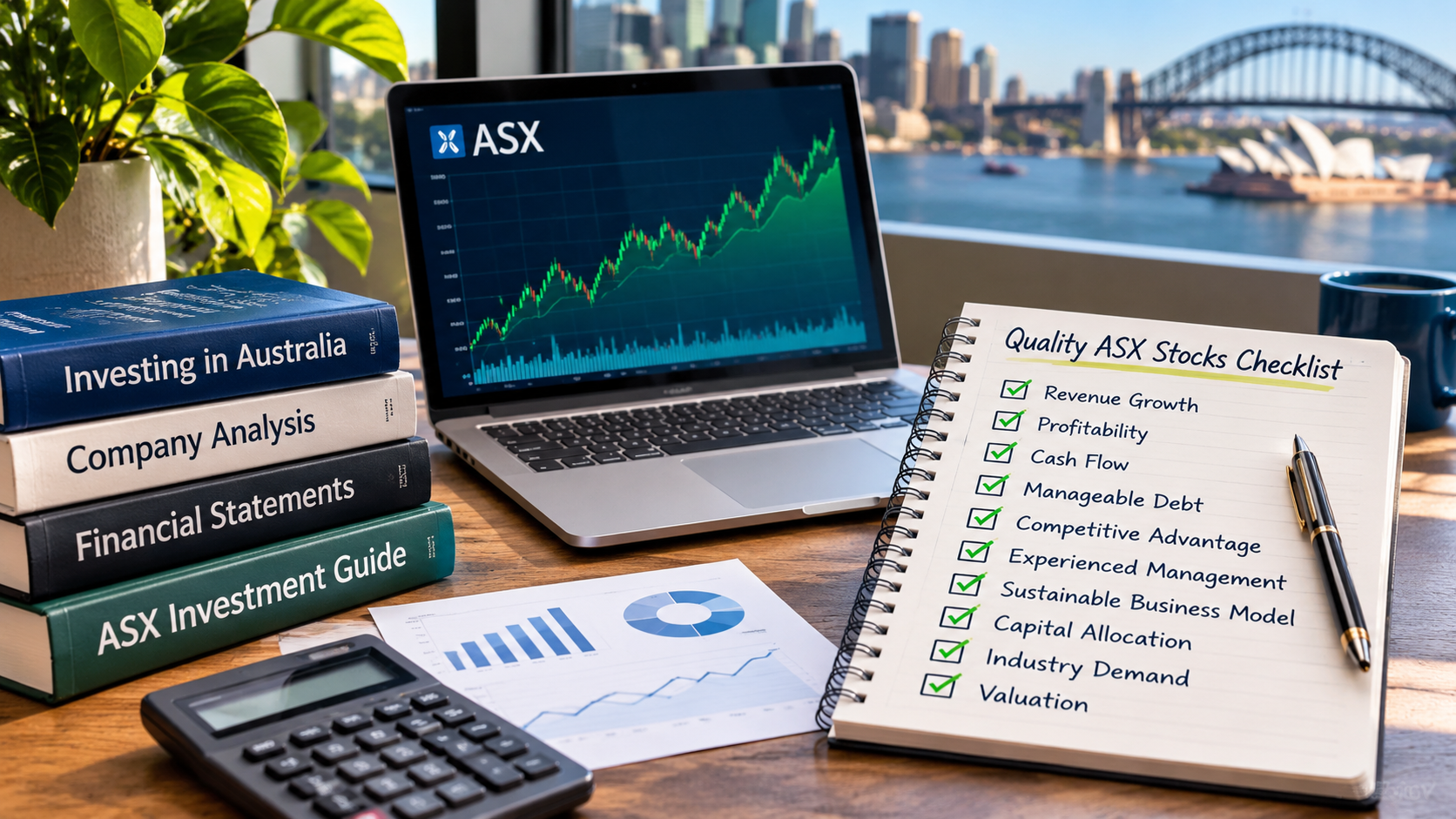
Here are 10 key signs to look for in assessing a reputable ASX-listed company.
1. Consistent Revenue Growth
A good corporation can generally show that it can grow revenues over time. Growth may also be consistent, which could mean its products or services remain relevant, consumer demand is holding up and the organisation is growing its market position.
But you have to look at revenue growth across a number of years, not just one good reporting quarter. It is also crucial to know if growth is coming from existing operations, acquisitions, increased prices or one-off deals.
2. Strong Profitability
Revenue growth is not enough on its own to make a quality firm. A corporation has to turn sales into profits by managing costs effectively and operating efficiently.
Investors may see how much of its revenue a corporation keeps as earnings by looking at gross profit margins, operational margins and net profit margins. Stable or growing margins may suggest stronger cost control, pricing power or operational performance.
A company with quickly growing sales but steadily dropping profits might be worth a closer look.
3. Healthy Cash Flow Generation
Cash flow is an indication of whether a business can earn enough cash from its regular activities. Companies with stable operating cash flow are typically better able to finance their day-to-day operations, invest for growth and satisfy financial obligations.
Another helpful statistic is free cash flow, which is the cash left over after capital expenditure. If stated earnings and cash generation are consistently different it may be worth digging deeper.
4. Manageable Debt Levels
A robust financial sheet can help a corporation weather economic instability and unanticipated operating issues. On the flip side, borrowing too much can drive up interest expenses and put strain on cash flow.
When evaluating financial leverage, investors can look at debt-to-equity, net debt-to-EBITDA and interest coverage ratios. The right amount of debt depends on the industry, thus ideally comparisons should be made to enterprises with a similar operating strategy.
5. A Sustainable Competitive Advantage
The best companies have traits that make it hard for a competition to steal their clients. Such benefits can be in the form of popular brands, proprietary technologies, distribution networks, customer relationships, intellectual property, or lower production costs.
For example, a business that has specialist items and long-term client relationships may have more freedom on price than a business that competes substantially on price.
Such advantages can help defend market share and underpin profitability over time, but they are not necessarily permanent.
6. Experienced and Accountable Management
Management actions can have a profound impact on the long-term performance of an organisation. Investors should evaluate leadership team’s sector experience, how they deploy resources and whether they can execute on stated objectives.
It is also important considering how management communicates in difficult times. Useful insight into corporate governance and accountability can be gained by transparent reporting of operational setbacks, financial challenges and changes in strategy.
7. A Clear and Sustainable Business Model
A good company should have a business plan that investors can understand. This means knowing what it sells, who its consumers are, how it makes money and what makes it spend.
Companies that have repeat customers, long-term contracts or recurring sources of income may have more visibility into revenues. However, the longevity of such arrangements is dependent on client retention, price conditions and the company’s ability to maintain quality of service.
Complex business structures and opaque sources of revenues could make it more challenging to judge long-term performance.
8. Disciplined Capital Allocation
How a corporation deploys its capital can affect the future worth of that company. Strong management teams will generally debate whether to spend money on expanding the business, buying another business, reducing debt or paying dividends or buying back shares.
Investors should ask if past investments have generated considerable returns and if acquisitions have improved the company’s operations. If a company consistently overpays for acquisitions or invests in ventures with poor returns, it can destroy shareholder value.
9. Exposure to Long-Term Industry Demand
Businesses in industries with sustained demand may be more likely to grow over time. Long-term economic and structural trends are in favour of sectors such as healthcare, infrastructure, technology, energy transition and vital consumer services.
However, just being in a developing business doesn’t inevitably constitute a company good quality. Its competitive position, financial performance and ability to harness industry demand remains a critical concern.
10. Sensible Valuation
Even a financially healthy business might be a costly investment if the pricing already reflects too optimistic expectations. Valuation allows investors to examine if the current market price is fair in comparison to the company’s earnings, cash flow and growth potential.
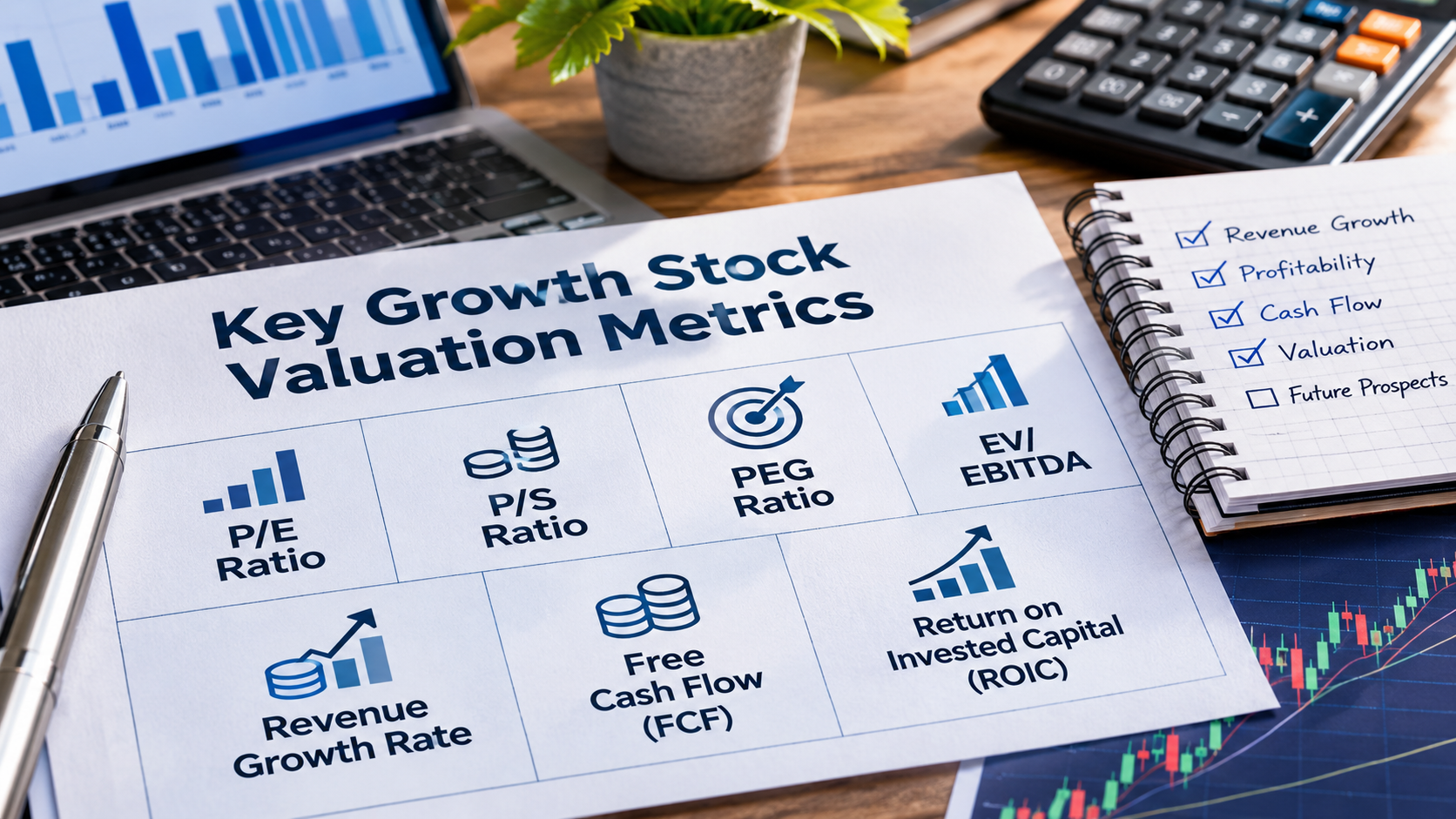
Common indicators include the price-to-earnings (P/E) ratio, price-to-sales (P/S) ratio and enterprise value-to-EBITDA. These ratios should be compared to previous valuations, industry peers and the company's predicted growth.
A lower valuation doesn't necessarily represent an excellent opportunity, and a greater valuation doesn't signal a company is overvalued.
Risk Considerations
Even financial strength and a good competitive position do not remove the danger of investment. A well-established ASX company can endure a drop in profitability, changes in management, growing costs, regulatory issues and changes in client demand. Future performance might also be impacted by economic conditions and industry upheaval. In terms of analysing quality equities in Australia, investors should consider a range of financial and operational variables, rather than a single signal.
Disclaimer:
General Financial Product Advice and Regulatory Framework: Pristine Gaze Pty Ltd (ABN 66 680 815 678, ACN 680 815 678) operates as Corporate Authorised Representative (CAR No. 001312049) of Alpha Securities Pty Ltd (AFSL 330757), which is licensed and regulated by the Australian Securities and Investments Commission under the Corporations Act 2001 (Cth). This report contains general financial product advice only and has been prepared without consideration of your personal objectives, financial situation, specific needs, circumstances, or investment experience. The information is not tailored to individual circumstances and may not be suitable for your particular situation. Before acting on any information contained herein, you should carefully consider its appropriateness having regard to your personal objectives, financial situation, and needs, and consider seeking personal financial advice from a qualified financial adviser who can assess your individual circumstances and provide tailored recommendations.
Investment Risks and Market Warnings: All investments carry significant risk, and different investment strategies may carry varying levels of risk exposure including total loss of invested capital. The value of investments and income derived from them can fluctuate significantly due to market conditions, economic factors, company-specific events, regulatory changes, commodity price volatility, currency fluctuations, interest rate movements, and other factors beyond our control. Securities markets are subject to market risk from general economic conditions and investor sentiment, liquidity risk affecting the ability to buy or sell securities at desired prices, credit risk from issuer default or deterioration, operational risk from inadequate internal processes, sector-specific risks including industry regulatory changes, technology obsolescence, management changes, competitive pressures, supply chain disruptions, and mining-specific risks including resource estimation uncertainty, operational hazards, environmental compliance, permitting delays, commodity price cycles, geopolitical factors affecting mining operations, and exploration risks. Small-cap and speculative mining stocks carry additional risks including limited liquidity, higher volatility, dependence on key personnel, limited operating history, uncertain cash flows, and potential failure to achieve commercial production.
Information Accuracy and Limitations: While we endeavour to ensure information accuracy and reliability, we make no representations or warranties (express or implied) regarding the accuracy, reliability, completeness, timeliness, or suitability of information provided, except where liability cannot be excluded under applicable law. This report may include information from third-party sources including company announcements, regulatory filings, research reports, market data providers, financial news services, and publicly available information, which we do not independently verify and for which we assume no responsibility. Past performance, examples, historical data, or projections are not indicative of future results, and no guarantee of future returns is provided or implied. To the maximum extent permitted by law, Pristine Gaze Pty Ltd and Alpha Securities Pty Ltd, together with their respective directors, officers, employees, representatives, and related entities, exclude all liability for any errors, omissions, inaccuracies, loss or damage (including direct, indirect, consequential, or special damages) arising from reliance on information provided, investment decisions made based on this report, market losses, opportunity costs, and technical issues or system failures.
Frequently Asked Questions
Common questions about investing and market research to help guide your decisions.