2 Long Term ASX Stocks Aligned With great Demographic Trends

Short-term market movements come and go, but demographic trends move slowly and with remarkable persistence. One of the most powerful forces shaping Australia’s economy over the coming decades is an ageing population. People are living longer, managing chronic conditions for more years, and relying more heavily on healthcare services as they age. 

For investors who look beyond cycles and focus on structural demand, businesses that sit close to everyday healthcare needs can offer long-term relevance. Two ASX-listed companies that align closely with these demographic shifts are Sigma Healthcare Ltd and Regis Healthcare Ltd. They operate in different parts of the healthcare system, but both are supported by the same underlying trend: an older population that needs more care, more often. 

The demographic backdrop that matters 

Australia’s population profile is changing steadily. The proportion of people aged 65 and above continues to rise, and the fastest-growing cohort is those over 80. This has clear and lasting consequences: 

  1. Prescription medicine use increases with age 
  1. Chronic conditions require ongoing treatment rather than one-off care 
  1. Demand for residential aged care grows as mobility and independence decline 
  1. Interaction with healthcare systems becomes more frequent and more complex 

These changes are not driven by economic cycles or consumer sentiment. They are driven by biology and longevity. Companies positioned at essential points in the healthcare chain are therefore exposed to demand that builds gradually over time rather than fluctuating sharply. 

Sigma Healthcare: embedded in everyday health needs 

Sigma Healthcare plays a foundational role in Australia’s healthcare system. It is one of the country’s largest pharmaceutical wholesalers, distributing medicines and health products to pharmacies across the nation. In addition, it supports a range of pharmacy brands and independent pharmacy models, helping them compete and operate efficiently. 

This positioning places Sigma close to the daily health needs of Australians. Pharmacies are not occasional destinations. For many people, especially older Australians, they are regular points of contact for prescriptions, advice, and health management. 

Why ageing supports Sigma’s relevance 

As people age, medicine usage tends to rise rather than fall. Conditions such as diabetes, cardiovascular disease, arthritis, and respiratory issues often require lifelong medication. This drives consistent prescription volumes flowing through pharmacies. 

From Sigma’s perspective, that translates into: 

  1. Higher underlying distribution volumes over time 
  1. Continued relevance of pharmacy networks as community health hubs 
  1. Stable demand for logistics, supply reliability, and inventory management 

Because Sigma operates behind the scenes, it does not rely on brand-driven consumer behaviour. Its business is linked to healthcare utilisation itself. That makes demographic alignment particularly powerful. 

Long-term implications 

Sigma’s growth is not about sudden expansion or breakthrough innovation. It is about being part of a system where demand rises incrementally but persistently. As Australia’s population ages, the total volume of medicines moving through the healthcare system increases. Sigma benefits simply by being essential to that flow. 

Execution still matters. Pricing pressure, regulatory change, and pharmacy competition all influence outcomes. But the direction of demand is anchored by demographics, not fashion or discretionary spending. 

Regis Healthcare: responding to the reality of ageing 

While Sigma supports healthcare access in the community, Regis Healthcare operates further along the ageing curve. It focuses on residential aged care, providing accommodation, daily living support, and clinical care to older Australians who can no longer live independently. 

Aged care is not discretionary. Families do not choose it for convenience or lifestyle reasons. They turn to it when physical, cognitive, or medical needs make independent living impossible. 

Why demographics favour aged care providers 

The number of Australians aged over 80 is expected to continue rising for decades. This age group has the highest likelihood of requiring residential care, often for extended periods. 

For operators like Regis, this means: 

  1. A growing pool of potential residents 
  1. Longer average stays as life expectancy increases 
  1. Greater complexity of care, increasing the intensity of services provided 

Government policy plays a major role in aged care funding and regulation, but the underlying demand does not disappear when policies change. The need for care remains, even as systems adapt. 

Structural demand versus operational challenges 

Aged care businesses face real challenges, including labour availability, cost pressures, and regulatory scrutiny. These factors influence margins and short-term performance. However, they do not negate the long-term demand trend. 

Regis operates in a sector where utilisation is driven by demographic reality. Over time, providers that maintain quality standards, manage staffing effectively, and adapt to funding models are positioned to benefit from sustained demand growth. 

What Sigma and Regis have in common 

Although they serve different needs, Sigma Healthcare and Regis Healthcare share several important characteristics that tie them to long-term demographic trends. 

Essential services 
Neither company depends on discretionary spending. Medicines and aged care are necessities in an ageing society. 

Recurring demand 
Customers return regularly. Pharmacies dispense prescriptions month after month. Aged care facilities provide daily services over years. 

Lower sensitivity to economic cycles 
Healthcare usage does not fall sharply during economic slowdowns. People continue to need medication and care regardless of broader conditions. 

Policy relevance 
Both sectors are central to public health outcomes, ensuring ongoing government involvement and funding frameworks, even as reforms evolve. 

What will shape outcomes from here 

Demographic alignment provides opportunity, but it does not guarantee success. For these companies, execution will determine how effectively they capture structural demand. 

For Sigma Healthcare, key considerations include maintaining supply reliability, managing margins in a competitive environment, and supporting pharmacy partners through regulatory change. 

For Regis Healthcare, the focus remains on care quality, workforce stability, and adapting to funding and compliance requirements while maintaining sustainable operations. 

Investors following these businesses should pay attention to operational discipline rather than short-term sentiment. 

Thinking in decades, not quarters 

Demographic trends unfold slowly, but they are among the most reliable drivers of long-term demand. An ageing population is not a forecast. It is already happening. 

Sigma Healthcare and Regis Healthcare sit at different points along the healthcare journey, but both are aligned with this powerful shift. Their services become more relevant as the population ages, not less. 

For investors who prioritise structural themes over short-term market noise, businesses embedded in essential healthcare services offer something increasingly rare: demand that grows quietly, steadily, and predictably over time. 

Disclaimer:

General Financial Product Advice and Regulatory Framework: Pristine Gaze Pty Ltd (ABN 66 680 815 678, ACN 680 815 678) operates as Corporate Authorised Representative (CAR No. 001312049) of Alpha Securities Pty Ltd (AFSL 330757), which is licensed and regulated by the Australian Securities and Investments Commission under the Corporations Act 2001 (Cth). This report contains general financial product advice only and has been prepared without consideration of your personal objectives, financial situation, specific needs, circumstances, or investment experience. The information is not tailored to individual circumstances and may not be suitable for your particular situation. Before acting on any information contained herein, you should carefully consider its appropriateness having regard to your personal objectives, financial situation, and needs, and consider seeking personal financial advice from a qualified financial adviser who can assess your individual circumstances and provide tailored recommendations.

Investment Risks and Market Warnings: All investments carry significant risk, and different investment strategies may carry varying levels of risk exposure including total loss of invested capital. The value of investments and income derived from them can fluctuate significantly due to market conditions, economic factors, company-specific events, regulatory changes, commodity price volatility, currency fluctuations, interest rate movements, and other factors beyond our control. Securities markets are subject to market risk from general economic conditions and investor sentiment, liquidity risk affecting the ability to buy or sell securities at desired prices, credit risk from issuer default or deterioration, operational risk from inadequate internal processes, sector-specific risks including industry regulatory changes, technology obsolescence, management changes, competitive pressures, supply chain disruptions, and mining-specific risks including resource estimation uncertainty, operational hazards, environmental compliance, permitting delays, commodity price cycles, geopolitical factors affecting mining operations, and exploration risks. Small-cap and speculative mining stocks carry additional risks including limited liquidity, higher volatility, dependence on key personnel, limited operating history, uncertain cash flows, and potential failure to achieve commercial production.

Information Accuracy and Limitations: While we endeavour to ensure information accuracy and reliability, we make no representations or warranties (express or implied) regarding the accuracy, reliability, completeness, timeliness, or suitability of information provided, except where liability cannot be excluded under applicable law. This report may include information from third-party sources including company announcements, regulatory filings, research reports, market data providers, financial news services, and publicly available information, which we do not independently verify and for which we assume no responsibility. Past performance, examples, historical data, or projections are not indicative of future results, and no guarantee of future returns is provided or implied. To the maximum extent permitted by law, Pristine Gaze Pty Ltd and Alpha Securities Pty Ltd, together with their respective directors, officers, employees, representatives, and related entities, exclude all liability for any errors, omissions, inaccuracies, loss or damage (including direct, indirect, consequential, or special damages) arising from reliance on information provided, investment decisions made based on this report, market losses, opportunity costs, and technical issues or system failures.
BHP

What Recent Developments Mean for BHP Group Ltd

When a company as large and influential as BHP makes strategic and operational adjustments, the implications extend well beyond its own balance sheet. BHP sits at the centre of global supply chains for iron ore, copper and other essential materials, so changes in its direction often signal how the wider resources sector is evolving. 

Recent developments at BHP point to a company refining its priorities rather than reinventing itself. The focus is on discipline, execution and positioning for long-term demand, while maintaining the scale and reliability that underpin its role as one of the world’s leading miners. Understanding what these changes mean helps frame how BHP fits into the global resources picture going forward. 

A clearer focus on capital discipline 

One of the most important themes emerging from BHP’s recent updates is tighter capital allocation. Large mining projects take many years to develop and require billions in upfront investment. Cost overruns and delays can quickly erode returns, so capital discipline has become a defining feature of successful operators. 

BHP has been signalling a preference for concentrating investment on assets where it already has scale, infrastructure and operating expertise. This approach reduces execution risk and avoids spreading capital too thinly across marginal opportunities. 

What this means in practice is a sharper distinction between core assets that generate reliable cash flow and growth projects that must meet strict return thresholds. For investors, this suggests BHP is prioritising predictable value creation over expansion for expansion’s sake. 

Iron ore remains the financial anchor 

Iron ore continues to play a central role in BHP’s earnings profile. Despite cyclical swings in steel demand, high-quality iron ore remains essential for global construction, infrastructure and manufacturing. 

Recent operational updates highlight a focus on maintaining reliability and cost efficiency in BHP’s iron ore operations. In mining, consistency matters as much as volume. Reliable shipments and stable operating costs help smooth earnings, even when commodity prices fluctuate. 

This steady cash generation from iron ore gives BHP flexibility. It funds dividends, supports balance sheet strength and provides capital to invest in other commodities without excessive financial strain. 

Copper and the long-term demand story 

Alongside iron ore, copper has become increasingly prominent in BHP’s strategy. Copper demand is closely linked to electrification, renewable energy infrastructure and electric vehicles. These trends are structural rather than cyclical, which makes copper attractive from a long-term planning perspective. 

Recent developments suggest BHP is working to advance existing copper assets and improve operational performance, while also assessing future growth options. The emphasis is on quality and scale rather than chasing volume at any cost. 

For a company of BHP’s size, even incremental improvements in copper production can have a meaningful impact on earnings over time. More importantly, copper provides diversification away from bulk commodities and aligns the portfolio with long-duration global demand trends. 

Operational reliability as a value driver 

Mining companies often rise or fall on their ability to execute consistently. Unplanned outages, weather disruptions and logistical issues can quickly affect output and costs. 

BHP has been highlighting efforts to improve operational reliability across its portfolio. This includes maintenance programs, infrastructure upgrades and more disciplined planning. While these initiatives rarely grab headlines, they matter because they reduce volatility in production and unit costs. 

From a valuation perspective, predictable operations lower risk. When investors have greater confidence in output and cost structures, the discount applied to future earnings tends to shrink. 

Project milestones and delivery credibility 

Large-scale mining projects are judged not only on their potential returns, but on whether they are delivered on time and within budget. Recent milestones across parts of BHP’s project pipeline suggest steady progress rather than aggressive expansion. 

This measured approach reflects lessons learned across the industry. Projects that move forward methodically, with clear milestones and transparent communication, tend to build trust with both investors and regulators. 

For BHP, maintaining a reputation for delivery credibility supports its ability to secure approvals, attract partners and allocate capital efficiently in the future. 

Competitive position in a changing sector 

BHP operates in a competitive global environment alongside other large diversified miners. Scale remains a significant advantage, but it must be paired with flexibility and strategic clarity. 

As competition for high-quality resources intensifies, particularly in copper and other transition metals, timing and discipline become crucial. BHP’s recent actions suggest it is aware that not every opportunity needs to be pursued, and that selective investment often delivers better long-term outcomes. 

Sustainability and social expectations 

Another important development shaping BHP’s outlook is the growing emphasis on environmental and social performance. Mining companies face increasing scrutiny from governments, communities and investors. 

BHP has been expanding its focus on emissions reduction, safety, community engagement and transparency. While these initiatives can increase costs in the short term, they also reduce the risk of disruptions, delays and loss of social licence over time. 

In capital-intensive industries, stability matters. Projects that maintain community support and meet regulatory expectations are more likely to deliver consistent returns across decades. 

What all this adds up to 

Taken together, recent developments at BHP point to a company reinforcing its foundations rather than chasing dramatic change. The strategy can be summarised in a few key ideas: 

  1. Protect and optimise core cash-generating assets 
  1. Allocate capital with discipline and patience 
  1. Align growth exposure with long-term demand trends 
  1. Improve operational reliability to reduce earnings volatility 
  1. Embed sustainability into long-term planning 

This is not a story of rapid transformation, but of steady positioning. For a company of BHP’s scale, that steadiness can be a strength. 

The bigger picture 

BHP’s role in the global economy means its decisions matter beyond its own performance. By focusing on execution, capital discipline and future-facing commodities, BHP is aiming to remain relevant in a world where resource demand is changing, but not disappearing. 

Recent developments suggest a company that understands its responsibility as a major supplier of essential materials, and one that is adapting without losing sight of what has historically made it successful. 

Disclaimer:

General Financial Product Advice and Regulatory Framework: Pristine Gaze Pty Ltd (ABN 66 680 815 678, ACN 680 815 678) operates as Corporate Authorised Representative (CAR No. 001312049) of Alpha Securities Pty Ltd (AFSL 330757), which is licensed and regulated by the Australian Securities and Investments Commission under the Corporations Act 2001 (Cth). This report contains general financial product advice only and has been prepared without consideration of your personal objectives, financial situation, specific needs, circumstances, or investment experience. The information is not tailored to individual circumstances and may not be suitable for your particular situation. Before acting on any information contained herein, you should carefully consider its appropriateness having regard to your personal objectives, financial situation, and needs, and consider seeking personal financial advice from a qualified financial adviser who can assess your individual circumstances and provide tailored recommendations.

Investment Risks and Market Warnings: All investments carry significant risk, and different investment strategies may carry varying levels of risk exposure including total loss of invested capital. The value of investments and income derived from them can fluctuate significantly due to market conditions, economic factors, company-specific events, regulatory changes, commodity price volatility, currency fluctuations, interest rate movements, and other factors beyond our control. Securities markets are subject to market risk from general economic conditions and investor sentiment, liquidity risk affecting the ability to buy or sell securities at desired prices, credit risk from issuer default or deterioration, operational risk from inadequate internal processes, sector-specific risks including industry regulatory changes, technology obsolescence, management changes, competitive pressures, supply chain disruptions, and mining-specific risks including resource estimation uncertainty, operational hazards, environmental compliance, permitting delays, commodity price cycles, geopolitical factors affecting mining operations, and exploration risks. Small-cap and speculative mining stocks carry additional risks including limited liquidity, higher volatility, dependence on key personnel, limited operating history, uncertain cash flows, and potential failure to achieve commercial production.

Information Accuracy and Limitations: While we endeavour to ensure information accuracy and reliability, we make no representations or warranties (express or implied) regarding the accuracy, reliability, completeness, timeliness, or suitability of information provided, except where liability cannot be excluded under applicable law. This report may include information from third-party sources including company announcements, regulatory filings, research reports, market data providers, financial news services, and publicly available information, which we do not independently verify and for which we assume no responsibility. Past performance, examples, historical data, or projections are not indicative of future results, and no guarantee of future returns is provided or implied. To the maximum extent permitted by law, Pristine Gaze Pty Ltd and Alpha Securities Pty Ltd, together with their respective directors, officers, employees, representatives, and related entities, exclude all liability for any errors, omissions, inaccuracies, loss or damage (including direct, indirect, consequential, or special damages) arising from reliance on information provided, investment decisions made based on this report, market losses, opportunity costs, and technical issues or system failures.

Pantoro Gold Ltd

How Execution Risks Could Impact Pantoro Gold Ltd (ASX: PNR)

Pantoro Gold has rebuilt itself around the Norseman gold project in Western Australia, and in doing so it has moved from being an explorer with ambition to a producer with expectations. Production milestones, strong drilling activity and a visible cash build have helped shape a positive narrative. But in mining, assets do not create value on their own. Execution does. 

For mid-tier gold producers like Pantoro, execution risk is often the difference between a good story and a durable business. Below is a clear, practical look at the key execution risks that could shape Pantoro’s outcomes over time, why each matters, and which signals are worth watching as the company continues to scale. 

Mining sequence and ground conditions: small issues, large consequences 

Every mine plan assumes certain ground conditions. When reality deviates, even slightly, schedules can shift. Open pit and underground mining both depend on stable ground, predictable rock behaviour and safe access to ore. 

Pantoro has already experienced minor geotechnical slips at Norseman that delayed part of the open pit sequence by around a month. While this was not catastrophic, it highlights how sensitive production schedules can be. A short delay can change the timing of ore delivery, alter grade profiles for a quarter and lift unit costs while remediation work is completed. 

The key here is not whether issues occur, because they inevitably do in mining, but how quickly they are resolved and how transparently they are communicated. Pantoro disclosed the issue early and adjusted sequencing, which is constructive. Investors should continue to watch for updates on pit progression, sequencing changes and any further references to ground stability. 

Underground development and drilling: the engine of future growth 

Pantoro’s long-term value rests heavily on its ability to convert exploration success into mineable inventory. That process depends on underground development, decline rehabilitation and drilling programs running on schedule. 

The company has outlined a very large drilling program, with thousands of metres planned to extend known mineralisation and test new targets. This scale creates opportunity, but it also raises execution risk. Drilling delays, slower-than-expected assay turnaround or underwhelming results can all push back resource upgrades and production growth. 

What matters is consistency. Are drilling metres being completed in line with plan? Are results frequent enough to build confidence? Are underground access works progressing so rigs can reach priority targets? These are operational details, but they directly influence how quickly Pantoro can turn geological potential into sustained output. 

Processing plant reliability: where ounces become cash 

Mining tonnes is only half the equation. The processing plant must operate reliably to convert ore into gold and revenue. During production ramp-ups, plants are often under the most stress, as throughput increases and maintenance regimes are tested. 

Pantoro’s recent quarters showed solid processing performance and margins, which is encouraging. However, maintaining that performance as volumes rise is critical. Unplanned outages, mechanical failures or reagent supply issues can quickly erode margins and disrupt cash flow. 

Signals to watch include plant availability metrics, commentary on unplanned downtime and evidence that higher throughput is being achieved without a corresponding increase in interruptions. Reliable processing underpins confidence in the entire operation. 

Contractors and supply chains: execution beyond the mine gate 

Pantoro’s plans rely heavily on contractors, specialist equipment and steady supply chains. Drilling rigs, skilled crews, consumables and fuel must all arrive on time and perform as expected. 

As activity ramps up, coordination becomes more complex. Multiple rigs and contractors increase output potential, but they also increase operational risk if availability tightens or performance varies. In mining, contractor bottlenecks often show up as cost creep or subtle schedule slippage before they are explicitly acknowledged. 

Investors should pay attention to cost commentary in quarterly reports. Rising costs without clear geological or operational explanations can be an early signal that execution pressure is building. 

Resource conversion: exploration success must be repeatable 

Exploration is inherently uncertain. One good intercept does not guarantee continuity, and not every target becomes a mine. For Pantoro, expectations around Norseman include extending mine life and lifting production through successful drilling. 

Execution risk here lies in conversion. Are drill results consistent across multiple zones? Are resources being upgraded and converted into reserves? Are mine plans being updated to reflect new confidence? 

Resource and reserve statements are critical checkpoints. They move the story from promise to proof. A steady cadence of upgrades supports confidence, while long gaps without conversion can raise questions about the depth of the opportunity. 

Permitting and community engagement: quieter but material risks 

Even in established mining regions, expansions and changes require approvals and community support. Environmental studies, heritage considerations and regulatory reviews can all influence timelines. 

Pantoro operates in a historic mining district, which helps, but modern standards still apply. Unexpected findings or consultation delays can slow development. These risks rarely appear suddenly; they tend to surface gradually through changes in guidance or revised schedules. 

Clear communication around approvals and stakeholder engagement helps reduce uncertainty. Silence or vague updates often do the opposite. 

Capital management: execution is constrained by cash 

Scaling operations and drilling programs requires funding. Pantoro has recently reported a stronger cash position and positive operating cash flow, which reduces near-term pressure. However, aggressive growth plans naturally increase spending. 

Execution risk arises if spending accelerates faster than cash generation. That can force hard choices, such as slowing drilling, deferring development or seeking additional funding. None of these are fatal, but they change the growth trajectory. 

Key indicators here include quarterly cash flow statements, commentary on capital priorities and any changes to planned activity levels. 

How execution risk shapes investor outcomes 

Execution issues tend to flow through to investors in three ways. 

First is timing risk. Delays push cash flows further out, which affects valuation assumptions. 

Second is cost risk. Disruptions usually raise unit costs, compressing margins even if production targets are eventually met. 

Third is credibility risk. Repeated misses, even if individually small, can erode confidence and make the share price more sensitive to negative news. 

The bigger picture for Pantoro 

Pantoro has achieved important milestones and has momentum behind its Norseman project. That gives it a solid foundation. But mining history is full of examples where good assets underdelivered because execution slipped. 

The company’s transparency to date, active drilling program and improving cash position are positive mitigants. The challenge now is consistency. Turning plans into repeatable outcomes quarter after quarter is what separates a promising producer from a dependable one. 

Disclaimer:

General Financial Product Advice and Regulatory Framework: Pristine Gaze Pty Ltd (ABN 66 680 815 678, ACN 680 815 678) operates as Corporate Authorised Representative (CAR No. 001312049) of Alpha Securities Pty Ltd (AFSL 330757), which is licensed and regulated by the Australian Securities and Investments Commission under the Corporations Act 2001 (Cth). This report contains general financial product advice only and has been prepared without consideration of your personal objectives, financial situation, specific needs, circumstances, or investment experience. The information is not tailored to individual circumstances and may not be suitable for your particular situation. Before acting on any information contained herein, you should carefully consider its appropriateness having regard to your personal objectives, financial situation, and needs, and consider seeking personal financial advice from a qualified financial adviser who can assess your individual circumstances and provide tailored recommendations.

Investment Risks and Market Warnings: All investments carry significant risk, and different investment strategies may carry varying levels of risk exposure including total loss of invested capital. The value of investments and income derived from them can fluctuate significantly due to market conditions, economic factors, company-specific events, regulatory changes, commodity price volatility, currency fluctuations, interest rate movements, and other factors beyond our control. Securities markets are subject to market risk from general economic conditions and investor sentiment, liquidity risk affecting the ability to buy or sell securities at desired prices, credit risk from issuer default or deterioration, operational risk from inadequate internal processes, sector-specific risks including industry regulatory changes, technology obsolescence, management changes, competitive pressures, supply chain disruptions, and mining-specific risks including resource estimation uncertainty, operational hazards, environmental compliance, permitting delays, commodity price cycles, geopolitical factors affecting mining operations, and exploration risks. Small-cap and speculative mining stocks carry additional risks including limited liquidity, higher volatility, dependence on key personnel, limited operating history, uncertain cash flows, and potential failure to achieve commercial production.

Information Accuracy and Limitations: While we endeavour to ensure information accuracy and reliability, we make no representations or warranties (express or implied) regarding the accuracy, reliability, completeness, timeliness, or suitability of information provided, except where liability cannot be excluded under applicable law. This report may include information from third-party sources including company announcements, regulatory filings, research reports, market data providers, financial news services, and publicly available information, which we do not independently verify and for which we assume no responsibility. Past performance, examples, historical data, or projections are not indicative of future results, and no guarantee of future returns is provided or implied. To the maximum extent permitted by law, Pristine Gaze Pty Ltd and Alpha Securities Pty Ltd, together with their respective directors, officers, employees, representatives, and related entities, exclude all liability for any errors, omissions, inaccuracies, loss or damage (including direct, indirect, consequential, or special damages) arising from reliance on information provided, investment decisions made based on this report, market losses, opportunity costs, and technical issues or system failures.

Hub24 Ltd

Why Hub24 Ltd (ASX: HUB) Deserves Attention in 2026

Some companies grow quietly for years before their progress becomes obvious. Hub24 Ltd fits that description well. It has spent more than a decade building a platform that financial advisers trust to manage client money, reporting and administration. What makes 2026 feel different is not a single announcement or short-term result, but a visible shift in how the business is positioning itself for its next phase. 

Hub24 is moving from being seen primarily as a high-quality platform utility to becoming a broader advice technology partner. That change has implications for growth, margins and long-term relevance, which is why it deserves close attention.  

A platform that advisers already rely on 

At its core, Hub24 provides the infrastructure that financial advisers use to manage investments, superannuation and reporting for clients. This might sound unexciting, but in wealth management, reliability and flexibility matter more than flashiness. Advisers build their businesses on platforms they trust, and once embedded, switching is disruptive and costly. 

Over recent years, Hub24 has consistently reported strong net inflows, meaning more client assets are being placed on the platform. Funds under administration have steadily increased, and adviser numbers using the platform have continued to rise. These are not cosmetic metrics. In platform businesses, asset flows are the engine that drives recurring revenue. 

What is important is that this momentum has not relied on one-off wins. It has been driven by steady adviser adoption and ongoing migrations, which suggests the platform is being chosen deliberately rather than opportunistically. 

Why 2026 looks like an inflection point 

Hub24’s earlier growth phase was about proving its platform worked and could scale. The next phase is about deepening its role in the advice process itself. That is where 2026 becomes interesting. 

The company has signalled clearly that it wants to be more than a place where assets sit. It wants to help advisers run better, more efficient businesses. This is a meaningful strategic shift. 

Advisers today face a difficult environment. Compliance requirements have increased, client expectations are higher, and producing advice can be time-consuming and costly. Technology that reduces friction in advice creation and delivery is becoming just as important as investment choice. 

Hub24 has started to lean into this reality. 

From platform to ecosystem 

One of the most telling moves has been Hub24’s investment in advice productivity and advice generation software. This is not a random fintech experiment. It is a direct response to a structural problem in the advice industry: too much time spent on process, not enough on clients. 

By connecting advice creation tools with its core platform, Hub24 is positioning itself closer to the front end of the adviser workflow. If advisers can generate, manage and implement advice within a connected environment, Hub24 becomes much harder to replace. 

This ecosystem approach also opens up new revenue opportunities. Instead of earning primarily from administration fees linked to assets, Hub24 can potentially earn more per adviser through software tools, integrations and services. That changes the long-term economics of the business. 

Importantly, this strategy builds on Hub24’s existing strengths. Advisers already trust the platform. Extending that trust into adjacent tools is far easier than trying to sell a standalone product into a crowded market. 

Market structure is working in Hub24’s favour 

The Australian platform market is becoming more concentrated. As regulation and technology costs rise, advisers tend to favour platforms that are stable, well-capitalised and widely supported. Industry discussion increasingly points to a market dominated by a small number of large players. 

Hub24 is now regularly mentioned among those leaders. That shift in perception matters. Advisers often choose platforms they believe will be around for the long term. As Hub24’s scale grows, it becomes a safer choice for licensees and adviser groups planning multi-year strategies. 

Scale also supports pricing discipline. In markets with many small competitors, price pressure can be intense. In more consolidated markets, platforms have greater ability to invest, innovate and maintain sustainable economics. 

Product changes that matter day to day 

Hub24’s recent platform updates have focused on practical improvements rather than cosmetic redesigns. Enhancements to reporting, billing, administration and data handling may not grab headlines, but they directly affect how advisers experience the platform each day. 

These incremental improvements compound over time. Advisers are more likely to consolidate activity onto a platform that reduces friction, saves time and lowers operational risk. This feeds back into higher retention and deeper engagement. 

The key point is that Hub24 is not standing still. It is refining its core while expanding carefully into areas that align with adviser needs. 

Risks that should not be ignored 

While the strategic direction is compelling, there are real risks. 

Building an ecosystem is complex. Integrating new tools, ensuring adoption, and avoiding distraction from the core platform requires disciplined execution. If advisers are slow to adopt productivity tools, returns on those investments could take longer to materialise. 

Regulatory change is another factor. Advice reform, cost pressures or changes in adviser numbers could affect the overall market Hub24 serves. Although the platform benefits from consolidation, a shrinking adviser base would limit growth potential. 

Competition also remains intense. Other platforms are investing heavily in technology and features. Hub24 must continue to innovate to maintain its differentiation. 

What to watch as the year unfolds 

For those tracking Hub24, a few signals matter more than share price movements. 

First, adviser growth and asset inflows. Sustained momentum here confirms the core engine remains strong. 

Second, evidence of multi-product adoption. If advisers begin using productivity tools alongside the platform, it validates the ecosystem strategy. 

Third, continued platform stability and incremental feature improvements. Reliability underpins trust. 

Finally, ongoing support from large dealer groups and licensees. Distribution agreements and migrations signal long-term confidence. 

A simple way to frame the opportunity 

Hub24’s story in 2026 is about evolution rather than reinvention. The platform economics that built the business are still intact. What changes the outlook is the company’s push to capture more of the advice workflow and embed itself deeper into how advisers operate. 

If successful, Hub24 shifts from being a back-office necessity to a front-office enabler. That raises switching costs, expands revenue per adviser, and strengthens long-term competitive position.

Disclaimer:

General Financial Product Advice and Regulatory Framework: Pristine Gaze Pty Ltd (ABN 66 680 815 678, ACN 680 815 678) operates as Corporate Authorised Representative (CAR No. 001312049) of Alpha Securities Pty Ltd (AFSL 330757), which is licensed and regulated by the Australian Securities and Investments Commission under the Corporations Act 2001 (Cth). This report contains general financial product advice only and has been prepared without consideration of your personal objectives, financial situation, specific needs, circumstances, or investment experience. The information is not tailored to individual circumstances and may not be suitable for your particular situation. Before acting on any information contained herein, you should carefully consider its appropriateness having regard to your personal objectives, financial situation, and needs, and consider seeking personal financial advice from a qualified financial adviser who can assess your individual circumstances and provide tailored recommendations.

Investment Risks and Market Warnings: All investments carry significant risk, and different investment strategies may carry varying levels of risk exposure including total loss of invested capital. The value of investments and income derived from them can fluctuate significantly due to market conditions, economic factors, company-specific events, regulatory changes, commodity price volatility, currency fluctuations, interest rate movements, and other factors beyond our control. Securities markets are subject to market risk from general economic conditions and investor sentiment, liquidity risk affecting the ability to buy or sell securities at desired prices, credit risk from issuer default or deterioration, operational risk from inadequate internal processes, sector-specific risks including industry regulatory changes, technology obsolescence, management changes, competitive pressures, supply chain disruptions, and mining-specific risks including resource estimation uncertainty, operational hazards, environmental compliance, permitting delays, commodity price cycles, geopolitical factors affecting mining operations, and exploration risks. Small-cap and speculative mining stocks carry additional risks including limited liquidity, higher volatility, dependence on key personnel, limited operating history, uncertain cash flows, and potential failure to achieve commercial production.

Information Accuracy and Limitations: While we endeavour to ensure information accuracy and reliability, we make no representations or warranties (express or implied) regarding the accuracy, reliability, completeness, timeliness, or suitability of information provided, except where liability cannot be excluded under applicable law. This report may include information from third-party sources including company announcements, regulatory filings, research reports, market data providers, financial news services, and publicly available information, which we do not independently verify and for which we assume no responsibility. Past performance, examples, historical data, or projections are not indicative of future results, and no guarantee of future returns is provided or implied. To the maximum extent permitted by law, Pristine Gaze Pty Ltd and Alpha Securities Pty Ltd, together with their respective directors, officers, employees, representatives, and related entities, exclude all liability for any errors, omissions, inaccuracies, loss or damage (including direct, indirect, consequential, or special damages) arising from reliance on information provided, investment decisions made based on this report, market losses, opportunity costs, and technical issues or system failures.

3 ASX Stocks With Big Global Growth Potential

Global growth doesn’t lift all companies equally. It tends to favour businesses that sit at the centre of trade flows, infrastructure build-outs, and industrial expansion. Some firms benefit because they move goods, some because they supply the materials, and others because they provide the platforms that support modern economies.

On the ASX, three companies stand out for their exposure to these global forces: Goodman Group, Rio Tinto, and Sandfire Resources. Each operates in a different sector, but all are connected to the same underlying theme: growth in trade, industry, data and infrastructure across borders.

Rather than chasing short-term noise, these businesses offer ways to participate in long-term global expansion through real assets, essential materials and scalable platforms.

Goodman Group: Real estate built for a connected world

Goodman Group is often described as a property company, but that label doesn’t fully capture what it does. Its core assets are logistics hubs, industrial parks and large-scale data centre developments. These are the physical foundations of global trade and the digital economy.

Modern commerce depends on efficient storage, fast distribution and reliable data infrastructure. Goods move through warehouses and logistics corridors, while information flows through data centres that support cloud computing, artificial intelligence and digital services. Goodman builds and operates both.

This dual exposure is important. Growth in e-commerce and international trade increases demand for logistics space. At the same time, expansion in cloud services and digital platforms increases demand for data centres. These two trends do not always move in perfect sync, which can help smooth cycles.

Another advantage is scale and partnerships. Goodman regularly works with global pension funds and institutional investors to deliver large projects that smaller developers simply cannot finance or execute alone. That ability to mobilise capital quickly allows it to respond to global demand in a way few competitors can.

For investors, Goodman offers exposure to growth that is physical, structural and repeatable. It is not tied to one country or one industry, but to the infrastructure that supports modern economies as they expand.

Rio Tinto: Industrial growth at global scale

Rio Tinto sits at the opposite end of the value chain. Instead of buildings and platforms, it supplies the raw materials that make growth possible.

Iron ore feeds global steel production. Copper is central to electrification, renewable energy, electric vehicles and grid infrastructure. Aluminium, lithium and other materials support manufacturing, construction and technology. When economies expand, demand for these inputs follows.

Rio’s strength lies in its scale and diversification. It operates some of the world’s largest mining assets and supplies customers across multiple continents. This means it is not dependent on a single market or commodity.

Strategically, the company has been placing greater emphasis on materials linked to long-term structural themes such as electrification and decarbonisation. Copper in particular has become a focus because of its role in power networks, transport and clean energy systems. As infrastructure investment grows globally, copper demand tends to grow with it.

Rio also benefits from being a trusted supplier. Large industrial customers and governments value reliable, high-quality supply chains. That credibility matters when global growth depends not just on demand, but on the ability to deliver at scale.

For investors seeking exposure to global industrial expansion, Rio offers a broad, diversified way to participate in that growth through essential materials rather than consumer trends.

Sandfire Resources: Focused leverage to electrification

Sandfire Resources provides a more concentrated angle on global growth through copper.

Copper is one of the most important metals in the modern economy. It is used in wiring, motors, renewable energy systems, electric vehicles, data infrastructure and industrial machinery. As countries invest in electrification and infrastructure, copper demand rises with them.

Sandfire operates producing assets while also advancing a pipeline of development projects. This combination matters. It allows the company to generate cash from current operations while building optionality for future growth.

Unlike diversified giants, Sandfire offers more direct leverage to the copper theme. Its performance is closely tied to copper demand and project execution, which makes it more sensitive to both upside and downside. But that sensitivity is exactly what attracts investors who want focused exposure to a single global trend.

As electrification, digital infrastructure and industrial expansion continue across regions, copper remains one of the core materials enabling that transformation. Sandfire’s position in this space links it directly to those global forces.

Three different paths to the same theme

Although Goodman, Rio Tinto and Sandfire Resources operate in very different industries, they connect to the same global growth drivers.

Goodman supports the movement of goods and data.
Rio Tinto supplies the materials that build cities, infrastructure and energy systems.
Sandfire provides a key input for electrification and digital infrastructure.

Together, they represent different layers of the global economy: infrastructure, resources and energy transition. This diversity matters because growth does not flow through one channel alone. It moves through supply chains, capital investment, technology and industrial production at the same time.

Why this matters for long-term investors

Global growth is not a straight line. It moves in cycles, phases and waves. But over long horizons, trade, infrastructure and industrial development continue to expand as populations grow, technology advances and economies modernise.

Companies that sit at the structural points of this system tend to benefit repeatedly over time. Not because of hype or trends, but because they provide things the world needs to function and grow.

Goodman provides the space and infrastructure.
Rio provides the materials.
Sandfire provides a critical metal for the next phase of energy and technology development.

A global growth lens, not a short-term trade

These stocks are not about timing market sentiment. They are about positioning within long-term global themes that play out over decades, not months.

For investors thinking in long horizons, exposure to companies aligned with trade flows, infrastructure build-outs and industrial expansion offers a way to participate in global growth without relying on short-term momentum.

Disclaimer:

General Financial Product Advice and Regulatory Framework: Pristine Gaze Pty Ltd (ABN 66 680 815 678, ACN 680 815 678) operates as Corporate Authorised Representative (CAR No. 001312049) of Alpha Securities Pty Ltd (AFSL 330757), which is licensed and regulated by the Australian Securities and Investments Commission under the Corporations Act 2001 (Cth). This report contains general financial product advice only and has been prepared without consideration of your personal objectives, financial situation, specific needs, circumstances, or investment experience. The information is not tailored to individual circumstances and may not be suitable for your particular situation. Before acting on any information contained herein, you should carefully consider its appropriateness having regard to your personal objectives, financial situation, and needs, and consider seeking personal financial advice from a qualified financial adviser who can assess your individual circumstances and provide tailored recommendations.

Investment Risks and Market Warnings: All investments carry significant risk, and different investment strategies may carry varying levels of risk exposure including total loss of invested capital. The value of investments and income derived from them can fluctuate significantly due to market conditions, economic factors, company-specific events, regulatory changes, commodity price volatility, currency fluctuations, interest rate movements, and other factors beyond our control. Securities markets are subject to market risk from general economic conditions and investor sentiment, liquidity risk affecting the ability to buy or sell securities at desired prices, credit risk from issuer default or deterioration, operational risk from inadequate internal processes, sector-specific risks including industry regulatory changes, technology obsolescence, management changes, competitive pressures, supply chain disruptions, and mining-specific risks including resource estimation uncertainty, operational hazards, environmental compliance, permitting delays, commodity price cycles, geopolitical factors affecting mining operations, and exploration risks. Small-cap and speculative mining stocks carry additional risks including limited liquidity, higher volatility, dependence on key personnel, limited operating history, uncertain cash flows, and potential failure to achieve commercial production.

Information Accuracy and Limitations: While we endeavour to ensure information accuracy and reliability, we make no representations or warranties (express or implied) regarding the accuracy, reliability, completeness, timeliness, or suitability of information provided, except where liability cannot be excluded under applicable law. This report may include information from third-party sources including company announcements, regulatory filings, research reports, market data providers, financial news services, and publicly available information, which we do not independently verify and for which we assume no responsibility. Past performance, examples, historical data, or projections are not indicative of future results, and no guarantee of future returns is provided or implied. To the maximum extent permitted by law, Pristine Gaze Pty Ltd and Alpha Securities Pty Ltd, together with their respective directors, officers, employees, representatives, and related entities, exclude all liability for any errors, omissions, inaccuracies, loss or damage (including direct, indirect, consequential, or special damages) arising from reliance on information provided, investment decisions made based on this report, market losses, opportunity costs, and technical issues or system failures.

The Key Drivers Shaping SiteMinder Ltd (ASX: SDR) Outlook

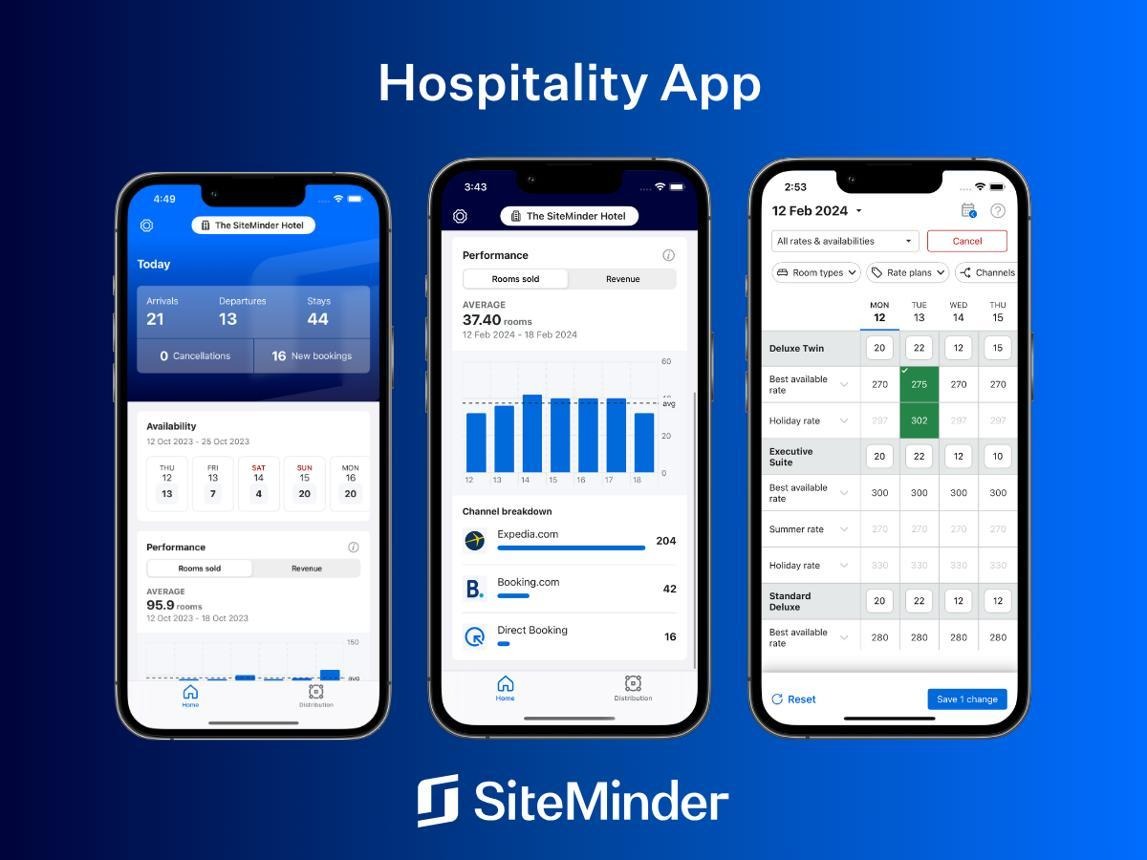
SiteMinder operates in a part of the travel ecosystem that most travellers never see, but hotels rely on every day. It provides the technology that helps accommodation providers manage online distribution, attract guests, and convert interest into confirmed bookings. As travel patterns evolve and hotels become more data-driven, the forces shaping SiteMinder’s outlook are less about short-term tourism swings and more about structural change in how rooms are sold.

Below is a clear, forward-looking look at the key drivers influencing SiteMinder Ltd and why each matters for the company’s medium- to long-term trajectory.

A platform built on reach and scale

One of SiteMinder’s strongest foundations is its global reach. The platform connects tens of thousands of hotels to hundreds of booking channels, including online travel agencies, metasearch platforms, wholesalers, and direct booking tools. This breadth creates a natural advantage.

The more channels SiteMinder supports, the more valuable it becomes to hotels that want visibility everywhere travellers search. At the same time, higher booking volumes strengthen SiteMinder’s relationships with channel partners, reinforcing its position at the centre of hotel distribution.

Scale also creates data depth. Processing millions of bookings gives SiteMinder insight into traveller behaviour, seasonality, pricing trends, and channel performance. That data does not just inform product development; it also reinforces the platform’s credibility with hotels that want evidence-based tools rather than guesswork.

Recurring revenue and ARR momentum

For a subscription-based platform, recurring revenue is the clearest signal of business health. SiteMinder reports annual recurring revenue as a core metric, reflecting fees paid by hotels to access its software over time.

Growth in recurring revenue suggests three things at once: new hotels are joining, existing hotels are staying, and many are expanding their usage of the platform. Unlike transactional models, this creates visibility and predictability.

For SiteMinder, steady ARR growth also shows that hotels continue to view distribution technology as essential rather than optional. Even when travel demand fluctuates, hotels still need to manage pricing, availability, and channel mix efficiently, which supports ongoing subscription value.

Changing booking behaviour favours distribution specialists

Traveller behaviour has shifted significantly over the past decade. Many guests now begin their accommodation search on online travel agencies rather than search engines or hotel websites. That trend increases competition for visibility and pricing accuracy across multiple platforms.

This is where SiteMinder’s core offering becomes critical. Hotels need to update room availability, rates, and restrictions in real time across dozens of channels. Doing this manually is impractical, especially for independent hotels and small chains.

As online travel agencies and metasearch platforms remain central to discovery, the need for reliable channel management grows. SiteMinder’s role is not to replace these channels, but to help hotels manage them intelligently while also supporting direct booking strategies.

Product depth and revenue per customer

SiteMinder has expanded beyond basic channel management. Its product suite includes tools for direct bookings, hotel websites, business intelligence, and a partner marketplace that integrates third-party services.

This depth creates an important growth lever. When a hotel adopts multiple products, SiteMinder increases revenue per customer while also making the relationship more embedded. A hotel using several interconnected tools is less likely to switch providers due to operational disruption.

The long-term opportunity lies in converting a large installed base into multi-product users. Success here depends on product usability, clear value propositions, and effective onboarding. Each additional module strengthens customer stickiness and improves unit economics.

Industry leadership and brand credibility

In hotel technology, trust matters. Distribution errors can lead to overbookings, lost revenue, or damaged guest relationships. SiteMinder has invested in building brand credibility through industry research, awards, and visible participation in hotel technology conversations.

By publishing booking trend reports and traveller behaviour studies, the company positions itself as more than a software vendor. It becomes a source of insight for hoteliers trying to navigate a complex digital landscape.

This thought leadership reinforces brand recognition and helps sales conversations. Hotels are more likely to adopt platforms they see as established, knowledgeable, and widely used across the industry.

Travel recovery and regional expansion

While SiteMinder is not directly dependent on tourism growth, higher travel volumes do support platform usage. More travel means more room nights to sell, more pricing decisions to manage, and more incentive for hotels to invest in technology that maximises revenue.

International travel recovery also matters because SiteMinder operates across many regions. Growth in Asia-Pacific, Europe, and the Americas broadens the addressable market and reduces reliance on any single country’s travel cycle.

That said, travel demand can be uneven. Business travel, leisure travel, and regional tourism often recover at different speeds. SiteMinder’s diversified customer base helps smooth these variations.

Competitive and execution challenges

Despite strong positioning, execution remains critical. SiteMinder operates in a competitive environment that includes niche software providers, property management systems, and booking platforms that may seek to keep hotels within their own ecosystems.

Key risks include:

  1. Slower adoption of additional products by existing customers
  2. Integration complexity as the platform connects with many third-party systems
  3. Pricing pressure if competitors bundle services aggressively

Monitoring churn rates, customer expansion metrics, and product reliability provides insight into how well the company is managing these challenges.

Practical signals to follow

Investors and observers tracking SiteMinder’s outlook should focus on a few tangible indicators:

  1. Trends in annual recurring revenue and customer retention
  2. Growth in bookings processed and channel connections
  3. Uptake of multiple products within the customer base
  4. New integrations and partnerships that expand distribution reach
  5. Published data showing shifts in traveller booking behaviour

Together, these signals show whether structural drivers are translating into sustainable business progress.

A business aligned with long-term hotel needs

SiteMinder’s outlook is shaped less by short-term travel headlines and more by how hotels sell rooms in a digital world. Distribution complexity, data-driven pricing, and multi-channel visibility are not passing trends. They are becoming standard requirements.

By focusing on scale, recurring revenue, product depth, and industry leadership, SiteMinder is aligned with these long-term needs. The key question is not whether travel will fluctuate, but whether hotels will continue to rely on sophisticated platforms to manage that fluctuation.

Disclaimer:

General Financial Product Advice and Regulatory Framework: Pristine Gaze Pty Ltd (ABN 66 680 815 678, ACN 680 815 678) operates as Corporate Authorised Representative (CAR No. 001312049) of Alpha Securities Pty Ltd (AFSL 330757), which is licensed and regulated by the Australian Securities and Investments Commission under the Corporations Act 2001 (Cth). This report contains general financial product advice only and has been prepared without consideration of your personal objectives, financial situation, specific needs, circumstances, or investment experience. The information is not tailored to individual circumstances and may not be suitable for your particular situation. Before acting on any information contained herein, you should carefully consider its appropriateness having regard to your personal objectives, financial situation, and needs, and consider seeking personal financial advice from a qualified financial adviser who can assess your individual circumstances and provide tailored recommendations.

Investment Risks and Market Warnings: All investments carry significant risk, and different investment strategies may carry varying levels of risk exposure including total loss of invested capital. The value of investments and income derived from them can fluctuate significantly due to market conditions, economic factors, company-specific events, regulatory changes, commodity price volatility, currency fluctuations, interest rate movements, and other factors beyond our control. Securities markets are subject to market risk from general economic conditions and investor sentiment, liquidity risk affecting the ability to buy or sell securities at desired prices, credit risk from issuer default or deterioration, operational risk from inadequate internal processes, sector-specific risks including industry regulatory changes, technology obsolescence, management changes, competitive pressures, supply chain disruptions, and mining-specific risks including resource estimation uncertainty, operational hazards, environmental compliance, permitting delays, commodity price cycles, geopolitical factors affecting mining operations, and exploration risks. Small-cap and speculative mining stocks carry additional risks including limited liquidity, higher volatility, dependence on key personnel, limited operating history, uncertain cash flows, and potential failure to achieve commercial production.

Information Accuracy and Limitations: While we endeavour to ensure information accuracy and reliability, we make no representations or warranties (express or implied) regarding the accuracy, reliability, completeness, timeliness, or suitability of information provided, except where liability cannot be excluded under applicable law. This report may include information from third-party sources including company announcements, regulatory filings, research reports, market data providers, financial news services, and publicly available information, which we do not independently verify and for which we assume no responsibility. Past performance, examples, historical data, or projections are not indicative of future results, and no guarantee of future returns is provided or implied. To the maximum extent permitted by law, Pristine Gaze Pty Ltd and Alpha Securities Pty Ltd, together with their respective directors, officers, employees, representatives, and related entities, exclude all liability for any errors, omissions, inaccuracies, loss or damage (including direct, indirect, consequential, or special damages) arising from reliance on information provided, investment decisions made based on this report, market losses, opportunity costs, and technical issues or system failures.

2 ASX Stocks With Rising Free Cash Flow to Watch in 2026

When investors look past headlines and market mood, one metric quietly reveals how strong a business really is: free cash flow. Unlike accounting profit, free cash flow shows how much real cash a company generates after paying for the assets it needs to keep operating. When this number improves, it often signals better discipline, stronger operations and more room to make long-term decisions without financial strain.

Two ASX-listed companies from very different sectors are showing signs of improving free cash flow. One operates in global energy markets, the other in domestic banking. Yet both tell a similar story about execution, balance sheet strength and flexibility.

Why free cash flow deserves attention

Free cash flow matters because it gives management options. Companies with rising free cash flow can reduce debt, invest in growth, absorb shocks or return capital to shareholders. In contrast, businesses that rely heavily on borrowing or equity raisings often lose strategic freedom.

In capital-intensive sectors like energy and regulated industries like banking, improving free cash flow can be a powerful signal that a company is moving into a more stable phase of its cycle.

Santos Ltd: Turning investment into cash generation

Santos Ltd is one of Australia’s largest energy producers, with assets across LNG, natural gas and oil. For several years, Santos has been in a heavy investment phase, funding large-scale projects designed to lift long-term production. That phase is now shifting.

From build phase to harvest phase

Major projects such as Barossa in northern Australia and Pikka in Alaska have absorbed significant capital. As these projects move from construction into production, the financial profile of the business changes. Capital expenditure falls, while operating cash inflows rise.

Barossa has already shipped its first LNG cargo, a key milestone that marks the start of revenue generation rather than cash outflow. Management has indicated that combined projects are expected to lift production meaningfully over the coming years, which helps spread fixed costs and supports stronger operating cash flow.

Evidence in recent cash flow data

Recent full-year disclosures showed Santos generating free cash flow of around US$1.8 billion, even in a period when energy prices were not particularly supportive. This outcome reflects disciplined cost control, steady production and the early contribution of new assets.

What stands out is not just the number, but the direction. Santos is transitioning from spending cash to creating it. That inflection often matters more than absolute levels because it changes how the business can be managed.

Why this shift matters

Improving free cash flow gives Santos several advantages:

  1. It can reduce net debt or maintain conservative leverage through commodity cycles
  2. It gains flexibility to fund future developments without stretching the balance sheet
  3. It can support shareholder returns when conditions allow

For an energy producer exposed to volatile prices, cash flow strength acts as a buffer. It allows the company to stay disciplined even when markets swing.

Bendigo and Adelaide Bank Ltd: Steady cash flow in a complex sector

Bendigo and Adelaide Bank Ltd operates in a very different environment. Banking is heavily regulated, competitive and sensitive to interest rate movements. Yet cash flow remains central to a bank’s ability to invest, comply and reward shareholders.

Improving operating cash trends

Recent financial disclosures show that Bendigo and Adelaide Bank has recorded stronger operating cash flow compared with earlier periods. This improvement reflects a combination of stable net interest income, tighter cost control and disciplined balance sheet management.

In banking, cash flow is influenced by loan growth, deposit stability and operating efficiency. When operating cash improves, it suggests the core business is converting customer activity into usable cash more effectively.

Strategic actions supporting cash generation

The bank’s acquisition of the RACQ Bank loan and deposit portfolio expanded its customer base and funding pool. Over time, broader deposits can support more stable cash inflows, particularly when competition for funding intensifies.

At the same time, the bank continues to invest in technology and platform consolidation. While these investments require upfront spending, the long-term goal is lower operating costs per customer. If executed well, that efficiency feeds directly into stronger free cash flow.

It is also worth noting that the bank has faced regulatory and compliance challenges, which can temporarily weigh on sentiment. However, these issues do not negate the importance of underlying cash flow trends when assessing long-term resilience.

Why free cash flow matters for a bank

For Bendigo and Adelaide Bank, improving cash flow supports:

  1. Investment in systems and compliance without stressing capital
  2. Stability during periods of margin pressure or credit uncertainty
  3. The sustainability of dividends over time

Banks do not grow in dramatic leaps. They compound steadily. Free cash flow is one of the clearest signals that the compounding engine is functioning as intended.

Different industries, similar signal

Santos and Bendigo and Adelaide Bank sit at opposite ends of the ASX. One sells energy into global markets, the other provides financial services domestically. Yet both show improving free cash flow driven by execution rather than favourable headlines.

  1. Santos benefits from major projects moving into production and lowering capital intensity
  2. Bendigo benefits from steady operations, portfolio expansion and efficiency initiatives

In both cases, cash flow improvement reduces reliance on external funding and increases strategic choice.

What investors should keep watching

Free cash flow trends matter most when they are sustainable. Key questions to monitor include:

  1. Are Santos’s new projects delivering consistent volumes and cash margins?
  2. Does Bendigo continue to balance investment spending with operating efficiency?
  3. Are cash flows being used to strengthen balance sheets or fund value-accretive growth?

Answers to these questions help separate temporary improvements from lasting structural change.

Cash flow as the quiet foundation

Free cash flow rarely makes flashy headlines, but it quietly underpins long-term value creation. Companies that improve it gain resilience, optionality and credibility with investors.

For Santos Ltd and Bendigo and Adelaide Bank Ltd, improving free cash flow signals that each business is executing within its own context. One is emerging from a heavy investment cycle, the other is refining a steady banking model. Different paths, same destination: greater financial flexibility and a stronger foundation for the future.

Disclaimer:

General Financial Product Advice and Regulatory Framework: Pristine Gaze Pty Ltd (ABN 66 680 815 678, ACN 680 815 678) operates as Corporate Authorised Representative (CAR No. 001312049) of Alpha Securities Pty Ltd (AFSL 330757), which is licensed and regulated by the Australian Securities and Investments Commission under the Corporations Act 2001 (Cth). This report contains general financial product advice only and has been prepared without consideration of your personal objectives, financial situation, specific needs, circumstances, or investment experience. The information is not tailored to individual circumstances and may not be suitable for your particular situation. Before acting on any information contained herein, you should carefully consider its appropriateness having regard to your personal objectives, financial situation, and needs, and consider seeking personal financial advice from a qualified financial adviser who can assess your individual circumstances and provide tailored recommendations.

Investment Risks and Market Warnings: All investments carry significant risk, and different investment strategies may carry varying levels of risk exposure including total loss of invested capital. The value of investments and income derived from them can fluctuate significantly due to market conditions, economic factors, company-specific events, regulatory changes, commodity price volatility, currency fluctuations, interest rate movements, and other factors beyond our control. Securities markets are subject to market risk from general economic conditions and investor sentiment, liquidity risk affecting the ability to buy or sell securities at desired prices, credit risk from issuer default or deterioration, operational risk from inadequate internal processes, sector-specific risks including industry regulatory changes, technology obsolescence, management changes, competitive pressures, supply chain disruptions, and mining-specific risks including resource estimation uncertainty, operational hazards, environmental compliance, permitting delays, commodity price cycles, geopolitical factors affecting mining operations, and exploration risks. Small-cap and speculative mining stocks carry additional risks including limited liquidity, higher volatility, dependence on key personnel, limited operating history, uncertain cash flows, and potential failure to achieve commercial production.

Information Accuracy and Limitations: While we endeavour to ensure information accuracy and reliability, we make no representations or warranties (express or implied) regarding the accuracy, reliability, completeness, timeliness, or suitability of information provided, except where liability cannot be excluded under applicable law. This report may include information from third-party sources including company announcements, regulatory filings, research reports, market data providers, financial news services, and publicly available information, which we do not independently verify and for which we assume no responsibility. Past performance, examples, historical data, or projections are not indicative of future results, and no guarantee of future returns is provided or implied. To the maximum extent permitted by law, Pristine Gaze Pty Ltd and Alpha Securities Pty Ltd, together with their respective directors, officers, employees, representatives, and related entities, exclude all liability for any errors, omissions, inaccuracies, loss or damage (including direct, indirect, consequential, or special damages) arising from reliance on information provided, investment decisions made based on this report, market losses, opportunity costs, and technical issues or system failures.
2 ASX Stocks Turning Cost Optimisation Into Profit Growth

When economic conditions are uneven and revenue growth is harder to come by, the companies that stand out are often not the loudest innovators but the most disciplined operators. Cost optimisation, when done properly, is not about short-term belt tightening. It is about redesigning how a business works so that profits improve even without perfect market conditions.

On the ASX, Aurizon Holdings and Rio Tinto offer two clear examples of how cost optimisation can become a long-term strategic advantage. They operate in very different industries, but both are using scale, structure and discipline to make their businesses leaner and more resilient.

Why cost optimisation matters beyond a single cycle

In capital-heavy industries, costs tend to creep up over time. Layers of management build, systems become complex, and assets are not always used efficiently. When markets tighten, these inefficiencies are exposed.

True cost optimisation is not about reacting to pressure. It is about simplifying operations, improving asset utilisation and aligning incentives so that efficiency becomes embedded. When done well, this approach can protect margins during downturns and amplify returns when conditions improve.

That is exactly the path Aurizon and Rio Tinto are taking, each in their own way.

Aurizon Holdings: making a fixed network work harder

Aurizon operates Australia’s largest rail freight network, moving bulk commodities such as coal and minerals across long distances. Rail networks are expensive to build and maintain, which means fixed costs are high. Once the tracks and trains are in place, profitability depends on how efficiently those assets are used.

Over recent years, Aurizon has shifted its focus from incremental savings to deeper operational simplification.

Where the cost optimisation is happening

Aurizon has been streamlining its organisational structure, reducing duplication across business units and simplifying decision-making layers. This matters because rail operations rely on coordination between network management, train operations and customer contracts. Fewer layers mean faster decisions and lower overhead.

The company has also been reshaping its commercial contracts. Longer-term agreements with customers provide more predictable volumes, allowing Aurizon to plan crew rosters, maintenance schedules and asset deployment more efficiently. Predictability is a powerful cost lever in a business with large fixed expenses.

At the operational level, improvements in scheduling, maintenance planning and asset utilisation help reduce downtime. When locomotives and wagons spend more time moving freight and less time idle, unit costs naturally fall.

Why this approach supports margins

Because Aurizon’s costs are largely fixed, even modest efficiency gains can have an outsized impact on profitability. Lower overhead per tonne hauled means margins improve without needing higher prices or new routes.

Just as important, reliability improves alongside cost discipline. Customers value consistency, and better service quality strengthens contract renewal prospects. Over time, this creates a reinforcing loop where efficiency supports both margins and revenue stability.

What long-term investors should watch

The key is whether savings are recurring. Investors should look for steady operating cost reductions, improved network reliability metrics and consistent contract renewals. These signals indicate that optimisation is structural, not temporary.

Rio Tinto: turning global scale into disciplined efficiency

Rio Tinto operates on a completely different scale, with mining assets spread across continents and commodities. For a company of this size, cost optimisation is not about small adjustments. It is about portfolio discipline, productivity and capital allocation.

A sharper focus on what matters

Rio Tinto has been simplifying its asset portfolio, focusing on operations that deliver strong returns and scale advantages. By reducing exposure to lower-return or more complex assets, management can concentrate resources on flagship businesses such as iron ore and copper.

This clarity reduces management distraction and lowers overhead tied to marginal operations. It also improves capital efficiency, as investment is directed to projects with clearer payback profiles.

Productivity as a margin lever

At the operational level, Rio Tinto has been targeting productivity improvements across its major mines. Even small reductions in cost per tonne can translate into billions of dollars over time due to the sheer volume of material produced.

Automation, better mine planning and improved maintenance practices all contribute. The goal is not just to cut costs, but to produce more with the same asset base.

Capital discipline strengthens the outcome

Cost optimisation is closely linked to how capital is spent. Rio Tinto has been more selective about new projects, prioritising those that fit its strategic focus and deliver robust returns. This reduces the risk of cost overruns and ensures that future growth does not dilute margins.

Why this matters for long-term performance

When a company with Rio Tinto’s scale improves efficiency, the impact compounds. Higher margins improve cash flow, which in turn gives flexibility to invest, reduce debt or return capital to shareholders. That optionality is a powerful by-product of disciplined cost management.

Same principle, different execution

Aurizon and Rio Tinto show that cost optimisation is not a one-size-fits-all strategy.

Aurizon is refining a regulated, asset-heavy network where reliability and contract structure drive efficiency. Its gains are steady and incremental, built on better utilisation and lower overhead.

Rio Tinto is applying discipline across a global portfolio, using scale and focus to lift productivity and returns. Its optimisation efforts operate at a much larger absolute level but follow the same logic.

In both cases, the objective is the same: make the business stronger regardless of external conditions.

The execution test investors should keep in mind

Cost optimisation stories only hold if execution follows. Warning signs include savings that rely on deferred maintenance, reduced safety margins or one-off asset sales without operational improvement.

More convincing signals include consistent unit cost reductions, stable or improving service levels and clear reporting that shows where efficiencies are coming from.

When efficiency becomes an advantage, not a reaction

Aurizon and Rio Tinto illustrate why cost optimisation can be a core investment theme rather than a defensive tactic. By embedding efficiency into how they operate, both companies reduce downside risk and increase their ability to benefit from future upswings.

Disclaimer:

General Financial Product Advice and Regulatory Framework: Pristine Gaze Pty Ltd (ABN 66 680 815 678, ACN 680 815 678) operates as Corporate Authorised Representative (CAR No. 001312049) of Alpha Securities Pty Ltd (AFSL 330757), which is licensed and regulated by the Australian Securities and Investments Commission under the Corporations Act 2001 (Cth). This report contains general financial product advice only and has been prepared without consideration of your personal objectives, financial situation, specific needs, circumstances, or investment experience. The information is not tailored to individual circumstances and may not be suitable for your particular situation. Before acting on any information contained herein, you should carefully consider its appropriateness having regard to your personal objectives, financial situation, and needs, and consider seeking personal financial advice from a qualified financial adviser who can assess your individual circumstances and provide tailored recommendations.

Investment Risks and Market Warnings: All investments carry significant risk, and different investment strategies may carry varying levels of risk exposure including total loss of invested capital. The value of investments and income derived from them can fluctuate significantly due to market conditions, economic factors, company-specific events, regulatory changes, commodity price volatility, currency fluctuations, interest rate movements, and other factors beyond our control. Securities markets are subject to market risk from general economic conditions and investor sentiment, liquidity risk affecting the ability to buy or sell securities at desired prices, credit risk from issuer default or deterioration, operational risk from inadequate internal processes, sector-specific risks including industry regulatory changes, technology obsolescence, management changes, competitive pressures, supply chain disruptions, and mining-specific risks including resource estimation uncertainty, operational hazards, environmental compliance, permitting delays, commodity price cycles, geopolitical factors affecting mining operations, and exploration risks. Small-cap and speculative mining stocks carry additional risks including limited liquidity, higher volatility, dependence on key personnel, limited operating history, uncertain cash flows, and potential failure to achieve commercial production.

Information Accuracy and Limitations: While we endeavour to ensure information accuracy and reliability, we make no representations or warranties (express or implied) regarding the accuracy, reliability, completeness, timeliness, or suitability of information provided, except where liability cannot be excluded under applicable law. This report may include information from third-party sources including company announcements, regulatory filings, research reports, market data providers, financial news services, and publicly available information, which we do not independently verify and for which we assume no responsibility. Past performance, examples, historical data, or projections are not indicative of future results, and no guarantee of future returns is provided or implied. To the maximum extent permitted by law, Pristine Gaze Pty Ltd and Alpha Securities Pty Ltd, together with their respective directors, officers, employees, representatives, and related entities, exclude all liability for any errors, omissions, inaccuracies, loss or damage (including direct, indirect, consequential, or special damages) arising from reliance on information provided, investment decisions made based on this report, market losses, opportunity costs, and technical issues or system failures.

3 ASX Growth Stocks to Watch for Early Momentum in 2026

In every market cycle, a small group of companies begins to show progress before growth becomes obvious to everyone else. These early signals are rarely loud. They show up in data points such as rising usage, improving economics, expanding footprints, or clearer execution. The companies below operate in very different industries, yet each is displaying early signs that its strategy is starting to gain traction.

This is not about short-term price action. It is about underlying business momentum that can compound over time if execution continues.

1. Catapult Group International

From wearable hardware to data-driven platforms

Catapult built its reputation by supplying wearable tracking devices to elite sports teams. What began as hardware attached to athletes has gradually evolved into something more valuable: a software and analytics platform that helps teams interpret performance, manage workloads, and reduce injury risk.

Where the early growth signals are coming from

Shift toward recurring software revenue
Catapult has been steadily moving away from one-off hardware sales toward subscription-based software and analytics. This matters because software subscriptions create more predictable revenue and longer customer relationships. When teams rely on analytics every day, the relationship becomes ongoing rather than transactional.

Broadening customer base across leagues
The company now works with teams across major global leagues, not just a handful of elite clubs. As leagues standardise performance technology across teams, vendors that are already embedded gain an advantage. Adoption at the league level is often an early indicator of durable growth.

Deeper product usage driving retention
Catapult’s tools are increasingly integrated into training schedules, match preparation, and player health management. The more data teams store and analyse within the platform, the higher the switching cost becomes. Rising retention and multi-year renewals are quiet but powerful growth signals.

Why it matters

In technology businesses, early growth often appears first as stronger engagement rather than headline revenue spikes. Catapult’s transition to analytics-led subscriptions and expanding adoption suggests the company is moving into a more scalable phase of its lifecycle.

2. Hub24 Ltd

Infrastructure quietly powering wealth advice

Hub24 operates behind the scenes of the wealth management industry. Financial advisers use its platform to manage investments, superannuation, reporting, and administration for their clients. The platform does not sell investment products itself. Instead, it provides the infrastructure advisers rely on every working day.

Where the early growth signals are coming from

Consistent net inflows of client assets
One of the clearest indicators of growth for a platform business is funds under administration. Hub24 has continued to report positive net inflows, meaning more assets are flowing onto the platform than leaving it. As assets grow, so does the base from which recurring fees are earned.

Adviser engagement and workflow integration
Hub24 is investing in tools that improve adviser productivity, including reporting, analytics, and integrations with other financial software. When advisers run more of their business through a single platform, usage becomes embedded and switching becomes less attractive.

Ecosystem development through partnerships
Rather than trying to build everything in-house, Hub24 has been expanding through partnerships with fintech and adviser-technology providers. This ecosystem approach increases the platform’s relevance without dramatically increasing complexity.

Why it matters

Early growth for platforms shows up in asset flows and daily usage, not marketing buzz. Hub24’s increasing role in adviser workflows suggests it is evolving from a useful tool into core infrastructure, which is where long-term growth often comes from.

3. Vault Minerals Ltd

Exploration moving toward scale

Vault Minerals operates in the resources sector, focusing on gold and lithium. Exploration companies often attract attention early, but only a few progress beyond initial discovery into projects that show real development potential. Vault is beginning to show signs of that transition.

Where the early growth signals are coming from

Expanding mineralisation through drilling
Recent drilling programs have extended known mineralised zones, particularly at lithium-focused targets. In exploration, consistent intercepts across multiple drill campaigns suggest scale rather than isolated results.

Progress on approvals and project access
Advancing regulatory approvals and land access may not generate headlines, but they significantly reduce development risk. Vault’s steady progress in this area signals that projects are being positioned for the next stage of evaluation.

Exposure to structurally supported commodities
Lithium demand is driven by long-term battery and electrification trends, while gold continues to play a role in portfolios during uncertain periods. This combination provides both growth and resilience characteristics at the project level.

Why it matters

In mining, early growth is not about production. It is about reducing uncertainty. Each drilling success, approval milestone, and geological upgrade increases the probability that a project can move forward. Vault’s recent progress suggests it is passing through that early filter.

What these companies have in common

Despite operating in completely different sectors, Catapult, Hub24, and Vault share several underlying traits:

  1. Evidence before expectation
    Each company is showing measurable progress rather than relying on narrative alone.
  2. Growing engagement with core users
    Teams, advisers, and stakeholders are increasing their reliance on these platforms or projects.
  3. Clear execution paths
    None of these stories depend on a single event. They rely on repeated delivery over time.

Early growth rarely looks dramatic. It looks like steady improvement in the metrics that matter most to the business.

What to watch going forward

Rather than focusing on share price movement, investors tracking early growth stories should watch operational indicators:

  1. For Catapult, customer retention, software adoption, and subscription expansion
  2. For Hub24, net inflows, adviser engagement, and platform usage depth
  3. For Vault Minerals, drilling consistency, resource updates, and permitting progress

These are the signals that confirm whether early momentum is turning into sustainable growth.

Quiet momentum can be powerful

Early growth does not announce itself with certainty. It builds through repeatable execution and increasing relevance. Catapult, Hub24, and Vault Minerals are each showing signs that their strategies are beginning to translate into tangible progress.

Disclaimer:

General Financial Product Advice and Regulatory Framework: Pristine Gaze Pty Ltd (ABN 66 680 815 678, ACN 680 815 678) operates as Corporate Authorised Representative (CAR No. 001312049) of Alpha Securities Pty Ltd (AFSL 330757), which is licensed and regulated by the Australian Securities and Investments Commission under the Corporations Act 2001 (Cth). This report contains general financial product advice only and has been prepared without consideration of your personal objectives, financial situation, specific needs, circumstances, or investment experience. The information is not tailored to individual circumstances and may not be suitable for your particular situation. Before acting on any information contained herein, you should carefully consider its appropriateness having regard to your personal objectives, financial situation, and needs, and consider seeking personal financial advice from a qualified financial adviser who can assess your individual circumstances and provide tailored recommendations.

Investment Risks and Market Warnings: All investments carry significant risk, and different investment strategies may carry varying levels of risk exposure including total loss of invested capital. The value of investments and income derived from them can fluctuate significantly due to market conditions, economic factors, company-specific events, regulatory changes, commodity price volatility, currency fluctuations, interest rate movements, and other factors beyond our control. Securities markets are subject to market risk from general economic conditions and investor sentiment, liquidity risk affecting the ability to buy or sell securities at desired prices, credit risk from issuer default or deterioration, operational risk from inadequate internal processes, sector-specific risks including industry regulatory changes, technology obsolescence, management changes, competitive pressures, supply chain disruptions, and mining-specific risks including resource estimation uncertainty, operational hazards, environmental compliance, permitting delays, commodity price cycles, geopolitical factors affecting mining operations, and exploration risks. Small-cap and speculative mining stocks carry additional risks including limited liquidity, higher volatility, dependence on key personnel, limited operating history, uncertain cash flows, and potential failure to achieve commercial production.

Information Accuracy and Limitations: While we endeavour to ensure information accuracy and reliability, we make no representations or warranties (express or implied) regarding the accuracy, reliability, completeness, timeliness, or suitability of information provided, except where liability cannot be excluded under applicable law. This report may include information from third-party sources including company announcements, regulatory filings, research reports, market data providers, financial news services, and publicly available information, which we do not independently verify and for which we assume no responsibility. Past performance, examples, historical data, or projections are not indicative of future results, and no guarantee of future returns is provided or implied. To the maximum extent permitted by law, Pristine Gaze Pty Ltd and Alpha Securities Pty Ltd, together with their respective directors, officers, employees, representatives, and related entities, exclude all liability for any errors, omissions, inaccuracies, loss or damage (including direct, indirect, consequential, or special damages) arising from reliance on information provided, investment decisions made based on this report, market losses, opportunity costs, and technical issues or system failures.

Why Smart Investors Keep CBA as a Core Portfolio Stock

When investors talk about “core holdings,” they are usually referring to companies that form the backbone of a portfolio. These are not stocks chosen for short-term excitement, but businesses expected to deliver resilience, steady returns and relevance through many market cycles. In Australia, few companies are discussed in this context as often as Commonwealth Bank of Australia.

CBA’s appeal is not built on novelty. It rests on scale, trust, recurring income and an ability to adapt as the financial system evolves. Looking beyond day-to-day share price movement, there are several reasons why CBA continues to be viewed as a genuine long-term cornerstone for many portfolios.


A franchise deeply embedded in everyday life

CBA’s most powerful advantage is how closely it is woven into daily financial activity across Australia. Millions of individuals use the bank for transaction accounts, savings, mortgages and credit cards. Small and medium businesses rely on it for lending, payments and cash management. Larger institutions engage with it across capital markets and advisory services.

This creates an unusually sticky customer base. Banking relationships are not switched lightly. Once customers have their income, bills, savings and loans tied to a single institution, inertia works strongly in the bank’s favour. Over time, this stickiness translates into predictable deposits and recurring revenue, which are valuable traits for a long-term investment.

Scale that supports stability

Size alone does not guarantee success, but in banking it brings structural benefits. CBA’s large deposit base provides a relatively stable and low-cost source of funding. This helps smooth earnings when credit conditions tighten or competition intensifies.

Scale also allows CBA to absorb economic shocks more effectively than smaller lenders. During periods of stress, larger banks with diversified loan books and strong funding profiles tend to experience fewer forced adjustments. For investors seeking a core holding, this ability to remain standing while conditions change is critical.

Proven resilience through multiple cycles

Over the past few decades, Australia has experienced housing booms, commodity cycles, global financial stress, a pandemic-driven shutdown and periods of rapid monetary tightening. Through all of this, CBA has continued to operate, lend and generate earnings.

This does not mean performance has been smooth or uninterrupted. Banks are cyclical by nature. But CBA’s history shows that it has generally entered downturns with sufficient capital and exited them without permanent damage to its franchise. That pattern matters for investors who prioritise capital preservation alongside returns.

Digital capability as a competitive edge

One reason CBA has held its position is its early and sustained investment in digital banking. The bank’s mobile and online platforms are among the most widely used in the country, processing vast volumes of transactions every day.

Digital capability does more than improve convenience. It lowers servicing costs, improves fraud detection, enhances data-driven risk management and allows products to be delivered at scale without proportional increases in staff or infrastructure. Over time, these efficiencies support margins and customer satisfaction.

In an industry where fintech challengers compete on user experience, CBA’s technology investment helps defend its market share rather than leaving it exposed.

Diversified earnings reduce reliance on one lever

While home lending remains an important part of CBA’s business, it is not the whole story. The bank generates income from business banking, transaction services, wealth-related activities and institutional operations.

This mix matters because different parts of the economy move at different speeds. When credit growth slows, transaction volumes or fee-based services may still hold up. When margins compress, scale and efficiency can soften the impact. Diversification does not eliminate risk, but it helps prevent any single weakness from dominating results.

Capital strength and risk discipline

For a bank, capital is the foundation of trust. Regulators, customers and investors all depend on a strong balance sheet. CBA has historically maintained capital levels that meet or exceed regulatory expectations, providing flexibility during uncertain periods.

Prudent risk management also underpins this strength. Conservative lending standards, ongoing credit monitoring and provisioning discipline reduce the likelihood of sudden shocks. For a core holding, this conservative approach is often preferred over aggressive growth that looks attractive until conditions reverse.

Shareholder returns as part of the equation

Another reason CBA often features in core portfolios is its long-standing approach to shareholder returns. Dividends have been a central part of the investment case for many years, supported by recurring earnings and capital management.

While dividends are never guaranteed and are influenced by regulation and economic conditions, the bank’s track record of returning capital adds an income dimension that complements potential capital growth. For long-term investors, reinvested dividends can play a meaningful role in compounding total returns.

Not without risks, but built to manage them

No bank is immune to macroeconomic forces. Interest rate changes, housing market dynamics, regulatory reforms and competitive pressures all influence outcomes. CBA has faced scrutiny and challenges in the past, as any large financial institution does.

What matters is not the absence of risk, but the ability to manage it. CBA’s scale, capital strength and operational maturity give it tools to respond rather than react. That distinction is often what separates a speculative holding from a core one.

Why CBA fits the core portfolio profile

A core holding is typically expected to do three things well: preserve capital, generate reliable income and participate in long-term growth. CBA’s business model aligns with all three.

  1. It operates a dominant and trusted franchise
  2. It generates recurring cash flows across economic cycles
  3. It invests to remain relevant as banking evolves
  4. It balances growth ambitions with risk discipline

These qualities do not make CBA exciting in the short term, but they do make it dependable over long horizons.

A steady anchor rather than a bold bet

For investors building portfolios meant to endure, the role of a core holding is not to outperform every year, but to provide stability while other positions take on more risk. In that context, Commonwealth Bank of Australia continues to stand out.

Its strength lies not in any single product or trend, but in a combination of trust, scale, adaptability and financial discipline. That combination is why many investors continue to see CBA not just as a bank, but as a long-term anchor within a diversified portfolio.

Disclaimer:

General Financial Product Advice and Regulatory Framework: Pristine Gaze Pty Ltd (ABN 66 680 815 678, ACN 680 815 678) operates as Corporate Authorised Representative (CAR No. 001312049) of Alpha Securities Pty Ltd (AFSL 330757), which is licensed and regulated by the Australian Securities and Investments Commission under the Corporations Act 2001 (Cth). This report contains general financial product advice only and has been prepared without consideration of your personal objectives, financial situation, specific needs, circumstances, or investment experience. The information is not tailored to individual circumstances and may not be suitable for your particular situation. Before acting on any information contained herein, you should carefully consider its appropriateness having regard to your personal objectives, financial situation, and needs, and consider seeking personal financial advice from a qualified financial adviser who can assess your individual circumstances and provide tailored recommendations.

Investment Risks and Market Warnings: All investments carry significant risk, and different investment strategies may carry varying levels of risk exposure including total loss of invested capital. The value of investments and income derived from them can fluctuate significantly due to market conditions, economic factors, company-specific events, regulatory changes, commodity price volatility, currency fluctuations, interest rate movements, and other factors beyond our control. Securities markets are subject to market risk from general economic conditions and investor sentiment, liquidity risk affecting the ability to buy or sell securities at desired prices, credit risk from issuer default or deterioration, operational risk from inadequate internal processes, sector-specific risks including industry regulatory changes, technology obsolescence, management changes, competitive pressures, supply chain disruptions, and mining-specific risks including resource estimation uncertainty, operational hazards, environmental compliance, permitting delays, commodity price cycles, geopolitical factors affecting mining operations, and exploration risks. Small-cap and speculative mining stocks carry additional risks including limited liquidity, higher volatility, dependence on key personnel, limited operating history, uncertain cash flows, and potential failure to achieve commercial production.

Information Accuracy and Limitations: While we endeavour to ensure information accuracy and reliability, we make no representations or warranties (express or implied) regarding the accuracy, reliability, completeness, timeliness, or suitability of information provided, except where liability cannot be excluded under applicable law. This report may include information from third-party sources including company announcements, regulatory filings, research reports, market data providers, financial news services, and publicly available information, which we do not independently verify and for which we assume no responsibility. Past performance, examples, historical data, or projections are not indicative of future results, and no guarantee of future returns is provided or implied. To the maximum extent permitted by law, Pristine Gaze Pty Ltd and Alpha Securities Pty Ltd, together with their respective directors, officers, employees, representatives, and related entities, exclude all liability for any errors, omissions, inaccuracies, loss or damage (including direct, indirect, consequential, or special damages) arising from reliance on information provided, investment decisions made based on this report, market losses, opportunity costs, and technical issues or system failures.