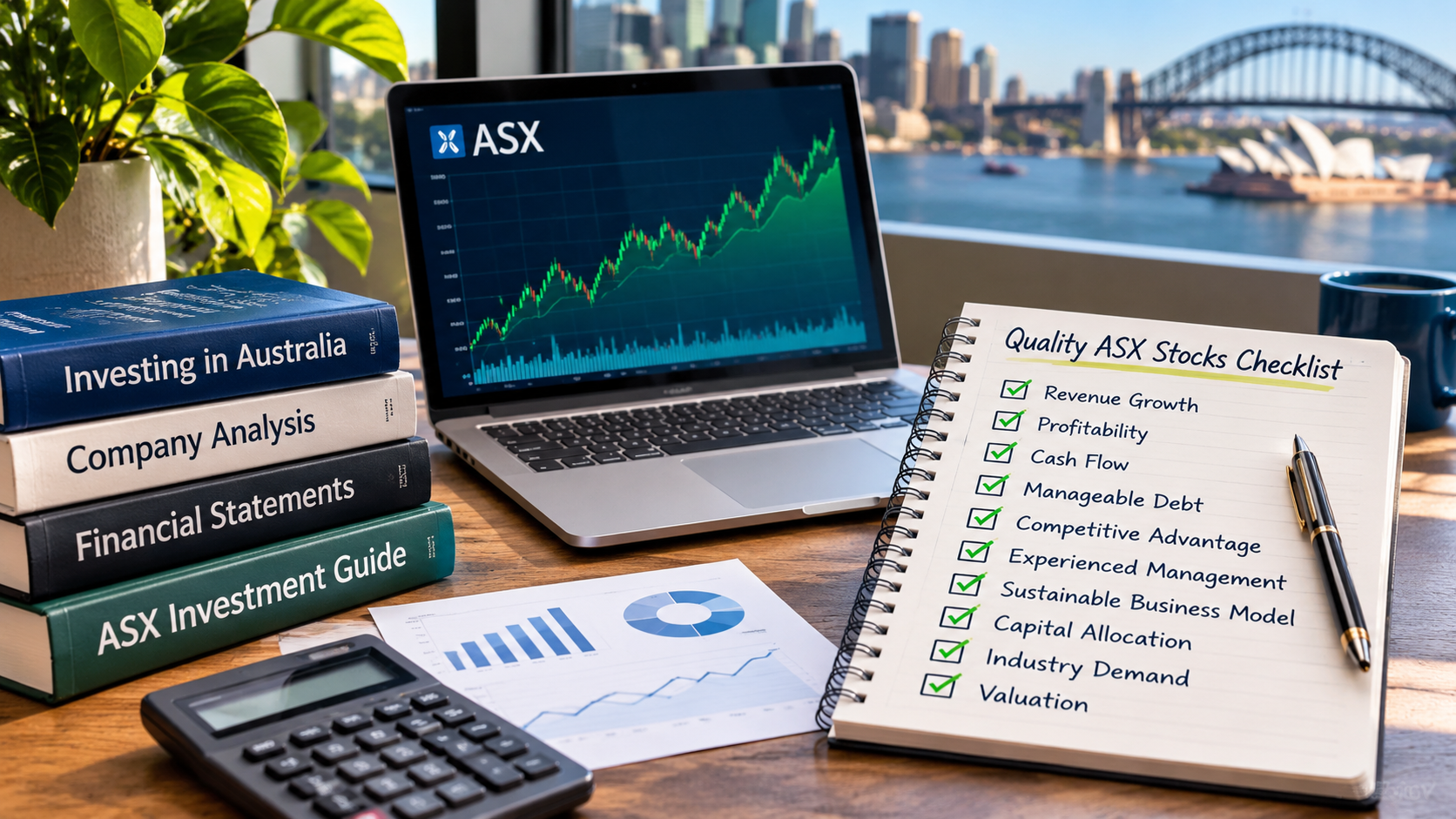
Should You Buy Stocks Every Month?
You are not always required to have a lot of money or great timing to invest in sharemarket. Many Australian investors choose to invest a specific amount consistently rather than waiting for the ideal time to acquire shares. This is often called dollar cost averaging, and it can help make investment more consistent.
Since share values fluctuate with interest rates, corporate revenues, economic conditions and world events it can be tricky to know when to invest. Buying stocks every month is a disciplined strategy to create an investment portfolio over time. But that’s not necessarily the ideal method for all investors. Understanding how it works, the benefits and the restrictions might help you decide if regular investing is right for your financial objectives.
What Is Dollar Cost Averaging?
Dollar cost averaging means that you invest the same amount of money each time, regardless of whether the share prices are going up or down. An investor splits a large sum into smaller installments over a period instead than investing the entire amount at once.
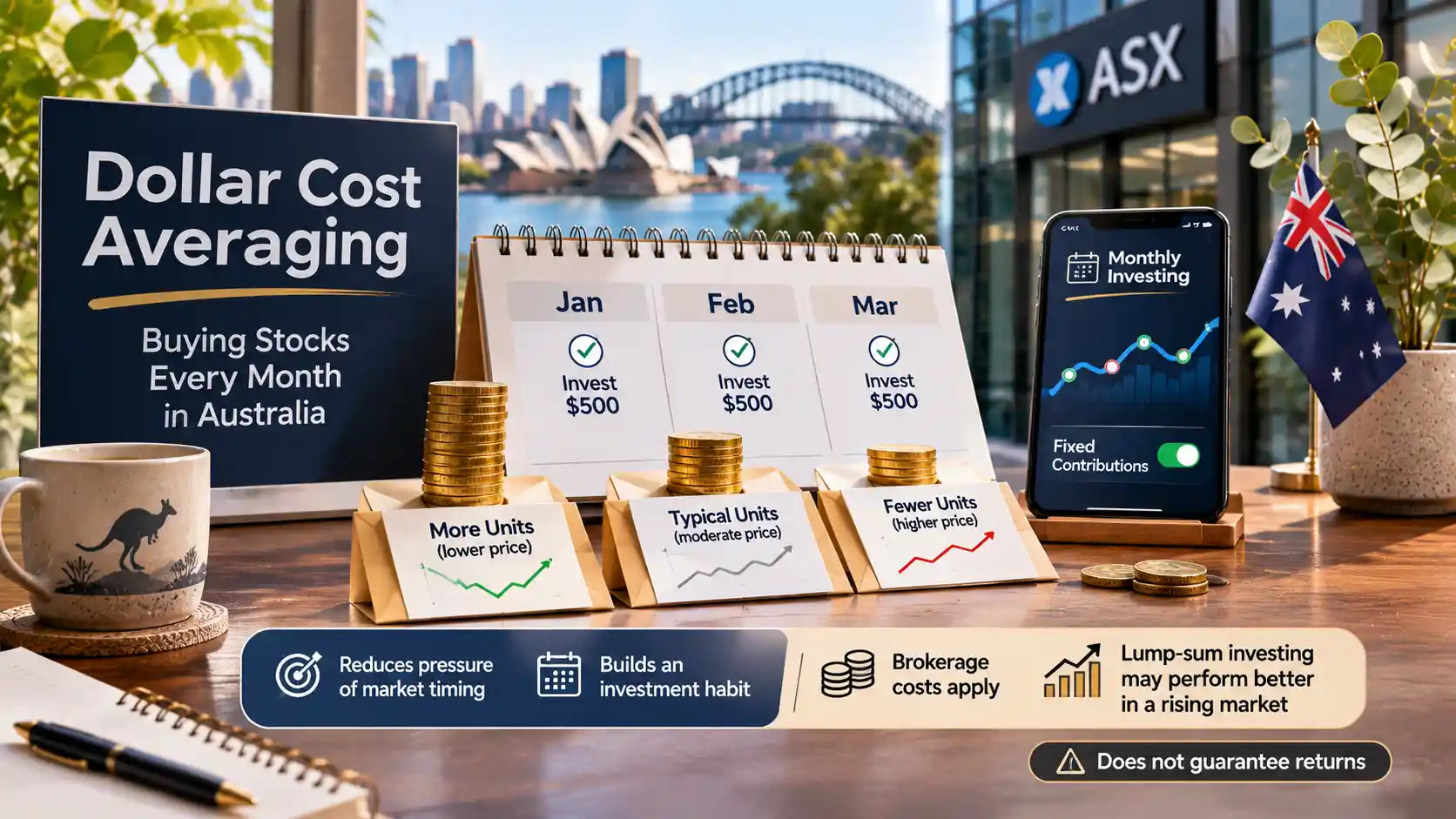
For example, an Australian investor could decide to put $500 a month into shares or an exchange traded fund (ETF). If the share price goes down, you get more units for the same money. When the price goes up, it buys less
This strategy can lead to an average buying price over varying market conditions over time. It also frees you from having to make every investing decision based on short-term market changes.
This is the basic premise of dollar cost averaging in Australia, whereby investors make recurring contributions to slowly gain exposure to the sharemarket.
Why Do Investors Buy Stocks Every Month?
1. Reduces the Pressure of Market Timing
One of the biggest sharemarket investment concerns is timing your buys. Prices move fast and even seasoned investors might struggle to reliably call market tops and bottoms.
Monthly investing removes the need to make a timing decision. Instead of waiting for the market to correct itself or attempting to buy at the absolute lowest price, investors establish a regular timetable.
For example, an investor who invests $500 per month continues to buy in both good and bad markets. This could assist ward off indefinitely delaying investments in expectation of better circumstances.
But regular investing doesn’t guaranty that you won’t face losses if the underlying investment loses value.
2. Builds an Investment Habit
Regular investing might help make your sharemarket involvement a financial habit. Setting away a fixed amount once you get paid can help you put money aside for long-term financial goals.
Also, it can minimise the impulse to react to every market headline. Contributions are on a predetermined schedule rather than frequent decisions depending on investor reaction.
Monthly contributions may be easier for Australian investors with recurring expenses such as rent, mortgage repayments and household bills to fit within a budget than a huge one-off investment.
3. Allows Investors to Buy at Different Prices
Share prices don't go up in a straight line. Regular investing means there are purchases at various price levels which can help spread the entrance point over time.
For example, an investor invests $500 into an investment each month. The contribution can purchase 50 items (unit price = $10). If next month the price drops to $8, the same donation will buy 62.5 units. If the price goes up to $12 later, it gets roughly 41.7 units.
When prices are low, the investor gets more units and when prices are high, the investor gets less. This does not guaranty a profit but can decrease the impact of investing the entire amount at one particular price.
What Are the Disadvantages of Monthly Investing?
While dollar cost averaging can give a disciplined approach to investing, it does have several limits that investors should be aware of.
Brokerage Fees and Other Costs
There could be brokerage costs for buying shares repeatedly every month. For investors contributing relatively small amounts, these charges may represent a considerable fraction of each investment.
Let’s say you paid a brokerage fee on a $200 transaction. That price would have a larger proportional impact than the same fee on a $2,000 buy. Investors should also consider management fees, spreads and other transaction charges related to ETFs.
The frequency and magnitude of the investments should therefore be examined together with the cost of buying and retaining assets.
It Does Not Guarantee Positive Returns
Dollar-cost averaging is a buying strategy, not a risk-avoidance strategy for investing. Regular purchases will not automatically shield the investor from losses if a company does badly or an ETF has assets that fall over a long period.
An investment that is declining can potentially expand exposure to that investment by buying more of it at reduced prices. So, it is still vital to understand the underlying company, fund or asset.
A Rising Market May Favour Investing Earlier
Dollar-cost averaging isn’t always better than investing a big sum. If markets are on a roll for a long time, putting more money in earlier can yield superior returns since more money is exposed to the market for a longer length of time.
This results in some cash not being invested during certain months, as the investments are staggered. If prices keep going up, the investor will lose some of the market’s upside.
It is contingent upon the performance of the market, how long are you investing and when you are contributing to the account.
Which Investments Can You Buy Regularly in Australia?
Australian investors can have exposure to various areas of the sharemarket with monthly contributions. They select based on their investing goals, risk appetite and desired degree of diversification.
Individual ASX shares: Investors can buy shares in listed firms on the ASX across sectors such as banking, healthcare, technology, mining and infrastructure. However, individual companies need to be researched for their financial performance, competitive position, value and business risks.
Exchange-traded funds (ETFs): ETFs give you access to a basket of securities in one investment. For example, an Australian sharemarket ETF may track a broad market index, whereas an international ETF may give exposure to global companies. ETFs can provide diversity, but their holdings, fees and investment risks differ.
Diversified investment funds: Some managed funds and other investment products offer exposure to diverse asset classes or markets. Before making regular contributions, investors should be aware of their investing strategy, fees and liquidity.
Some brokers and investment platforms also provide regular investment programmes and minimum purchase quantities.
How Much Should You Invest Each Month?
There is no set amount that every investor should put into it. The amount needed depends on income, living expenditures, previous financial obligations and time available to fulfil investing goals.
A good place to start is to assess monthly income and expenses, have sufficient emergency reserves and deal with high interest debt before investing money in shares.
For example, someone with a regular salary might decide to put in $200 or $500 a month, if it's manageable and doesn't affect their critical needs. Contributions can be reassessed if your financial circumstances change.
Also, the investing time horizon must be considered. Sharemarkets can be very volatile in the short term and money that may be needed in the near term may not be suited for exposure to shares.
Is Buying Stocks Every Month a Good Strategy?
Buying stocks every month may be advantageous for investors who wish to expand their portfolios and like an organised approach. It can take the pressure off timing the market, encourage regular contributions and spread purchases over several price levels.
But that’s not necessarily better than lumpsum investing, especially when the markets are on the rise. Also need to examine brokerage expenses, quality of investments, risk of market loss etc.
At the end of the day, dollar cost averaging in Australia is best considered to manage the timing of investments, not as a surefire way to get returns. Investors must be aware of selecting appropriate assets, controlling costs and following a plan that is consistent with their financial situation and long-run goals.
Risk Considerations
There is a risk of loss when investing in shares and ETFs. The value of your investments can go down as well as up. Regular investing does not guaranty a return or prevent against loss. Returns can be affected by company performance, economic conditions, interest rates, market volatility and investment costs. Investors should consider their own financial circumstances and risk tolerance before making any investing decisions.
Disclaimer:
General Financial Product Advice and Regulatory Framework: Pristine Gaze Pty Ltd (ABN 66 680 815 678, ACN 680 815 678) operates as Corporate Authorised Representative (CAR No. 001312049) of Alpha Securities Pty Ltd (AFSL 330757), which is licensed and regulated by the Australian Securities and Investments Commission under the Corporations Act 2001 (Cth). This report contains general financial product advice only and has been prepared without consideration of your personal objectives, financial situation, specific needs, circumstances, or investment experience. The information is not tailored to individual circumstances and may not be suitable for your particular situation. Before acting on any information contained herein, you should carefully consider its appropriateness having regard to your personal objectives, financial situation, and needs, and consider seeking personal financial advice from a qualified financial adviser who can assess your individual circumstances and provide tailored recommendations.
Investment Risks and Market Warnings: All investments carry significant risk, and different investment strategies may carry varying levels of risk exposure including total loss of invested capital. The value of investments and income derived from them can fluctuate significantly due to market conditions, economic factors, company-specific events, regulatory changes, commodity price volatility, currency fluctuations, interest rate movements, and other factors beyond our control. Securities markets are subject to market risk from general economic conditions and investor sentiment, liquidity risk affecting the ability to buy or sell securities at desired prices, credit risk from issuer default or deterioration, operational risk from inadequate internal processes, sector-specific risks including industry regulatory changes, technology obsolescence, management changes, competitive pressures, supply chain disruptions, and mining-specific risks including resource estimation uncertainty, operational hazards, environmental compliance, permitting delays, commodity price cycles, geopolitical factors affecting mining operations, and exploration risks. Small-cap and speculative mining stocks carry additional risks including limited liquidity, higher volatility, dependence on key personnel, limited operating history, uncertain cash flows, and potential failure to achieve commercial production.
Information Accuracy and Limitations: While we endeavour to ensure information accuracy and reliability, we make no representations or warranties (express or implied) regarding the accuracy, reliability, completeness, timeliness, or suitability of information provided, except where liability cannot be excluded under applicable law. This report may include information from third-party sources including company announcements, regulatory filings, research reports, market data providers, financial news services, and publicly available information, which we do not independently verify and for which we assume no responsibility. Past performance, examples, historical data, or projections are not indicative of future results, and no guarantee of future returns is provided or implied. To the maximum extent permitted by law, Pristine Gaze Pty Ltd and Alpha Securities Pty Ltd, together with their respective directors, officers, employees, representatives, and related entities, exclude all liability for any errors, omissions, inaccuracies, loss or damage (including direct, indirect, consequential, or special damages) arising from reliance on information provided, investment decisions made based on this report, market losses, opportunity costs, and technical issues or system failures.
Frequently Asked Questions
Common questions about investing and market research to help guide your decisions.