How Sector Rotation Can Improve Your Portfolio

Markets rarely move in the same direction at the same pace. Different industries can perform better or worse depending on economic growth, inflation, interest rates, consumer demand and investor sentiment. Sector rotation strategy is an approach that recognises these changing conditions and adjusts portfolio exposure accordingly. Rather than focusing only on individual companies, investors using sector rotation look at how broader economic and market conditions may influence different parts of the market.
What Is Sector Rotation?
Sector rotation refers to the movement of investor capital between different sectors as economic and market conditions change. Some industries may benefit during periods of strong economic growth, while others may become more attractive when growth slows or uncertainty increases.
The idea is based on the observation that sectors can respond differently to the economic cycle. Investors may therefore increase exposure to sectors they believe are positioned to benefit from the current environment while reducing exposure to areas facing greater pressure.
Sector rotation does not require investors to constantly trade. It can simply involve periodically reviewing whether the portfolio's sector exposure still matches the prevailing economic environment and investment objectives.
How the Economic Cycle Influences Sectors
Economic conditions can broadly move through different stages, including recovery, expansion, slowdown and contraction. The characteristics of each stage can influence business activity, consumer spending and corporate earnings.
During an economic recovery, businesses may begin increasing investment and consumers may become more confident. As expansion continues, demand can strengthen across economically sensitive industries. When growth begins slowing, investors may place greater emphasis on businesses with more stable demand.
Understanding these broad changes can help investors think about why different sectors may perform differently at different points in the cycle.
Interest Rates and Sector Performance
Interest rates are an important factor in sector rotation. Changes in borrowing costs can influence consumer spending, business investment and company valuations.
When interest rates rise, businesses and consumers may face higher financing costs. Companies that rely heavily on borrowing can therefore experience greater pressure. Higher rates can also affect how investors value businesses whose expected earnings are further in the future.
When rates decline, financing conditions may become more supportive, potentially improving the environment for interest-rate-sensitive areas of the market.
However, rate movements rarely occur in isolation. Investors should also consider inflation, economic growth and central-bank expectations.
Inflation Can Change Sector Preferences
Inflation can influence both company costs and consumer purchasing power. Businesses facing rising wages, materials, energy or other expenses may experience pressure on margins if they cannot pass those costs on to customers.
Some sectors may be better positioned to manage inflation because of pricing power or the nature of their underlying demand, while others may be more sensitive to rising costs.
This makes inflation another important factor when assessing whether portfolio sector allocations remain appropriate.
Growth vs Defensive Sectors
A key part of a sector rotation strategy is understanding the difference between growth-oriented and defensive areas of the market.
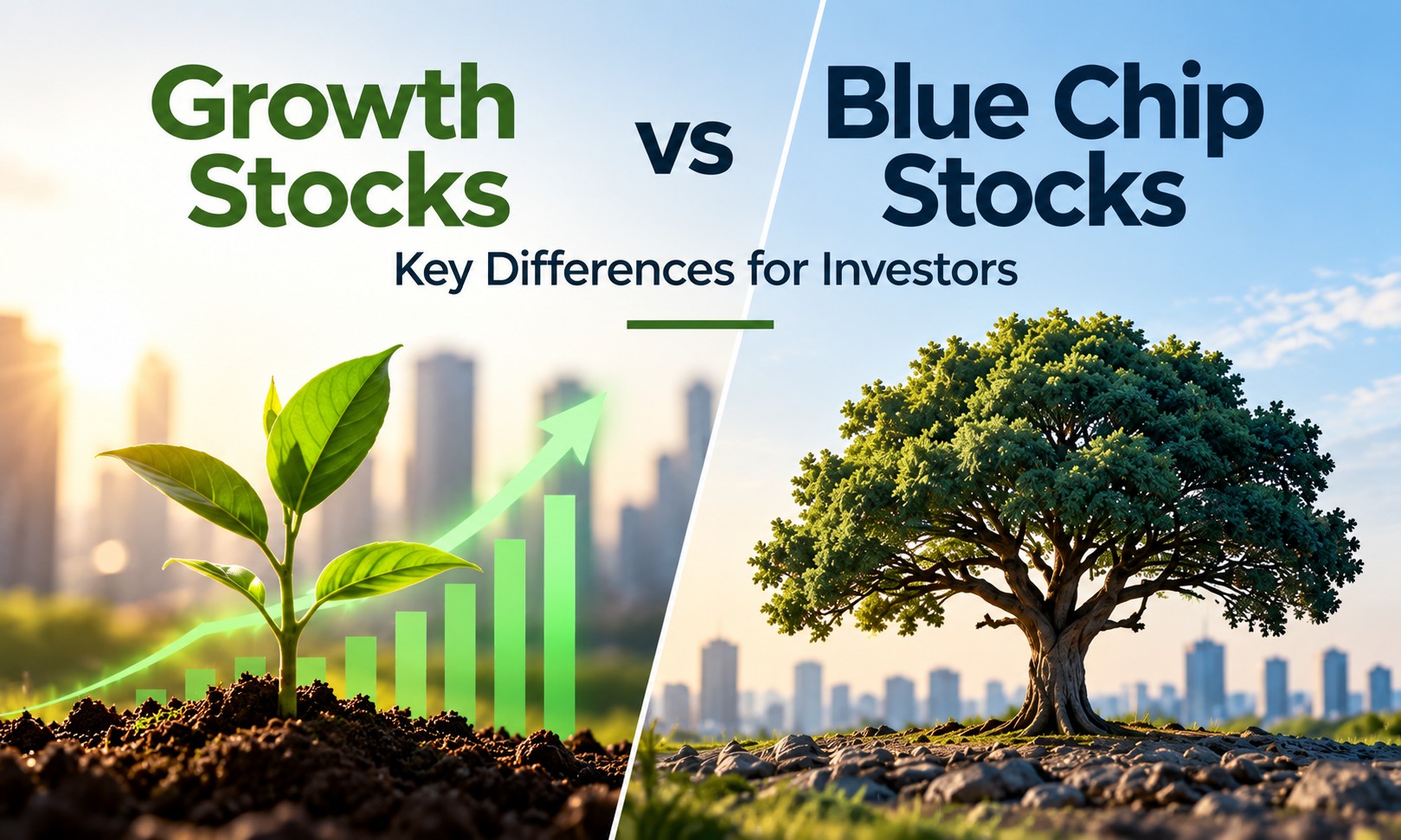
Growth-oriented sectors can benefit when economic conditions are supportive and investors are willing to accept greater risk in pursuit of stronger earnings growth. Defensive sectors, by comparison, often include businesses providing products or services that consumers continue to require regardless of economic conditions.
During periods of strong economic confidence, investors may favour growth opportunities. When uncertainty rises, defensive areas may become relatively more attractive.
This is not a fixed rule, but it provides a useful framework for understanding changes in market behaviour.
How Investors Can Use Sector Rotation
Investors do not necessarily need to make dramatic portfolio changes based on every economic development. A more measured approach can involve reviewing sector exposure periodically and identifying areas where concentration or risk has increased.
For example, an investor may discover that a portfolio has become heavily exposed to one industry following a period of strong performance. Rebalancing could help bring that exposure back towards the investor's intended allocation.
A disciplined process can reduce the temptation to make emotional decisions based on short-term market movements.
Benefits of a Sector Rotation Strategy
Sector rotation can provide several potential advantages:
- Helps investors recognise changing economic conditions
- Can reduce excessive exposure to one sector
- Encourages regular portfolio review
- Provides a framework for understanding market cycles
- Can help align portfolio exposure with changing opportunities
- May improve risk management through broader sector awareness
The strategy can therefore be useful as part of a wider portfolio-management process rather than as a standalone method for predicting markets.
The Risks of Timing the Market
One of the biggest challenges with sector rotation is that economic cycles are difficult to predict precisely. Markets can begin anticipating changes well before they become visible in economic data.
An investor who rotates into a sector too early may experience weak performance while waiting for the expected conditions to develop. Moving too late can create a different problem, as the market may have already priced in the anticipated improvement.
Frequent switching can also increase transaction costs and potentially lead investors to make decisions based on short-term noise.
Avoiding Over-Rotation
Constantly changing sector allocations can undermine the benefits of a long-term investment strategy. Investors may sell investments after temporary weakness only to see them recover later.
A better approach may be to establish clear criteria for reviewing sector exposure. These could include significant changes in economic conditions, valuation, earnings expectations or portfolio concentration.
This keeps decisions connected to a defined strategy rather than daily market movements.
Combining Rotation With Diversification
Sector rotation does not mean abandoning diversification. Even when investors have a view about which sectors may perform well, maintaining a balanced portfolio can help reduce the consequences of being wrong.
Investors can combine sector analysis with appropriate diversification across industries, asset classes and geographic markets. The goal is to manage risk while still allowing the portfolio to participate in areas with attractive long-term potential.
Risk Considerations
Sector rotation involves the risk of making incorrect assumptions about economic conditions, market cycles and future sector performance. Markets can anticipate changes before economic data confirms them, making timing difficult. Frequent portfolio adjustments can also increase transaction costs, create tax consequences and lead to emotional decision-making. A sector that appears attractive may still underperform due to unexpected economic, regulatory or company-specific developments. Investors should maintain appropriate diversification and consider their objectives, timeframe and risk tolerance before adopting a sector rotation strategy.
Disclaimer:
General Financial Product Advice and Regulatory Framework: Pristine Gaze Pty Ltd (ABN 66 680 815 678, ACN 680 815 678) operates as Corporate Authorised Representative (CAR No. 001312049) of Alpha Securities Pty Ltd (AFSL 330757), which is licensed and regulated by the Australian Securities and Investments Commission under the Corporations Act 2001 (Cth). This report contains general financial product advice only and has been prepared without consideration of your personal objectives, financial situation, specific needs, circumstances, or investment experience. The information is not tailored to individual circumstances and may not be suitable for your particular situation. Before acting on any information contained herein, you should carefully consider its appropriateness having regard to your personal objectives, financial situation, and needs, and consider seeking personal financial advice from a qualified financial adviser who can assess your individual circumstances and provide tailored recommendations.
Investment Risks and Market Warnings: All investments carry significant risk, and different investment strategies may carry varying levels of risk exposure including total loss of invested capital. The value of investments and income derived from them can fluctuate significantly due to market conditions, economic factors, company-specific events, regulatory changes, commodity price volatility, currency fluctuations, interest rate movements, and other factors beyond our control. Securities markets are subject to market risk from general economic conditions and investor sentiment, liquidity risk affecting the ability to buy or sell securities at desired prices, credit risk from issuer default or deterioration, operational risk from inadequate internal processes, sector-specific risks including industry regulatory changes, technology obsolescence, management changes, competitive pressures, supply chain disruptions, and mining-specific risks including resource estimation uncertainty, operational hazards, environmental compliance, permitting delays, commodity price cycles, geopolitical factors affecting mining operations, and exploration risks. Small-cap and speculative mining stocks carry additional risks including limited liquidity, higher volatility, dependence on key personnel, limited operating history, uncertain cash flows, and potential failure to achieve commercial production.
Information Accuracy and Limitations: While we endeavour to ensure information accuracy and reliability, we make no representations or warranties (express or implied) regarding the accuracy, reliability, completeness, timeliness, or suitability of information provided, except where liability cannot be excluded under applicable law. This report may include information from third-party sources including company announcements, regulatory filings, research reports, market data providers, financial news services, and publicly available information, which we do not independently verify and for which we assume no responsibility. Past performance, examples, historical data, or projections are not indicative of future results, and no guarantee of future returns is provided or implied. To the maximum extent permitted by law, Pristine Gaze Pty Ltd and Alpha Securities Pty Ltd, together with their respective directors, officers, employees, representatives, and related entities, exclude all liability for any errors, omissions, inaccuracies, loss or damage (including direct, indirect, consequential, or special damages) arising from reliance on information provided, investment decisions made based on this report, market losses, opportunity costs, and technical issues or system failures.
Frequently Asked Questions
Common questions about investing and market research to help guide your decisions.