

Why Interest Rates Matter For Growth Stocks
Interest rates are one of the most important forces influencing stock market performance because they directly affect borrowing costs, business expansion, consumer spending, and investor behavior. When central banks begin cutting interest rates, the overall financial environment usually becomes more supportive for businesses and equity markets. This is particularly important for ASX growth stocks, as growth-focused companies tend to benefit more strongly from lower-rate conditions compared to mature defensive businesses.
Falling interest rates generally provide a boost to the stock market by reducing borrowing costs for companies, encouraging consumer spending, and making stocks more attractive than bonds. Lower financing costs allow businesses to invest more aggressively into expansion, acquisitions, technology infrastructure, and product development. At the same time, consumers often spend more because loan repayments and financing expenses become cheaper. This combination of stronger business activity and improving consumer demand can support higher corporate earnings across the economy.
Another important reason lower interest rates support ASX growth stocks is valuation expansion. Growth companies are often valued based on future earnings potential rather than current profits. When interest rates decline, future earnings become more valuable in present-value terms, allowing investors to justify paying higher valuation multiples for companies expected to grow rapidly over time. This effect is particularly strong in sectors such as software, cloud infrastructure, digital marketplaces, and technology-driven businesses.
Investor sentiment also shifts significantly during falling-rate environments. Higher interest rates usually increase the attractiveness of fixed-income assets such as bonds and term deposits because investors can earn relatively safer returns. However, when rates begin falling, bond yields become less attractive, encouraging investors to shift capital toward equities in search of stronger returns. This often increases demand for these growth stocks, especially businesses operating in industries linked to artificial intelligence, cloud computing, digital transformation, and online services.
Why Growth Stocks Benefit More Than Defensive Stocks
Growth companies are generally more sensitive to interest rate movements because their valuations rely heavily on expectations of future expansion. Businesses expected to generate large earnings growth over many years tend to benefit more from lower discount rates, which improve valuation potential.
Another important factor is scalability. Many ASX growth stocks operate digital or technology-driven business models where revenue can expand significantly without costs increasing at the same pace. Lower borrowing costs further accelerate this process because companies gain easier access to funding for expansion initiatives and innovation.
Technology and infrastructure businesses also often require substantial upfront investment into software development, cloud infrastructure, data centers, or global expansion. Falling interest rates reduce the cost of financing these projects, improving profitability and operational flexibility.
- Lower borrowing costs support expansion and investment
- Future earnings become more valuable in lower-rate environments
- Investors shift from bonds toward higher-growth equity opportunities
Key ASX Growth Stocks That Could Benefit
Xero Ltd (ASX: XRO)
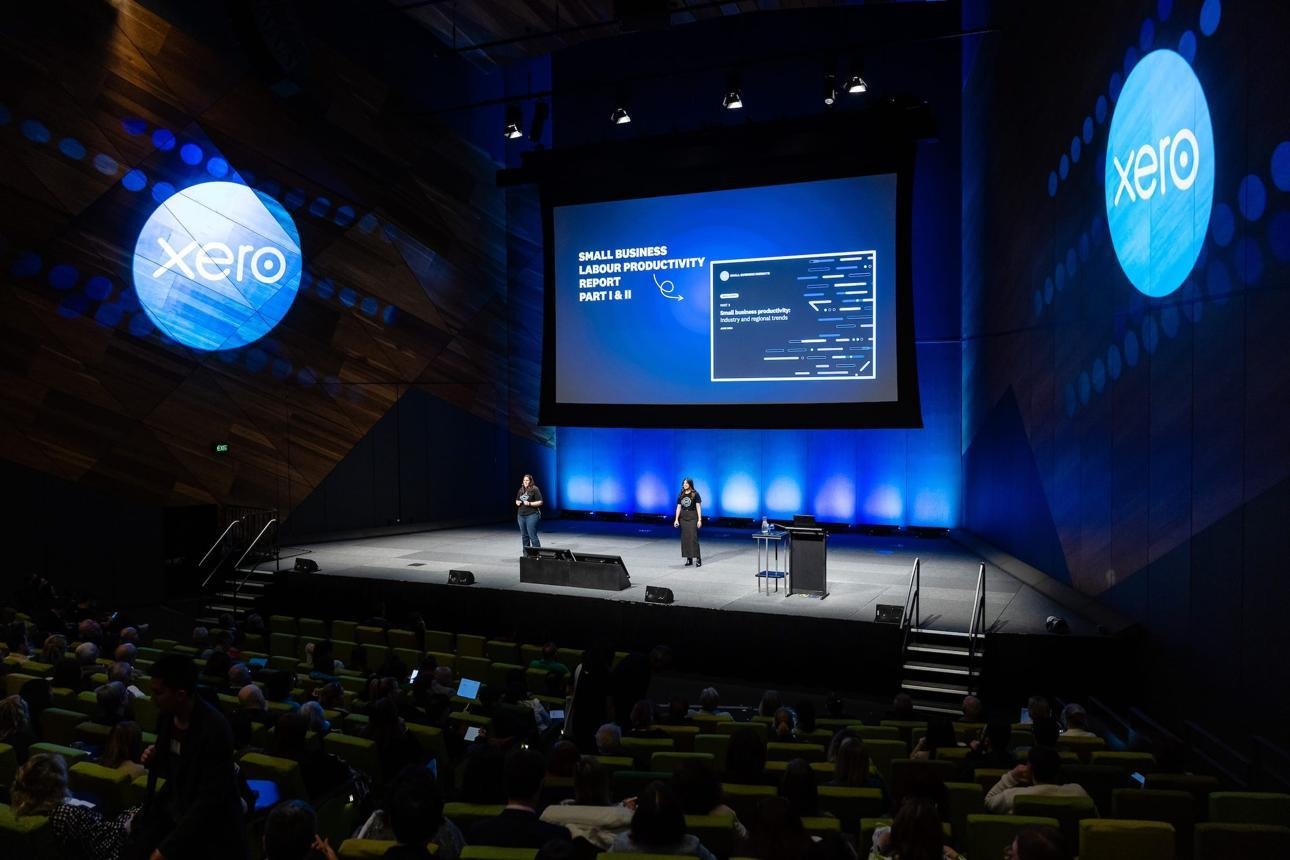
Xero operates one of the leading cloud accounting platforms focused on small and medium-sized businesses. The company benefits from recurring subscription revenue and long-term digital accounting adoption trends. Among ASX growth stocks, XRO is particularly sensitive to falling interest rates because software and technology companies often experience stronger valuation expansion during accommodative monetary conditions.
As borrowing costs decline, businesses may increase spending on software infrastructure and operational efficiency tools, supporting long-term demand for cloud-based financial platforms. Xero’s scalable business model and international expansion opportunities further strengthen its position within the growth sector.
Key Insight: Lower rates can strengthen software spending and support valuation expansion.
Car Group Limited (ASX: CAR)
Carsales operates within the online automotive marketplace industry and benefits from increasing digital transaction activity. Falling interest rates can support vehicle financing and consumer spending, which may strengthen automotive sales activity and online marketplace demand. Among ASX growth stocks, CAR benefits from scalable digital infrastructure and recurring marketplace revenue generation.
Lower financing costs may additionally encourage consumers and dealerships to increase transaction activity, supporting advertising and listing revenue across digital automotive platforms.
Key Insight: Falling rates may improve consumer activity and online marketplace demand.
Seek Ltd (ASX: SEK)

Seek operates one of the largest online employment and recruitment platforms, benefiting from digital hiring trends and employment market activity. Lower interest rates generally support economic expansion and business investment, which can increase hiring demand across industries. Among ASX growth stocks, SEK benefits from stronger recruitment activity during improving economic conditions.
As companies expand operations in a lower-rate environment, demand for skilled workers and recruitment services often increases, supporting online hiring platforms and recurring digital revenue growth.
Key Insight: Economic expansion and hiring activity can strengthen recruitment demand.
NextDC Ltd (ASX: NXT)

NextDC operates within the data center and digital infrastructure sector, benefiting from rising cloud computing and AI-related demand. Data center businesses often require substantial capital investment for expansion, meaning lower interest rates can significantly improve financing conditions and long-term growth potential. Among ASX growth stocks, NXT remains strongly positioned because of structural demand for cloud infrastructure and AI computing capacity.
Falling rates can also improve investor appetite for infrastructure-heavy growth companies because long-term future earnings become more attractive relative to fixed-income investments.
Key Insight: Lower financing costs support large-scale digital infrastructure expansion.
Computershare Ltd (ASX: CPU)

Computershare provides financial administration, registry, and technology services across global markets. The company benefits from recurring service demand and operational scalability. Among ASX growth stocks, CPU combines technology exposure with stable financial infrastructure operations, making it attractive during supportive economic and monetary conditions.
Lower interest rates may encourage stronger equity market participation and corporate activity, potentially increasing demand for registry and financial administration services.
Key Insight: Stronger market activity may support financial infrastructure growth.
How Falling Rates Could Impact Market Sentiment
Market psychology often changes significantly once investors expect interest rates to decline. Lower rates generally improve optimism around economic growth, consumer spending, and corporate profitability. This tends to increase risk appetite, pushing investors toward sectors capable of delivering stronger earnings expansion.
ASX growth stocks often outperform during these phases because investors become more willing to pay premium valuations for future growth potential. Technology, cloud computing, online platforms, and digital infrastructure businesses frequently attract the strongest capital inflows during accommodative monetary cycles.
Another major factor is relative return comparison. When bond yields fall, investors searching for higher returns increasingly allocate capital toward equities. Growth stocks generally benefit the most because of their stronger earnings expansion expectations.
Risk Considerations
Despite the positive outlook, ASX growth stocks still carry important risks. Falling interest rates may support valuations temporarily, but long-term performance ultimately depends on earnings growth and operational execution. If companies fail to meet market expectations, highly valued growth stocks can experience sharp corrections.
Competition, technological disruption, and slower-than-expected economic growth may also impact performance. Additionally, if inflation remains persistent, central banks could delay or reduce expected rate cuts, weakening investor optimism around growth sectors.
Disclaimer:
General Financial Product Advice and Regulatory Framework: Pristine Gaze Pty Ltd (ABN 66 680 815 678, ACN 680 815 678) operates as Corporate Authorised Representative (CAR No. 001312049) of Alpha Securities Pty Ltd (AFSL 330757), which is licensed and regulated by the Australian Securities and Investments Commission under the Corporations Act 2001 (Cth). This report contains general financial product advice only and has been prepared without consideration of your personal objectives, financial situation, specific needs, circumstances, or investment experience. The information is not tailored to individual circumstances and may not be suitable for your particular situation. Before acting on any information contained herein, you should carefully consider its appropriateness having regard to your personal objectives, financial situation, and needs, and consider seeking personal financial advice from a qualified financial adviser who can assess your individual circumstances and provide tailored recommendations.
Investment Risks and Market Warnings: All investments carry significant risk, and different investment strategies may carry varying levels of risk exposure including total loss of invested capital. The value of investments and income derived from them can fluctuate significantly due to market conditions, economic factors, company-specific events, regulatory changes, commodity price volatility, currency fluctuations, interest rate movements, and other factors beyond our control. Securities markets are subject to market risk from general economic conditions and investor sentiment, liquidity risk affecting the ability to buy or sell securities at desired prices, credit risk from issuer default or deterioration, operational risk from inadequate internal processes, sector-specific risks including industry regulatory changes, technology obsolescence, management changes, competitive pressures, supply chain disruptions, and mining-specific risks including resource estimation uncertainty, operational hazards, environmental compliance, permitting delays, commodity price cycles, geopolitical factors affecting mining operations, and exploration risks. Small-cap and speculative mining stocks carry additional risks including limited liquidity, higher volatility, dependence on key personnel, limited operating history, uncertain cash flows, and potential failure to achieve commercial production.
Information Accuracy and Limitations: While we endeavour to ensure information accuracy and reliability, we make no representations or warranties (express or implied) regarding the accuracy, reliability, completeness, timeliness, or suitability of information provided, except where liability cannot be excluded under applicable law. This report may include information from third-party sources including company announcements, regulatory filings, research reports, market data providers, financial news services, and publicly available information, which we do not independently verify and for which we assume no responsibility. Past performance, examples, historical data, or projections are not indicative of future results, and no guarantee of future returns is provided or implied. To the maximum extent permitted by law, Pristine Gaze Pty Ltd and Alpha Securities Pty Ltd, together with their respective directors, officers, employees, representatives, and related entities, exclude all liability for any errors, omissions, inaccuracies, loss or damage (including direct, indirect, consequential, or special damages) arising from reliance on information provided, investment decisions made based on this report, market losses, opportunity costs, and technical issues or system failures.