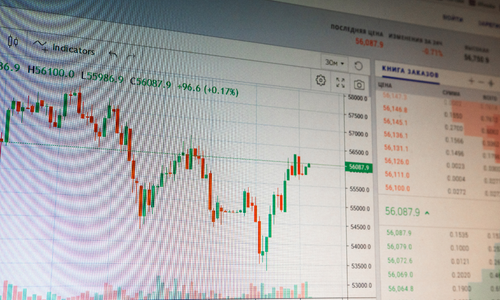
Why Most Investors Buy at the Wrong Time

Successful investing is not only about choosing the right companies—it is also about making good decisions at the right time. While many investors spend hours researching financial statements and market trends, they often overlook one of the biggest influences on investment performance: their own emotions.
Fear, greed, excitement, and uncertainty can all affect investment decisions. These emotions often lead investors to buy after prices have already risen sharply or sell during market downturns. Understanding stock market psychology can help investors recognise these behavioural patterns and make more disciplined, long-term investment decisions.
Why Stock Market Psychology Matters
Financial markets are influenced by company performance and economic conditions, but investor behaviour also plays a major role in short-term price movements.
When optimism becomes widespread, investors may rush into the market, driving share prices higher. During periods of uncertainty, fear can trigger widespread selling, causing prices to fall. These emotional cycles have repeated throughout market history and continue to shape investor behaviour today.
Learning about stock market psychology can help investors focus on business fundamentals rather than reacting to short-term market noise.
Fear of Missing Out (FOMO)
One of the most common investing mistakes is buying shares simply because everyone else appears to be making money.
When a company's share price rises rapidly, news coverage and social media discussions often increase investor excitement. This can encourage people to invest without fully understanding the business or considering whether the shares are reasonably valued.
Buying based solely on momentum rather than careful research can expose investors to greater risk if market sentiment changes.
Fear During Market Declines
Market corrections are a normal part of investing, yet many investors panic when share prices begin falling.
Rather than viewing lower prices as an opportunity to reassess quality businesses, emotional decision-making may lead investors to sell after markets have already declined. This often locks in losses that might otherwise have been temporary.
Understanding stock market psychology helps investors recognise that market volatility is a normal feature of long-term investing rather than a signal to make impulsive decisions.
Following the Crowd
Humans naturally seek comfort in following the majority. In financial markets, this behaviour is known as herd mentality.
When large numbers of investors buy or sell simultaneously, prices can become disconnected from a company's underlying value. Investors who rely solely on popular opinion instead of conducting their own research may end up purchasing shares at elevated prices or selling quality companies during temporary market weakness.
Independent analysis can help investors avoid making decisions based purely on market sentiment.
Short-Term Thinking
Many investors focus heavily on daily share price movements while paying less attention to the long-term performance of the underlying business.
Quality companies often experience periods of market volatility despite continuing to grow revenue, profits, and market share. Investors who become overly focused on short-term price fluctuations may overlook the long-term value being created by the business.
Maintaining a longer investment horizon can reduce the influence of emotional decision-making.
Confirmation Bias
Confirmation bias occurs when investors seek information that supports their existing opinions while ignoring evidence that challenges their views.
For example, an investor who believes a company will perform well may only read positive news while overlooking potential risks. This can result in overly optimistic expectations and poor investment decisions.
A balanced approach involves considering both positive and negative information before making investment decisions.
Developing Better Investment Habits
Improving stock market psychology does not require eliminating emotions altogether. Instead, successful investors often develop structured investment processes that reduce emotional influences.
Helpful habits may include:
- Conducting thorough company research before investing.
- Setting long-term investment goals.
- Diversifying across industries and sectors.
- Reviewing company fundamentals instead of reacting to daily price movements.
- Remaining patient during periods of market volatility.
A disciplined investment approach can help investors remain focused on long-term objectives rather than short-term market sentiment.
Risk Considerations
Although understanding stock market psychology can improve investment decision-making, it does not eliminate investment risk. Economic conditions, interest rates, company performance, geopolitical events, and unexpected market developments can all affect share prices. Investors should combine behavioural awareness with thorough fundamental research, diversification, and a long-term investment strategy when evaluating opportunities in the share market.
Disclaimer:
General Financial Product Advice and Regulatory Framework: Pristine Gaze Pty Ltd (ABN 66 680 815 678, ACN 680 815 678) operates as Corporate Authorised Representative (CAR No. 001312049) of Alpha Securities Pty Ltd (AFSL 330757), which is licensed and regulated by the Australian Securities and Investments Commission under the Corporations Act 2001 (Cth). This report contains general financial product advice only and has been prepared without consideration of your personal objectives, financial situation, specific needs, circumstances, or investment experience. The information is not tailored to individual circumstances and may not be suitable for your particular situation. Before acting on any information contained herein, you should carefully consider its appropriateness having regard to your personal objectives, financial situation, and needs, and consider seeking personal financial advice from a qualified financial adviser who can assess your individual circumstances and provide tailored recommendations.
Investment Risks and Market Warnings: All investments carry significant risk, and different investment strategies may carry varying levels of risk exposure including total loss of invested capital. The value of investments and income derived from them can fluctuate significantly due to market conditions, economic factors, company-specific events, regulatory changes, commodity price volatility, currency fluctuations, interest rate movements, and other factors beyond our control. Securities markets are subject to market risk from general economic conditions and investor sentiment, liquidity risk affecting the ability to buy or sell securities at desired prices, credit risk from issuer default or deterioration, operational risk from inadequate internal processes, sector-specific risks including industry regulatory changes, technology obsolescence, management changes, competitive pressures, supply chain disruptions, and mining-specific risks including resource estimation uncertainty, operational hazards, environmental compliance, permitting delays, commodity price cycles, geopolitical factors affecting mining operations, and exploration risks. Small-cap and speculative mining stocks carry additional risks including limited liquidity, higher volatility, dependence on key personnel, limited operating history, uncertain cash flows, and potential failure to achieve commercial production.
Information Accuracy and Limitations: While we endeavour to ensure information accuracy and reliability, we make no representations or warranties (express or implied) regarding the accuracy, reliability, completeness, timeliness, or suitability of information provided, except where liability cannot be excluded under applicable law. This report may include information from third-party sources including company announcements, regulatory filings, research reports, market data providers, financial news services, and publicly available information, which we do not independently verify and for which we assume no responsibility. Past performance, examples, historical data, or projections are not indicative of future results, and no guarantee of future returns is provided or implied. To the maximum extent permitted by law, Pristine Gaze Pty Ltd and Alpha Securities Pty Ltd, together with their respective directors, officers, employees, representatives, and related entities, exclude all liability for any errors, omissions, inaccuracies, loss or damage (including direct, indirect, consequential, or special damages) arising from reliance on information provided, investment decisions made based on this report, market losses, opportunity costs, and technical issues or system failures.