What Is Risk Tolerance and Why Does It Matter?
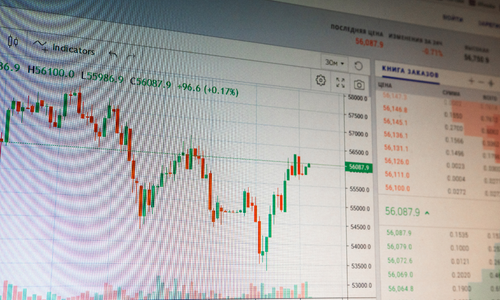
Investing involves uncertainty, and the value of an investment can rise or fall depending on market conditions, economic developments and the performance of underlying assets. However, not every investor responds to these fluctuations in the same way. Some are comfortable accepting significant short-term losses in pursuit of potentially higher long-term returns, while others prefer a more stable approach, even if it means sacrificing some growth potential. Understanding investment risk tolerance helps investors recognise how much uncertainty they are comfortable accepting and how their investment decisions align with their financial circumstances, objectives and timeframe. It also provides a foundation for building a portfolio that can be maintained through changing market conditions rather than abandoned during periods of volatility.
What Is Investment Risk Tolerance?
Investment risk tolerance refers to an investor's willingness to accept fluctuations in the value of their investments, including the possibility of losing money. It reflects how comfortable someone feels when markets decline, returns become uncertain or an investment performs differently from expectations. An investor with higher risk tolerance may be willing to accept substantial short-term volatility in exchange for the possibility of stronger long-term returns, while someone with lower risk tolerance may prefer investments that generally experience smaller price movements.
Risk tolerance is personal and can change over time. Two investors with similar incomes and investment goals may react very differently to the same market decline because their financial responsibilities, experiences and emotional responses are different. Recognising these differences is important because an investment strategy should be suitable not only for the expected return but also for the level of uncertainty an investor can realistically manage.
Risk Tolerance vs Risk Capacity
Although risk tolerance and risk capacity are closely related, they describe different aspects of an investor's financial position. Risk tolerance concerns emotional comfort with investment uncertainty, whereas risk capacity refers to the financial ability to withstand losses without compromising important financial goals. Someone may feel comfortable taking substantial investment risks but have limited savings, significant debt or near-term expenses that make large losses financially difficult to absorb.
Conversely, an investor with a stable income, adequate emergency savings and a long investment timeframe may have the financial capacity to tolerate market declines but still feel uncomfortable seeing their portfolio fall in value. Both factors matter when developing an investment approach. A strategy that exceeds an investor's financial capacity can create practical difficulties, while one that exceeds their emotional tolerance may lead to impulsive decisions during market downturns.
What Influences Investment Risk Tolerance?
Several factors can influence investment risk tolerance, including age, income stability, financial commitments, investment experience and the time available to achieve a particular goal. Investors with long-term objectives may have more time to recover from temporary market declines, whereas those expecting to withdraw money soon may have less flexibility to wait for markets to improve. Household expenses, debt repayments, dependants and the availability of emergency savings can also affect how much investment uncertainty a person can reasonably accept.
Previous investing experiences may influence risk tolerance as well. Someone who has experienced a severe market decline may become more cautious, while an investor who has mainly experienced rising markets may underestimate the possibility of losses. However, past experience alone does not determine the most appropriate strategy. Investors should consider their current circumstances and the potential consequences of different outcomes rather than basing decisions entirely on previous market behaviour.
The Relationship Between Risk and Potential Returns
Investment risk and potential returns are often connected. Assets with greater growth potential can also experience larger price fluctuations and more significant losses, while investments designed to provide greater stability may offer lower long-term growth potential. This relationship does not mean that taking more risk automatically produces better returns. An investment can involve substantial uncertainty without delivering a corresponding financial reward.
Understanding this distinction helps investors avoid choosing an investment simply because it promises attractive returns. A sensible assessment considers the risks involved, the likelihood of achieving the intended outcome and the financial consequences if expectations are not met. The objective is to identify an appropriate balance between potential growth and the level of risk that can be managed over the intended investment timeframe.
How Risk Tolerance Affects Portfolio Allocation
Risk tolerance can influence how an investor divides their money across different asset classes, including shares, bonds, property, cash and other investments. A growth-oriented portfolio may have greater exposure to assets that can experience significant short-term volatility, while a more conservative portfolio may place greater emphasis on capital stability and income. Balanced approaches seek to combine different characteristics, although their performance will still depend on market conditions and the specific investments held.
The appropriate allocation depends on more than an investor's willingness to accept risk. Financial goals, expected withdrawals, income requirements and the time available to remain invested also matter. A portfolio designed for long-term wealth accumulation may differ considerably from one intended to fund expenses in the near future. Understanding these differences can help investors avoid taking unnecessary risks or becoming so cautious that their investments struggle to meet their long-term objectives.
Emotional Responses to Market Volatility
Emotions can have a significant influence on investment decisions, particularly when markets fall sharply or uncertainty increases. Investors may become anxious about losses, sell investments after prices have already declined or abandon a long-term strategy because recent performance has been disappointing. Others may become overly confident during strong markets and take more risk than their financial circumstances justify.
These reactions can create a mismatch between an investor's stated risk tolerance and their actual behaviour. Someone who believes they can tolerate substantial volatility may discover that watching their portfolio decline is more difficult than expected. Understanding this possibility before investing can help investors make more realistic decisions about portfolio risk. A suitable strategy should be one they can maintain through both favourable and unfavourable market conditions, rather than one that appears attractive only when markets are rising.
The Role of Diversification
Diversification can help manage portfolio risk by spreading investments across different assets, industries, regions and sources of return. When investments respond differently to economic conditions, weakness in one area may be partly offset by more stable performance elsewhere. However, diversification does not eliminate the possibility of losses, particularly during periods when markets decline broadly.
Risk tolerance can influence how diversification is implemented, but investors should not confuse diversification with simply holding a large number of investments. Several holdings may still share similar underlying risks, leaving the portfolio vulnerable to the same economic developments. Understanding the exposures within a portfolio can provide a clearer picture of the level of risk being taken and whether that risk remains consistent with the investor's financial objectives.
Common Mistakes When Assessing Risk Tolerance
One common mistake is assuming that risk tolerance remains constant throughout life. Changes in employment, family responsibilities, debt, retirement plans and financial resources can affect both the willingness and ability to accept investment losses. Another mistake is assessing risk based on market conditions at a single point in time. Investors may feel comfortable taking risks when markets are performing well but become considerably more cautious during a downturn.
It is also important not to confuse a willingness to take risk with the need to take it. Accepting additional uncertainty is not always necessary to achieve a financial goal, particularly when the potential downside could create difficulties meeting essential expenses. Regularly reviewing financial circumstances and investment objectives can help investors determine whether their existing approach remains appropriate as their situation changes.
Risk Considerations
Investment risk tolerance does not guarantee that an investment strategy will deliver positive returns or protect capital during market downturns. Even diversified portfolios can experience losses, and investments with greater growth potential may involve significant volatility. An investor's willingness to accept risk may also differ from their financial capacity to withstand losses, creating challenges if market conditions deteriorate. Changes in income, expenses, investment timeframes and personal circumstances can affect the suitability of an existing strategy. Investors should consider their financial objectives, liquidity needs, time horizon and ability to absorb losses when assessing investment risk tolerance and determining an appropriate investment approach.
Disclaimer:
General Financial Product Advice and Regulatory Framework: Pristine Gaze Pty Ltd (ABN 66 680 815 678, ACN 680 815 678) operates as Corporate Authorised Representative (CAR No. 001312049) of Alpha Securities Pty Ltd (AFSL 330757), which is licensed and regulated by the Australian Securities and Investments Commission under the Corporations Act 2001 (Cth). This report contains general financial product advice only and has been prepared without consideration of your personal objectives, financial situation, specific needs, circumstances, or investment experience. The information is not tailored to individual circumstances and may not be suitable for your particular situation. Before acting on any information contained herein, you should carefully consider its appropriateness having regard to your personal objectives, financial situation, and needs, and consider seeking personal financial advice from a qualified financial adviser who can assess your individual circumstances and provide tailored recommendations.
Investment Risks and Market Warnings: All investments carry significant risk, and different investment strategies may carry varying levels of risk exposure including total loss of invested capital. The value of investments and income derived from them can fluctuate significantly due to market conditions, economic factors, company-specific events, regulatory changes, commodity price volatility, currency fluctuations, interest rate movements, and other factors beyond our control. Securities markets are subject to market risk from general economic conditions and investor sentiment, liquidity risk affecting the ability to buy or sell securities at desired prices, credit risk from issuer default or deterioration, operational risk from inadequate internal processes, sector-specific risks including industry regulatory changes, technology obsolescence, management changes, competitive pressures, supply chain disruptions, and mining-specific risks including resource estimation uncertainty, operational hazards, environmental compliance, permitting delays, commodity price cycles, geopolitical factors affecting mining operations, and exploration risks. Small-cap and speculative mining stocks carry additional risks including limited liquidity, higher volatility, dependence on key personnel, limited operating history, uncertain cash flows, and potential failure to achieve commercial production.
Information Accuracy and Limitations: While we endeavour to ensure information accuracy and reliability, we make no representations or warranties (express or implied) regarding the accuracy, reliability, completeness, timeliness, or suitability of information provided, except where liability cannot be excluded under applicable law. This report may include information from third-party sources including company announcements, regulatory filings, research reports, market data providers, financial news services, and publicly available information, which we do not independently verify and for which we assume no responsibility. Past performance, examples, historical data, or projections are not indicative of future results, and no guarantee of future returns is provided or implied. To the maximum extent permitted by law, Pristine Gaze Pty Ltd and Alpha Securities Pty Ltd, together with their respective directors, officers, employees, representatives, and related entities, exclude all liability for any errors, omissions, inaccuracies, loss or damage (including direct, indirect, consequential, or special damages) arising from reliance on information provided, investment decisions made based on this report, market losses, opportunity costs, and technical issues or system failures.