High Dividend Stocks ASX: What Investors Should Look For

Dividend investing remains an important part of the Australian share market, particularly for investors looking for companies and investment vehicles that can provide regular income alongside potential capital growth. However, a high dividend yield on its own does not necessarily indicate a sustainable income opportunity. When researching high dividend stocks ASX, investors can consider the source of the dividend, the consistency of distributions, underlying earnings, cash flow, payout sustainability and the broader risks affecting the business. Three ASX-listed names that provide different examples within the dividend-focused landscape are Helia Group, WAM Capital and GQG Partners.
What Makes a High Dividend Stock Attractive?
A high dividend yield is calculated by comparing the annual dividend with the current share price. When the dividend remains unchanged while the share price falls, the headline yield can rise. This means a high yield does not always indicate improving fundamentals. Sometimes it can reflect a falling share price or expectations that future distributions may be reduced.
For this reason, investors researching high dividend stocks can look beyond the headline yield and examine whether the business generates enough recurring earnings and cash flow to support distributions. Dividend history, payout ratios, balance-sheet strength and the stability of the underlying business can all provide additional context when assessing the sustainability of income.
Helia Group Ltd (ASX: HLI)
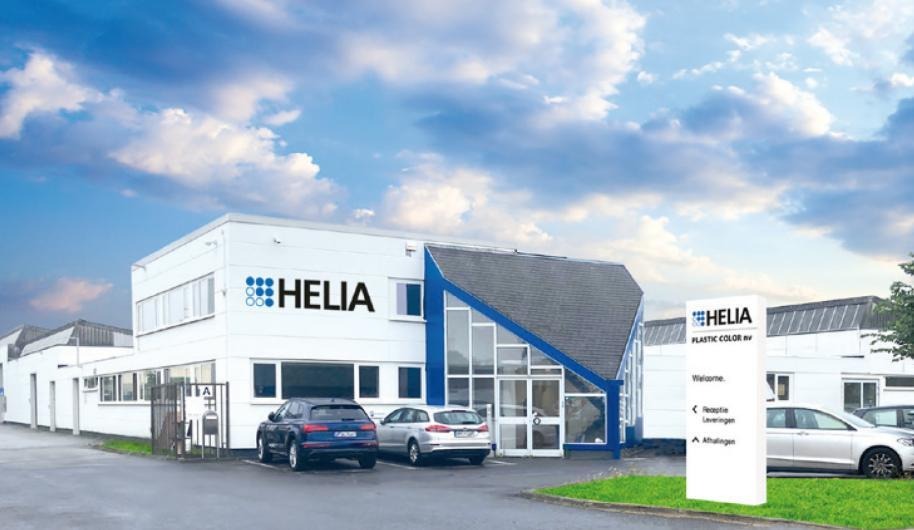
Helia Group operates in the Australian lenders mortgage insurance market, providing protection to lenders against losses that can arise when borrowers default on home loans and the proceeds from a property sale are insufficient to cover the outstanding debt. Its business is therefore closely connected to Australia's housing and mortgage markets.
For dividend-focused investors, Helia provides an example of why the sustainability of distributions needs to be considered alongside the headline yield. The company's earnings can be influenced by housing market conditions, claims experience, new mortgage lending, unemployment and broader economic conditions. These factors can change over time and can affect the amount of capital available for distributions.
The company's position within the mortgage insurance market also means investors need to understand the relationship between its insurance operations and the wider Australian housing environment. A strong housing market and stable employment conditions can influence claims outcomes, while a deterioration in borrower conditions could increase pressure on the business. This makes the underlying quality and resilience of earnings important when considering Helia as a dividend-focused investment.
WAM Capital Ltd (ASX: WAM)

WAM Capital is a listed investment company managed by Wilson Asset Management. Rather than operating a traditional trading or industrial business, its investment returns are generated through a portfolio of investments and the decisions made by its investment management team.
This structure makes WAM Capital different from a conventional operating company. Investors considering its dividend characteristics need to understand both the income generated by its investment portfolio and the company's ability to maintain distributions over time. The underlying portfolio performance can influence the resources available for future dividends.
The listed investment company structure also means the market price of WAM Capital's shares can differ from the value of its underlying portfolio. This distinction between share price and underlying net tangible assets is an important consideration when assessing an LIC. A discount or premium can change the effective valuation at which investors obtain exposure to the underlying investments, meaning dividend yield should be considered alongside the company's portfolio performance and market valuation.
GQG Partners Inc (ASX: GQG)

GQG Partners is an investment management business whose revenue is linked largely to the assets it manages for clients. This creates a different dividend profile from companies operating in industries such as insurance or listed investment companies.
An investment manager can benefit when client assets increase through investment performance, additional inflows or a combination of both. At the same time, assets under management can decline when markets fall or clients withdraw capital. Because management fees are generally linked to assets under management, changes in market conditions can influence revenue and profitability.
For dividend investors, this makes the relationship between assets under management, investment performance, client flows and distributions particularly relevant. GQG's business model demonstrates that a relatively strong dividend profile still needs to be considered in the context of the underlying earnings engine. Investors can assess whether the company's distributions are supported by recurring operating earnings and whether its asset-management franchise remains competitive.
Dividend Yield Is Only One Measure
When comparing high dividend stocks ASX, dividend yield can be a useful starting point but should not be treated as the complete analysis. A company with a very high yield may have experienced a substantial decline in its share price, potentially signalling concerns about future earnings or distributions.
A more complete assessment can include dividend history, earnings coverage, cash generation and payout ratios. Investors can also examine whether dividends have been stable, increasing or irregular over time. A lower but more consistent dividend may have different characteristics from a much higher distribution that depends on unusually strong earnings or favourable market conditions.
Dividend Sustainability Matters
The sustainability of a dividend depends largely on the financial capacity of a business to continue making distributions. Companies with predictable earnings and strong cash generation may have greater flexibility to maintain dividends through different market environments.
However, even businesses with long dividend histories can reduce distributions when economic conditions change. Insurance claims can rise, investment markets can weaken, customers can withdraw funds or earnings can decline. Investors therefore need to understand the factors that could put pressure on future dividends rather than assuming that previous distributions will continue indefinitely.
Franking Credits and Australian Dividends
Franking credits are another consideration for Australian investors. When an Australian company has already paid tax on its profits, it may attach franking credits to dividends distributed to shareholders. Eligible investors may be able to use these credits to offset Australian income tax, subject to their individual circumstances and applicable tax rules.
The presence and level of franking can therefore influence the after-tax value of a dividend. However, investors should avoid assessing a dividend solely on its headline yield or franking level. The underlying sustainability of the distribution remains an important consideration.
Comparing Different Dividend Models
Helia Group, WAM Capital and GQG Partners illustrate three different ways investors can gain exposure to income-oriented ASX investments. Helia's dividend characteristics are linked to insurance operations and housing-related conditions, WAM Capital's distributions are connected to an investment portfolio and listed investment company structure, while GQG Partners' earnings are influenced by assets under management, investment performance and client flows.
These differences highlight why comparing dividend yields without considering the underlying business model can provide an incomplete picture. Each company has different factors that can influence earnings and future distributions, so investors need to assess the source of the income rather than focusing only on the amount being paid.
Looking Beyond the Dividend
Income investors may also need to consider the potential for capital growth or decline. A high dividend can provide attractive cash income, but a significant fall in the share price can affect the overall investment outcome. Similarly, a company with a more moderate yield may have greater potential to increase its dividend or grow its underlying business over time.
The relationship between income, valuation and business growth is therefore important. Investors can consider whether the current share price appropriately reflects the company's earnings prospects and whether the dividend provides adequate compensation for the risks involved.
Risk Considerations
High-dividend investments can face risks including dividend reductions, weaker earnings, falling asset values, economic downturns and changes in market conditions. Helia can be affected by housing and mortgage-market conditions and insurance claims, while WAM Capital is exposed to investment portfolio performance and movements between its market price and underlying asset value. GQG Partners can be affected by investment performance, market movements, client flows and changes in assets under management. A high dividend yield does not guarantee sustainable future income, and investors should assess the underlying business, earnings, cash generation, valuation and distribution policy before making investment decisions.
Disclaimer:
General Financial Product Advice and Regulatory Framework: Pristine Gaze Pty Ltd (ABN 66 680 815 678, ACN 680 815 678) operates as Corporate Authorised Representative (CAR No. 001312049) of Alpha Securities Pty Ltd (AFSL 330757), which is licensed and regulated by the Australian Securities and Investments Commission under the Corporations Act 2001 (Cth). This report contains general financial product advice only and has been prepared without consideration of your personal objectives, financial situation, specific needs, circumstances, or investment experience. The information is not tailored to individual circumstances and may not be suitable for your particular situation. Before acting on any information contained herein, you should carefully consider its appropriateness having regard to your personal objectives, financial situation, and needs, and consider seeking personal financial advice from a qualified financial adviser who can assess your individual circumstances and provide tailored recommendations.
Investment Risks and Market Warnings: All investments carry significant risk, and different investment strategies may carry varying levels of risk exposure including total loss of invested capital. The value of investments and income derived from them can fluctuate significantly due to market conditions, economic factors, company-specific events, regulatory changes, commodity price volatility, currency fluctuations, interest rate movements, and other factors beyond our control. Securities markets are subject to market risk from general economic conditions and investor sentiment, liquidity risk affecting the ability to buy or sell securities at desired prices, credit risk from issuer default or deterioration, operational risk from inadequate internal processes, sector-specific risks including industry regulatory changes, technology obsolescence, management changes, competitive pressures, supply chain disruptions, and mining-specific risks including resource estimation uncertainty, operational hazards, environmental compliance, permitting delays, commodity price cycles, geopolitical factors affecting mining operations, and exploration risks. Small-cap and speculative mining stocks carry additional risks including limited liquidity, higher volatility, dependence on key personnel, limited operating history, uncertain cash flows, and potential failure to achieve commercial production.
Information Accuracy and Limitations: While we endeavour to ensure information accuracy and reliability, we make no representations or warranties (express or implied) regarding the accuracy, reliability, completeness, timeliness, or suitability of information provided, except where liability cannot be excluded under applicable law. This report may include information from third-party sources including company announcements, regulatory filings, research reports, market data providers, financial news services, and publicly available information, which we do not independently verify and for which we assume no responsibility. Past performance, examples, historical data, or projections are not indicative of future results, and no guarantee of future returns is provided or implied. To the maximum extent permitted by law, Pristine Gaze Pty Ltd and Alpha Securities Pty Ltd, together with their respective directors, officers, employees, representatives, and related entities, exclude all liability for any errors, omissions, inaccuracies, loss or damage (including direct, indirect, consequential, or special damages) arising from reliance on information provided, investment decisions made based on this report, market losses, opportunity costs, and technical issues or system failures.