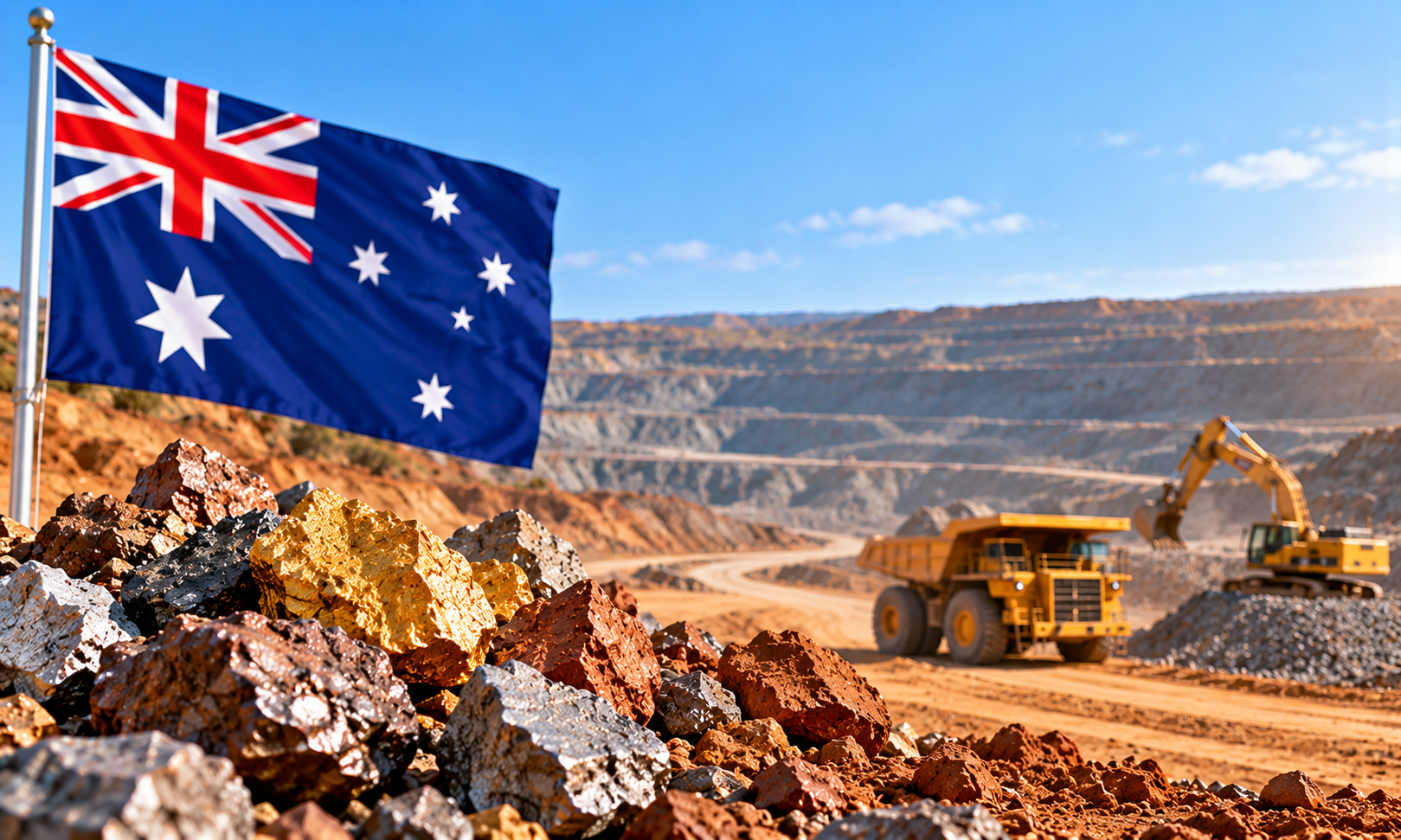
2 Gold Dividend Stocks That Could Shine in 2025

As global markets continue to wrestle with inflation, rising interest rates, and geopolitical tensions, gold is once again regaining its luster. Traditionally seen as a safe-haven asset, gold tends to shine brightest when uncertainty clouds investor sentiment. But in 2025, it’s not just the gold price that’s catching attention—it’s the gold miners that pay consistent dividends.
For income-seeking investors, gold miners that offer both steady payouts and growth potential are particularly attractive. Two names that stand out on the ASX are Northern Star Resources Ltd (ASX: NST) and Rand Mining Ltd (ASX: RND). Both companies combine strong operations, disciplined management, and reliable dividends, positioning them to deliver golden income streams in the year ahead.
Northern Star Resources Ltd: Dividend Powerhouse with Scale
Northern Star Resources is one of Australia’s largest and most respected gold producers, operating major mining hubs at KCGM (Kalgoorlie), Jundee, and Pogo. Over the past decade, Northern Star has transformed itself from a mid-tier miner into a globally recognized name—thanks to strategic acquisitions, efficient cost control, and a relentless focus on shareholder value.
In FY25, the company once again demonstrated its financial strength:
- Total revenue surged to $6.41 billion, reflecting near-record gold sales even amid some temporary operational disruptions.
- Record final dividend: 30 cents per share, bringing the full-year payout to 55 cents, marking a new all-time high for the company.
- Dividend yield: Around 2.6% at recent market prices, a solid return for a top-tier miner.
- Net cash position: A hefty $1.69 billion, underscoring its robust balance sheet.
- Shareholder returns: Over $840 million returned via dividends and buybacks during FY25.
Northern Star’s underlying EBITDA continues to trend upward, supported by steady output and disciplined operations. The company’s project pipeline also looks healthy, with the KCGM mill expansion and Hemi development project expected to boost production and efficiency over the coming years.
For FY26, management has guided for gold production in the range of 1.7–1.85 million ounces, which should comfortably support another year of strong cash generation and consistent dividends.
In short, Northern Star is more than just a gold miner—it’s a cash-generating powerhouse with a proven ability to balance growth investment and shareholder rewards.
Rand Mining Ltd: Boutique Producer with a Surprise Yield
While Northern Star is a giant, Rand Mining Ltd (ASX: RND) represents the opposite end of the spectrum—a small-cap gem that has quietly built a reputation for outstanding dividend yields. Based in Western Australia’s East Kundana district, Rand operates with efficiency and minimal debt, benefiting from low production costs and strong operational partnerships.
Its FY25 results highlight the power of disciplined small-scale mining:
- Revenue: $43.3 million, up 24.5% year-over-year.
- Net income: $13.1 million, nearly double FY24’s earnings.
- Dividend: Fully-franked 10 cents per share in December 2024, translating to an annualized yield of around 6.6%.
Rand’s management has a history of returning surplus cash directly to shareholders through special dividends, which can significantly boost total returns during strong operational years. This approach reflects a shareholder-first mindset, making the stock particularly appealing to those who value tangible, consistent rewards.
Despite being smaller in scale, Rand Mining’s lean cost structure and profitable operations enable it to deliver returns that rival larger peers. Its exposure to high-quality gold assets and minimal debt load make it a resilient income option in a volatile sector.
Why These Gold Dividend Stocks Stand Out
Both Northern Star and Rand Mining offer investors something rare in the gold space—a blend of yield and growth. Here’s why they’re worth keeping on your watchlist in 2025:
- Exposure to Rising Gold Prices:
With global inflation still elevated and central banks maintaining large gold reserves, gold prices could remain strong through 2025. Both NST and RND are well-positioned to capitalize, translating higher gold prices directly into improved margins and potential dividend growth. - Strong Balance Sheets:
Northern Star’s multi-billion-dollar cash reserves and Rand’s debt-free status mean both companies have financial flexibility to sustain payouts even in volatile markets. - Operational Leverage:
Any uptick in production or efficiency gains has an outsized impact on profits—and consequently on dividend capacity. Northern Star’s ongoing projects, in particular, could boost free cash flow substantially. - Yield with Growth:
Northern Star offers moderate yield with growth stability, while Rand Mining delivers higher yield with special dividend potential. Together, they present a balanced approach for investors seeking both income and upside. - Inflation Hedge:
Gold has historically been one of the best hedges against inflation. Adding dividend-paying gold miners to a portfolio provides not only price appreciation potential but also a steady cash return, making it a dual-benefit investment.
The Bigger Picture: Gold’s Renewed Appeal
Looking beyond company specifics, 2025 could be another strong year for gold itself. Persistent geopolitical tensions, uncertainty in global growth, and the possibility of central banks slowing interest rate cuts all contribute to a favorable environment for gold prices.
Moreover, demand for physical gold and gold ETFs remains robust, especially in emerging markets like India and China. This global demand backdrop supports a stable to rising gold price range, creating ideal conditions for cash-rich gold miners to continue rewarding shareholders.
Conclusion: Golden Income for 2025
If you’re looking to balance defensive income with exposure to precious metal upside, Northern Star Resources and Rand Mining stand out as two compelling ASX-listed options for 2025.
- Northern Star offers scale, consistency, and reliability, backed by strong operations and a disciplined capital strategy.
- Rand Mining provides higher yields and nimble execution, ideal for investors seeking more direct exposure to dividend fluctuations tied to gold’s performance.
Both companies have demonstrated that it’s possible to enjoy the defensive qualities of gold while still earning regular, attractive income. As 2025 unfolds and gold remains a focal point for investors seeking safety and returns, these two dividend-paying gold miners could truly shine.
Disclaimer:
General Financial Product Advice and Regulatory Framework: Pristine Gaze Pty Ltd (ABN 66 680 815 678, ACN 680 815 678) operates as Corporate Authorised Representative (CAR No. 001312049) of Alpha Securities Pty Ltd (AFSL 330757), which is licensed and regulated by the Australian Securities and Investments Commission under the Corporations Act 2001 (Cth). This report contains general financial product advice only and has been prepared without consideration of your personal objectives, financial situation, specific needs, circumstances, or investment experience. The information is not tailored to individual circumstances and may not be suitable for your particular situation. Before acting on any information contained herein, you should carefully consider its appropriateness having regard to your personal objectives, financial situation, and needs, and consider seeking personal financial advice from a qualified financial adviser who can assess your individual circumstances and provide tailored recommendations.
Investment Risks and Market Warnings: All investments carry significant risk, and different investment strategies may carry varying levels of risk exposure including total loss of invested capital. The value of investments and income derived from them can fluctuate significantly due to market conditions, economic factors, company-specific events, regulatory changes, commodity price volatility, currency fluctuations, interest rate movements, and other factors beyond our control. Securities markets are subject to market risk from general economic conditions and investor sentiment, liquidity risk affecting the ability to buy or sell securities at desired prices, credit risk from issuer default or deterioration, operational risk from inadequate internal processes, sector-specific risks including industry regulatory changes, technology obsolescence, management changes, competitive pressures, supply chain disruptions, and mining-specific risks including resource estimation uncertainty, operational hazards, environmental compliance, permitting delays, commodity price cycles, geopolitical factors affecting mining operations, and exploration risks. Small-cap and speculative mining stocks carry additional risks including limited liquidity, higher volatility, dependence on key personnel, limited operating history, uncertain cash flows, and potential failure to achieve commercial production.
Information Accuracy and Limitations: While we endeavour to ensure information accuracy and reliability, we make no representations or warranties (express or implied) regarding the accuracy, reliability, completeness, timeliness, or suitability of information provided, except where liability cannot be excluded under applicable law. This report may include information from third-party sources including company announcements, regulatory filings, research reports, market data providers, financial news services, and publicly available information, which we do not independently verify and for which we assume no responsibility. Past performance, examples, historical data, or projections are not indicative of future results, and no guarantee of future returns is provided or implied. To the maximum extent permitted by law, Pristine Gaze Pty Ltd and Alpha Securities Pty Ltd, together with their respective directors, officers, employees, representatives, and related entities, exclude all liability for any errors, omissions, inaccuracies, loss or damage (including direct, indirect, consequential, or special damages) arising from reliance on information provided, investment decisions made based on this report, market losses, opportunity costs, and technical issues or system failures.
Frequently Asked Questions
Common questions about investing and market research to help guide your decisions.