

Why Dividend Growth Investing Matters
Dividend growth investing focuses not only on current income but also on the ability of companies to consistently increase shareholder payouts over time. Unlike high-yield investing, which often prioritizes immediate income, dividend growth strategies emphasize long-term financial strength, earnings expansion, and sustainable capital allocation. This approach has made ASX dividend growth stocks increasingly attractive for investors seeking a balance between income generation and long-term wealth creation.
One of the major advantages of these growth stocks is compounding. Companies that regularly increase dividends allow investors to reinvest payouts into additional shares, creating long-term portfolio growth. Over time, even moderate annual increases in dividends can significantly enhance total returns. This makes dividend growth investing particularly effective for long-term investors focused on financial stability and passive income expansion.
Another important factor is business quality. Companies capable of consistently increasing dividends generally operate with strong cash flow generation, stable earnings, and disciplined management. These businesses often hold leadership positions within their industries, enabling them to maintain profitability across economic cycles. As a result, ASX dividend growth stocks are often viewed as higher-quality investments compared to companies that offer unsustainably high yields.
Market volatility also increases the attractiveness of dividend growth strategies. During uncertain market conditions, investors tend to favor companies with reliable earnings and strong balance sheets. Businesses capable of maintaining and increasing dividends during challenging periods often attract stronger institutional support, which can help stabilize share price performance.
What Defines Strong Dividend Growth Companies
Strong ASX dividend growth stocks generally share several characteristics. Consistent earnings growth is one of the most important factors, as rising profits support increasing shareholder payouts. Companies with strong free cash flow and manageable debt levels are better positioned to sustain long-term dividend expansion.
Capital allocation discipline is equally important. Businesses that balance reinvestment with shareholder returns are more likely to create sustainable long-term value. Sector positioning also matters, as companies operating in industries with stable demand often maintain more predictable earnings profiles.
- Consistent earnings and cash flow growth
- Sustainable and increasing dividend payouts
- Strong balance sheets and capital discipline
Top 4 ASX Dividend Growth Stocks
Macquarie Group Ltd (ASX: MQG)

Macquarie Group operates across investment banking, asset management, infrastructure, and financial services. The company has built a reputation for strong earnings growth and disciplined capital allocation, allowing it to consistently increase shareholder returns over time. Among ASX dividend growth stocks, Macquarie stands out because of its diversified global operations and ability to benefit from infrastructure and asset management trends.
Key Insight: Diversified global operations support long-term dividend growth.
Origin Energy Ltd (ASX: ORG)
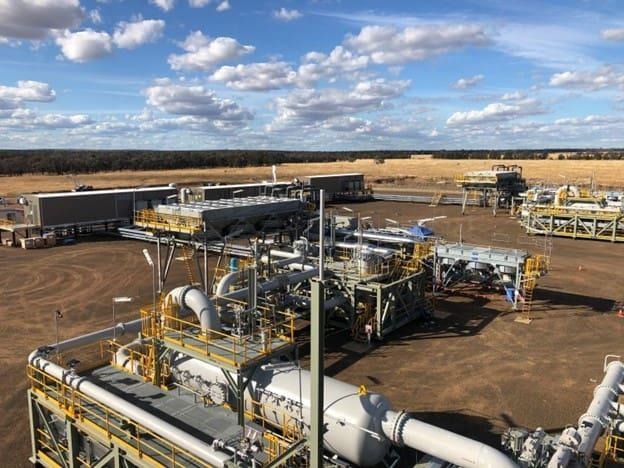
Origin Energy benefits from exposure to both electricity generation and LNG markets, creating diversified revenue streams. The company’s strong cash flow generation supports shareholder returns while also enabling investment into future energy projects. Among ASX dividend growth stocks, ORG offers a combination of energy sector exposure and improving earnings stability.
Key Insight: Energy diversification supports cash flow and shareholder returns.
Suncorp Group Ltd (ASX: SUN)

Suncorp operates within insurance and financial services, sectors that generate recurring revenue through premiums and financial products. Its stable business model and disciplined capital management have supported long-term dividend sustainability. Among ASX dividend growth stocks, Suncorp is often viewed as a defensive income and growth combination.
Key Insight: Insurance-driven cash flow supports stable dividend expansion.
Wesfarmers Ltd (ASX: WES)

Wesfarmers operates across retail, industrial, and consumer-focused businesses, giving it diversified earnings exposure. Its portfolio includes major retail operations such as Bunnings, which continue to generate strong and recurring cash flow. Among ASX dividend growth stocks, Wesfarmers stands out because of its balance between operational stability and growth potential.
Key Insight: Diversified retail operations support consistent shareholder returns.
How These Stocks Differ
These ASX dividend growth stocks differ based on sector exposure and earnings drivers. Macquarie benefits from financial and infrastructure operations, Origin Energy relies on energy markets and LNG exposure, Suncorp generates recurring insurance-based revenue, while Wesfarmers is driven by retail and consumer demand. This diversification allows investors to gain exposure to multiple industries while maintaining a focus on increasing shareholder returns.
Another key difference is growth style. Macquarie focuses on global financial expansion, Origin benefits from energy demand and transition trends, Suncorp emphasizes defensive earnings stability, and Wesfarmers combines mature retail cash flow with selective growth initiatives. These varying characteristics create different risk-reward profiles within ASX dividend growth stocks.
What Is Driving Shareholder Returns
Shareholder returns in ASX dividend growth stocks are primarily driven by earnings expansion, operational efficiency, and disciplined capital management. Companies capable of generating excess cash flow often increase dividends while also reinvesting into future growth opportunities.
Long-term economic growth, consumer demand, and infrastructure investment also contribute to earnings expansion across multiple sectors. Businesses that successfully balance reinvestment with shareholder distributions are generally better positioned to deliver sustainable returns over time.
Risk Considerations
Despite their stability, ASX dividend growth stocks are still exposed to economic and sector-specific risks. Financial companies may be impacted by interest rate changes and economic slowdowns, while energy businesses remain sensitive to commodity prices and regulatory shifts. Retail-focused companies can also face changing consumer spending patterns.
Additionally, rising costs or weaker earnings growth may limit future dividend increases. Investors should therefore focus not only on current dividend performance but also on long-term business quality and earnings sustainability when evaluating ASX dividend growth stocks.
Disclaimer:
General Financial Product Advice and Regulatory Framework: Pristine Gaze Pty Ltd (ABN 66 680 815 678, ACN 680 815 678) operates as Corporate Authorised Representative (CAR No. 001312049) of Alpha Securities Pty Ltd (AFSL 330757), which is licensed and regulated by the Australian Securities and Investments Commission under the Corporations Act 2001 (Cth). This report contains general financial product advice only and has been prepared without consideration of your personal objectives, financial situation, specific needs, circumstances, or investment experience. The information is not tailored to individual circumstances and may not be suitable for your particular situation. Before acting on any information contained herein, you should carefully consider its appropriateness having regard to your personal objectives, financial situation, and needs, and consider seeking personal financial advice from a qualified financial adviser who can assess your individual circumstances and provide tailored recommendations.
Investment Risks and Market Warnings: All investments carry significant risk, and different investment strategies may carry varying levels of risk exposure including total loss of invested capital. The value of investments and income derived from them can fluctuate significantly due to market conditions, economic factors, company-specific events, regulatory changes, commodity price volatility, currency fluctuations, interest rate movements, and other factors beyond our control. Securities markets are subject to market risk from general economic conditions and investor sentiment, liquidity risk affecting the ability to buy or sell securities at desired prices, credit risk from issuer default or deterioration, operational risk from inadequate internal processes, sector-specific risks including industry regulatory changes, technology obsolescence, management changes, competitive pressures, supply chain disruptions, and mining-specific risks including resource estimation uncertainty, operational hazards, environmental compliance, permitting delays, commodity price cycles, geopolitical factors affecting mining operations, and exploration risks. Small-cap and speculative mining stocks carry additional risks including limited liquidity, higher volatility, dependence on key personnel, limited operating history, uncertain cash flows, and potential failure to achieve commercial production.
Information Accuracy and Limitations: While we endeavour to ensure information accuracy and reliability, we make no representations or warranties (express or implied) regarding the accuracy, reliability, completeness, timeliness, or suitability of information provided, except where liability cannot be excluded under applicable law. This report may include information from third-party sources including company announcements, regulatory filings, research reports, market data providers, financial news services, and publicly available information, which we do not independently verify and for which we assume no responsibility. Past performance, examples, historical data, or projections are not indicative of future results, and no guarantee of future returns is provided or implied. To the maximum extent permitted by law, Pristine Gaze Pty Ltd and Alpha Securities Pty Ltd, together with their respective directors, officers, employees, representatives, and related entities, exclude all liability for any errors, omissions, inaccuracies, loss or damage (including direct, indirect, consequential, or special damages) arising from reliance on information provided, investment decisions made based on this report, market losses, opportunity costs, and technical issues or system failures.