
2 Underperforming ASX Sectors That Could Rebound Soon
Every investor loves chasing the sectors that are already booming. It feels safe, predictable, and rewarding — at least at first. But some of the most powerful opportunities often emerge from the sectors that nobody wants to talk about. In the world of markets, the underdogs can turn into leaders when conditions shift.
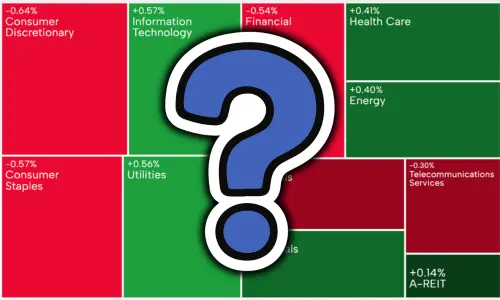
Two such Underperforming ASX Sectors are Energy and Real Estate (A-REITs). They’ve had their share of setbacks — from commodity swings to interest-rate burdens — but each also carries the ingredients for a meaningful recovery.
In investing, sectors that lag behind often carry the seeds of revival. Energy and Real Estate have taken some lumps for diverse reasons. But shifting global dynamics, evolving demand patterns, and changes in interest-rate cycles could turn these laggards into comeback stories.
This isn’t about timing the market. It’s about understanding the forces shaping these sectors, recognizing the cracks, and spotting where strength could return.
Let’s unpack what went wrong — and what might eventually lift them up.
What Went Wrong: Why Energy & A-REITs Struggled
1. Energy Sector — Demand Slowdown Meets Global Transition
If there’s one thing the Energy sector knows well, it’s cycles. Peaks of optimism followed by troughs of uncertainty — and the recent phase leaned toward the latter.
Several forces converged to pressure ASX energy names:
Softer global demand
Oil and gas demand has faced pressure due to slower economic activity across multiple regions. When industrial production cools, transportation slows, and manufacturing contracts, energy consumption naturally drops.
Rising appeal of renewables
With countries adopting aggressive climate targets, renewable energy got a structural boost. This long-term transition doesn’t kill fossil-fuel demand overnight, but it changes the psychology of investors and governments. The sentiment uncertainty alone is enough to weigh on traditional energy valuations.
Oversupply and price volatility
Energy markets are notorious for unpredictable supply dynamics. When major producers ramp up output during periods of soft demand, prices turn erratic. Uncertain pricing makes forecasting difficult for energy companies, which in turn keeps investors cautious.
Regulatory overhang
Companies exposed to coal, gas pipelines, or carbon-heavy projects are increasingly scrutinised. Regulations, investor climate expectations, and ESG pressures create a complicated backdrop for long-term planning.
2. Real Estate / A-REITs — Rate Pressure & Shifting Behaviour
Few sectors feel the pain of rising interest rates like Real Estate. A-REITs (Australian Real Estate Investment Trusts) rely heavily on borrowing to acquire and maintain income-generating properties. When financing becomes expensive, valuations come under pressure.
Recent performance data shows this clearly:
Industrial A-REITs underperformed in FY25
This was a sharp reversal. Industrial property — warehouses, logistics hubs, distribution centres — had enjoyed years of strong returns. But rising rates and softening tenant demand reversed that trend.
Retail & diversified REITs held up better
Retail malls and diversified trusts displayed resilience, supported by stable occupancy and consumer activity. But industrial and office-heavy portfolios dragged overall A-REIT performance.
Higher interest costs
As rates rose over previous years, borrowing costs climbed. This affected:
- Ability to acquire new properties
- Debt refinancing
- Overall distribution attractiveness
Lower yields combined with higher financing costs became a difficult combination.
Changing work and shopping patterns
Hybrid work, flexible office structures, and post-pandemic shopping habits altered long-term demand dynamics. Office spaces faced the biggest identity crisis, while industrial spaces witnessed moderation.
Result:
High borrowing costs, behavioural shifts, and cautious sentiment collectively weighed down A-REIT valuations.
Why a Rebound Could Be Brewing
Downturns often carry the clues for the next upturn. And in the case of Energy and Real Estate, several structural and cyclical factors could support a potential recovery.
1. Energy — Cycles, Adaptation & Supply Tightening
The Energy sector may be bruised, but it’s far from out. Several catalysts could support a turnaround:
Commodity cycles eventually rotate
History shows that energy cycles rarely stay down permanently. All it takes is:
- An uptick in global industrial activity
- A supply disruption
- Geopolitical tension affecting producers
- Normalising demand from transportation, aviation, and manufacturing
These can push oil and gas prices higher, which directly improves energy company margins.
Adaptation and diversification
Many energy companies aren’t sitting idle. Some are investing in:
- Gas and LNG
- Transitional fuels
- Hydrogen pilot projects
- Renewable energy arms
- Low-carbon technologies
Diversification helps reduce exposure to old-economy risks while positioning them for long-term energy mix changes.
Undervaluation creates opportunity
When valuations compress due to pessimism, even stable cash-flowing companies become attractive for income-focused investors. Long-term resource scarcity could also underpin value.
Policy shifts
Energy security remains a priority for governments. Any policy favouring domestic production, supply stability, or LNG expansion could brighten sector prospects.
Together, these factors form a foundation for the sector’s potential rebound.
2. A-REITs — Easing Rates & Stabilising Fundamentals
Real estate doesn’t need explosive growth to revive. Even stability is enough to restore income appeal and valuation confidence.
Rate stabilisation or easing supports valuations
Lower or stabilised interest rates can improve:
- Borrowing conditions
- Valuation models
- Capital flows into property
- Debt refinancing flexibility
With reduced rate pressure, investors often rediscover the value of steady rental yields.
Retail and diversified REITs show resilience
Retail REITs benefit from:
- High occupancy
- Stable foot traffic
- Essential retail (grocery, pharmacy, home goods) tenants
Diversified trusts spread risk across segments, making them less vulnerable to single-sector weakness.
Office and industrial stabilisation
Even in challenged segments:
- Leasing activity can pick up as economic clarity improves
- Rent profiles stabilise when tenant uncertainty reduces
- Industrial supply-demand balance can normalise
A rebound doesn’t require booming demand — just a levelling out of uncertainty.
Investor appetite for real assets
In uncertain environments, income-producing assets regain appeal. Long-term investors often favour REITs for predictable cashflows, especially when yields improve relative to bonds.
What to Watch: Signals That Might Mark the Turnaround
Timing a recovery is tricky — but watching the right indicators helps investors stay ahead of the curve.
For Energy
- Upward trends in oil and gas prices
- Signs of tightening supply
- Improved industrial activity indicators
- Project approvals or policy changes favouring local production
- Strategic diversification moves by energy companies
For Real Estate / A-REITs
- Central bank commentary on interest-rate direction
- Lower bond yields
- Improving occupancy in retail, office, and industrial spaces
- Stabilising or rising rental growth rates
These signals often surface before the broader market catches on.
What This Means for Investors
Investing in underperforming sectors requires perspective and discipline. Here’s how many long-term investors interpret these trends:
A contrarian window
Energy and A-REITs are classic contrarian ideas: when sentiment is low, future returns can be higher once the macro backdrop normalises.
Selectivity is critical
Within both sectors, quality varies widely.
In Energy:
Companies with strong balance sheets, long-life assets, and realistic transition strategies tend to weather downturns better.
In A-REITs:
Trusts with diversified portfolios, strong occupancy, long lease tenures, and essential-service tenants provide a more stable base.
Patience matters
These aren’t short-term trades. Recoveries depend on:
- Commodity cycles
- Economic momentum
- Interest-rate shifts
- Sector re-rating
Those willing to look beyond short-term pessimism often benefit most.
Don’t Ignore the Underdogs
Markets have a funny way of turning the least-loved sectors into the next big winners. Energy and Real Estate may feel like yesterday’s stories, weighed down by regulation, economics, and shifting preferences. But beneath the noise lies potential — anchored in cyclicality, necessity, and the simple fact that no sector stays out of favour forever.
Energy remains vital for global activity, regardless of how fast renewables grow. Real estate remains essential because people will always shop, live, work, store, and distribute goods somewhere.
Both sectors have taken their hits. Both sectors carry challenges. But they also hold the building blocks for recovery.
For patient investors with a long-term mindset, these underperformers might one day become the comeback stories that everyone wishes they hadn’t ignored.
Disclaimer:
General Financial Product Advice and Regulatory Framework: Pristine Gaze Pty Ltd (ABN 66 680 815 678, ACN 680 815 678) operates as Corporate Authorised Representative (CAR No. 001312049) of Alpha Securities Pty Ltd (AFSL 330757), which is licensed and regulated by the Australian Securities and Investments Commission under the Corporations Act 2001 (Cth). This report contains general financial product advice only and has been prepared without consideration of your personal objectives, financial situation, specific needs, circumstances, or investment experience. The information is not tailored to individual circumstances and may not be suitable for your particular situation. Before acting on any information contained herein, you should carefully consider its appropriateness having regard to your personal objectives, financial situation, and needs, and consider seeking personal financial advice from a qualified financial adviser who can assess your individual circumstances and provide tailored recommendations.
Investment Risks and Market Warnings: All investments carry significant risk, and different investment strategies may carry varying levels of risk exposure including total loss of invested capital. The value of investments and income derived from them can fluctuate significantly due to market conditions, economic factors, company-specific events, regulatory changes, commodity price volatility, currency fluctuations, interest rate movements, and other factors beyond our control. Securities markets are subject to market risk from general economic conditions and investor sentiment, liquidity risk affecting the ability to buy or sell securities at desired prices, credit risk from issuer default or deterioration, operational risk from inadequate internal processes, sector-specific risks including industry regulatory changes, technology obsolescence, management changes, competitive pressures, supply chain disruptions, and mining-specific risks including resource estimation uncertainty, operational hazards, environmental compliance, permitting delays, commodity price cycles, geopolitical factors affecting mining operations, and exploration risks. Small-cap and speculative mining stocks carry additional risks including limited liquidity, higher volatility, dependence on key personnel, limited operating history, uncertain cash flows, and potential failure to achieve commercial production.
Information Accuracy and Limitations: While we endeavour to ensure information accuracy and reliability, we make no representations or warranties (express or implied) regarding the accuracy, reliability, completeness, timeliness, or suitability of information provided, except where liability cannot be excluded under applicable law. This report may include information from third-party sources including company announcements, regulatory filings, research reports, market data providers, financial news services, and publicly available information, which we do not independently verify and for which we assume no responsibility. Past performance, examples, historical data, or projections are not indicative of future results, and no guarantee of future returns is provided or implied. To the maximum extent permitted by law, Pristine Gaze Pty Ltd and Alpha Securities Pty Ltd, together with their respective directors, officers, employees, representatives, and related entities, exclude all liability for any errors, omissions, inaccuracies, loss or damage (including direct, indirect, consequential, or special damages) arising from reliance on information provided, investment decisions made based on this report, market losses, opportunity costs, and technical issues or system failures.
Pristine Gaze