
3 ASX Mobile Tech Stocks Revolutionizing Connectivity
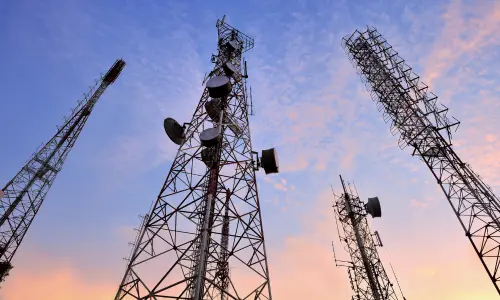
Mobile connectivity has become one of the quiet forces shaping modern life. It sits behind every video call, every online class, every tap-and-go payment and every emergency alert. We rarely think about it, yet we depend on it every hour. On the ASX there are companies, big and small, that are expanding what mobile technology can do. Some build vast national networks, some challenge the status quo with new products and pricing, and some design smart devices that give mobile networks new meaning.
In this blog we explore three such companies in the Australian market: Telstra Group (TLS), TPG Telecom (TPG) and Spacetalk (SPA). Each plays a different role in the mobile ecosystem, and together they show how connectivity is being reshaped for the future.
Telstra: the national network with national responsibilities
Telstra is the long standing backbone of Australia’s communications system. With the widest footprint and a long history as the country’s incumbent carrier, it carries a huge share of mobile and fixed line traffic. This scale gives Telstra a level of responsibility few companies shoulder. It must keep critical systems running for millions of households and businesses, and it works closely with regulators, emergency agencies and government bodies.
Because it sits at the centre of the network, Telstra often finds itself in the spotlight when disruptions, device issues or coverage challenges appear. In recent periods, national discussions have focused on network resilience and how different devices interact with emergency call routing. Telstra’s public updates and disclosures show a company that is constantly maintaining, modernizing and upgrading its infrastructure while also addressing the expectations that come with being the national carrier.
Why this matters: When Telstra updates a network platform, expands coverage or adjusts operational practice, the effects reach every corner of the country. A single tweak can influence rural coverage, enterprise connectivity, emergency call flow and even how smaller operators plug into the system. Telstra’s decisions have multiplier effects, which is why investors, businesses and policy makers watch its moves closely.
TPG Telecom: the challenger turning scale into options
TPG Telecom operates with a different identity. It has spent much of its history as a challenger, pressuring incumbents through aggressive pricing, flexible offers and product variety. Over the years, mergers and strategic shifts have expanded its customer base and given it much deeper market reach.
As it grows, TPG is no longer just the disruptive player on the sidelines. It now handles operational responsibilities that come with scale. Recently it issued statements around device compatibility with emergency services, participated in capital management programs, including a retail reinvestment plan, and updated customers about operational matters across its brands. These moves reflect a company that is not only offering competitive products but also actively handling infrastructure, regulatory expectations and service quality at a national level.
Why this matters: Challenger networks broaden consumer choice and balance the competitive landscape. When a challenger becomes large enough, its decisions influence pricing trends, interoperability with other networks, customer support expectations and even national emergency response systems. In short, TPG now contributes to the stability and innovation of the entire market, not just the leaner end of it.
Spacetalk: narrow focus, broad potential
Spacetalk shows a completely different side of mobile technology. Instead of building towers or managing spectrum, it designs smart devices for children and seniors. These devices use mobile networks but add layers of safety, communication and location features designed for families.
Spacetalk’s recent product updates show a shift toward becoming a more service driven company. It launched a new subscription platform and mobile app to make the device ecosystem more cohesive. By combining hardware with recurring subscription services, Spacetalk is building long term customer relationships rather than one time device sales. This focus on family safety and connected wellbeing highlights how mobile technology can be specialized for niche but high value uses.
Why this matters: Device ecosystems shape how people use mobile networks. When companies like Spacetalk create simple, safe and integrated experiences, they raise the bar for what consumers expect from mobile technology. They also push carriers and regulators to think about secure connectivity, child safety and data privacy. These innovations expand the social role of mobile tech beyond communication into wellbeing and everyday family life.
How these three stories connect
Looking at Telstra, TPG and Spacetalk side by side reveals three layers that define the mobile world.
- Telstra represents infrastructure at national scale, building the foundation that everything else runs on.
- TPG brings competition, innovation and variety to the retail and wholesale markets, giving consumers more choices while keeping pressure on the industry to evolve.
- Spacetalk enhances the human experience of mobile connectivity through devices and apps that solve real world problems for families.
Each layer interacts with the others. A device update can influence how emergency calls are routed across networks. A retail capital move can shift market share and change how users move between carriers. A new subscription platform can set expectations for seamless service and raise questions about network support. These linkages show that mobile connectivity is not just hardware or radio waves. It is a complex system of infrastructure, competition and real world applications.
What to watch in the next phase of mobile evolution
For anyone following the Australian mobile sector, a few indicators offer useful clues about how connectivity is changing.
Regulators are increasingly focused on resilience, transparency and device performance. Their inquiries and responses often guide how operators improve reliability and how technology rolls out nationwide.
Operator communications and customer programs are also key. How carriers manage handset replacements, software updates and customer outreach provides insight into network health and long term commitment to quality.
Subscription and software based models are becoming more important. As device makers introduce recurring services, the industry shifts toward long term customer engagement rather than one off sales.
Disclaimer:
General Financial Product Advice and Regulatory Framework: Pristine Gaze Pty Ltd (ABN 66 680 815 678, ACN 680 815 678) operates as Corporate Authorised Representative (CAR No. 001312049) of Alpha Securities Pty Ltd (AFSL 330757), which is licensed and regulated by the Australian Securities and Investments Commission under the Corporations Act 2001 (Cth). This report contains general financial product advice only and has been prepared without consideration of your personal objectives, financial situation, specific needs, circumstances, or investment experience. The information is not tailored to individual circumstances and may not be suitable for your particular situation. Before acting on any information contained herein, you should carefully consider its appropriateness having regard to your personal objectives, financial situation, and needs, and consider seeking personal financial advice from a qualified financial adviser who can assess your individual circumstances and provide tailored recommendations.
Investment Risks and Market Warnings: All investments carry significant risk, and different investment strategies may carry varying levels of risk exposure including total loss of invested capital. The value of investments and income derived from them can fluctuate significantly due to market conditions, economic factors, company-specific events, regulatory changes, commodity price volatility, currency fluctuations, interest rate movements, and other factors beyond our control. Securities markets are subject to market risk from general economic conditions and investor sentiment, liquidity risk affecting the ability to buy or sell securities at desired prices, credit risk from issuer default or deterioration, operational risk from inadequate internal processes, sector-specific risks including industry regulatory changes, technology obsolescence, management changes, competitive pressures, supply chain disruptions, and mining-specific risks including resource estimation uncertainty, operational hazards, environmental compliance, permitting delays, commodity price cycles, geopolitical factors affecting mining operations, and exploration risks. Small-cap and speculative mining stocks carry additional risks including limited liquidity, higher volatility, dependence on key personnel, limited operating history, uncertain cash flows, and potential failure to achieve commercial production.
Information Accuracy and Limitations: While we endeavour to ensure information accuracy and reliability, we make no representations or warranties (express or implied) regarding the accuracy, reliability, completeness, timeliness, or suitability of information provided, except where liability cannot be excluded under applicable law. This report may include information from third-party sources including company announcements, regulatory filings, research reports, market data providers, financial news services, and publicly available information, which we do not independently verify and for which we assume no responsibility. Past performance, examples, historical data, or projections are not indicative of future results, and no guarantee of future returns is provided or implied. To the maximum extent permitted by law, Pristine Gaze Pty Ltd and Alpha Securities Pty Ltd, together with their respective directors, officers, employees, representatives, and related entities, exclude all liability for any errors, omissions, inaccuracies, loss or damage (including direct, indirect, consequential, or special damages) arising from reliance on information provided, investment decisions made based on this report, market losses, opportunity costs, and technical issues or system failures.
Pristine Gaze